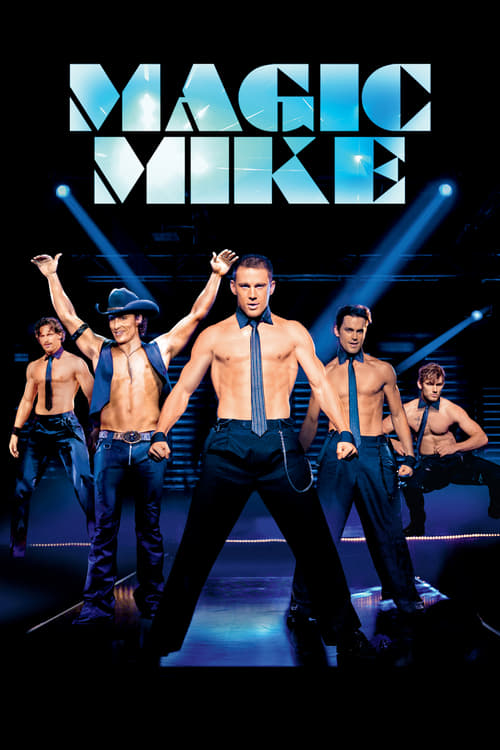
Magic Mike (2012)
Directed by Steven Soderbergh
No — Magic Mike is not woke, scoring 15 out of 100 on our wokeness meter.
Magic Mike arrives as a modestly budgeted Soderbergh experiment, shot through a straw filter that lends Tampa a permanent late-afternoon haze.
Consciousness Markers
The film offers a genuine critique of blue-collar precarity and the broken American Dream: Mike's small-business loan is denied, Dallas is driven purely by greed, and the dancers are disposable labor in his 'empire' scheme.
The film was noted for centering female desire and the female gaze, and Brooke serves as a moral counterweight, but this is a byproduct of the subject matter rather than a deliberate feminist thesis.
The cast is overwhelmingly white and conventionally attractive, with only incidental Latino supporting players (Adam Rodriguez, Gabriel Iglesias) who exist naturally in the story without any representational commentary.
Soderbergh's direction is observational and understated, delivering its social commentary on the American Dream through drama rather than preachy sermonizing.
The film contains no LGBTQ+ characters or themes; the 'gay interest' keyword reflects only the beefcake marketing campaign that courted gay male audiences, not any narrative content.
Race is entirely absent as a theme; the Tampa stripping world depicted is uniformly white with no engagement with racial dynamics whatsoever.
The film is built entirely around chiseled, conventionally perfect male bodies and objectification; it celebrates the physique rather than promoting body positivity or diverse body acceptance.
There is no environmental or climate content in the film; a hurricane party appears only as a social setting, not as a climate statement.
No neurodivergent characters or themes are present in the film.
The film is a fictionalized story loosely inspired by Channing Tatum's stripping past, not a revisionist reframing of historical events.
Why it received this score
Magic Mike arrives as a modestly budgeted Soderbergh experiment, shot through a straw filter that lends Tampa a permanent late-afternoon haze. The camera watches more than it lectures. Channing Tatum, drawing on his own teenage years on the Florida circuit, plays a man who strips to fund a furniture business, and the film's real interest lies in that gap between the stage and the bank. It is a drama about labor that happens to feature oiled abdominal muscles.
On that front the film has something to say. Mike's loan application is denied. Dallas, played by Matthew McConaughey with the appetite of a man who has never once doubted himself, dreams of an empire and regards his dancers as interchangeable parts. The screenplay notes that the drug trade and the stripping trade run on the same disposable bodies. That is a pointed observation about American economic arrangements, delivered through plot instead of speeches. The result earns its critique.
Elsewhere the ledger is thinner. The cast is almost entirely white and uniformly sculpted, which means representation and body acceptance are not projects the film has taken up. The female gaze is courted, and Brooke functions as a conscience, an arrangement that flatters its audience without advancing a thesis. There is no engagement with race, no environmental content (a hurricane party is a party), no neurodivergent characters, no reworking of history. The marketing courted gay male audiences with pride floats and red-band trailers, though nothing in the story itself follows through. Soderbergh keeps his sermonizing to a minimum, which is the film's quiet virtue. It observes the American Dream failing in a strip mall and declines to explain the moral. The sequels would abandon that restraint entirely.
Analysis generated by our Consciousness Algorithm
Part of


Synopsis
Mike, an experienced stripper, takes a younger performer called The Kid under his wing and schools him in the arts of partying, picking up women, and making easy money.
Questions about Magic Mike
Is Magic Mike woke?
No — Magic Mike is not woke, scoring 15 out of 100 on our wokeness meter. That earns it a verdict of Ultra Based.
Does Magic Mike have any woke elements?
1 of the 10 markers register at 30 or above, led by Eat the Rich (35). On Eat the Rich: The film offers a genuine critique of blue-collar precarity and the broken American Dream: Mike's small-business loan is denied, Dallas is driven purely by greed, and the dancers are disposable labor in his 'empire' scheme.
How does Magic Mike compare to other 2012 movies?
It ranks #57 of the 230 films from 2012 we've scored; their average is 12. The wokest is Killing Them Softly (92).
Is Magic Mike the most woke Magic Mike movie?
No. It ranks #3 of the 3 Magic Mike films we've scored; the wokest is Magic Mike's Last Dance (50).