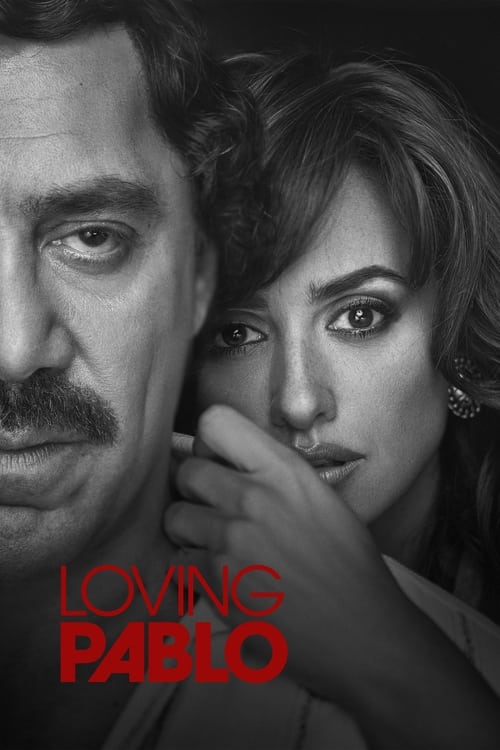
Loving Pablo (2017)
Directed by Fernando León de Aranoa
No — Loving Pablo is not woke, scoring 15 out of 100 on our wokeness meter.
The Escobar subgenre has become its own small industry, and Fernando León de Aranoa's contribution arrives with a pair of Spain's most bankable stars and a memoir to lean on.
Consciousness Markers
The leads are Spanish actors playing Colombian figures, with Colombian actors in supporting roles; the Latin American setting makes diverse casting natural rather than a pointed statement, placing it in modest territory.
The story is anchored by journalist Virginia Vallejo's perspective and her memoir, lending a female vantage point, but the film remains chiefly a portrait of a male drug lord and her complicity.
The film depicts Colombia's drug wars and social decay but frames them through crime and biography rather than racial justice themes.
A conventional lurid biopic that dramatizes events rather than preaching to the audience; minimal didactic energy.
The drug trade's violence and excess are shown, but there is no systemic critique of capitalism or wealth redistribution messaging.
Adapted from Vallejo's memoir offering a personal revision of the Escobar legend, but it reinterprets events rather than re-framing history through a modern ideological lens.
No LGBTQ+ characters or themes appear anywhere in this narco-romance narrative.
No environmental or climate content is present in this crime drama.
No body positivity themes or body-image commentary appear.
No neurodivergent characters or themes are present.
Why it received this score
The Escobar subgenre has become its own small industry, and Fernando León de Aranoa's contribution arrives with a pair of Spain's most bankable stars and a memoir to lean on. Javier Bardem plays the drug lord as a man of appetites; Penélope Cruz plays Virginia Vallejo as a woman who watches the appetites and takes notes. The film chronicles a love affair between 1981 and 1987 against a backdrop of car bombs and cocaine money. It is a Spanish-Bulgarian co-production, a detail worth savoring for the sheer improbability of the financing.
The casting is Latin American playing Latin American, which the setting makes inevitable instead of pointed. Colombian performers fill the supporting ranks while the marquee names arrive from Madrid. There is a woman's vantage point here, borrowed from Vallejo's book, and the film grants her narration and regret, though the camera keeps drifting back to the man with the mustache and the ledger. Any critique of the drug economy is incidental; the movie is fond of the money, the planes, the marble.
Where the film might have sermonized about empire, poverty, or the machinery of capital, it chooses lurid biography instead. That restraint, whether artistic or merely commercial, keeps the proceedings free of messaging. Critically it landed at 31 percent, and the reviews explain themselves. Still, for the cataloguer, this is a clean specimen. No environmental crusading, no body-image discourse, no neurological subplot, no ideological re-reading of the past. Just a handsome, sordid, faintly exhausted romance between a journalist and a monster. The sommelier notes: a thin vintage, served at room temperature.
Analysis generated by our Consciousness Algorithm


Synopsis
The film chronicles the rise and fall of the world's most feared drug lord Pablo Escobar and his volatile love affair with Colombia's most famous journalist Virginia Vallejo throughout a reign of terror that tore a country apart.
Questions about Loving Pablo
Is Loving Pablo woke?
No — Loving Pablo is not woke, scoring 15 out of 100 on our wokeness meter. That earns it a verdict of Ultra Based.
Does Loving Pablo have any woke elements?
1 of the 10 markers register at 30 or above, led by Representation Casting (35). On Representation Casting: The leads are Spanish actors playing Colombian figures, with Colombian actors in supporting roles; the Latin American setting makes diverse casting natural rather than a pointed statement, placing it in modest territory.
How does Loving Pablo compare to other 2017 movies?
It ranks #119 of the 309 films from 2017 we've scored; their average is 19. The wokest is I Am Not Your Negro (92).
How is the Woke Score calculated?
An AI-assisted process researches the film and its reception, scores it 0–100 on ten markers, then combines those into one 0–100 Woke Score. It measures a specific set of 2020s cultural themes, not film quality.