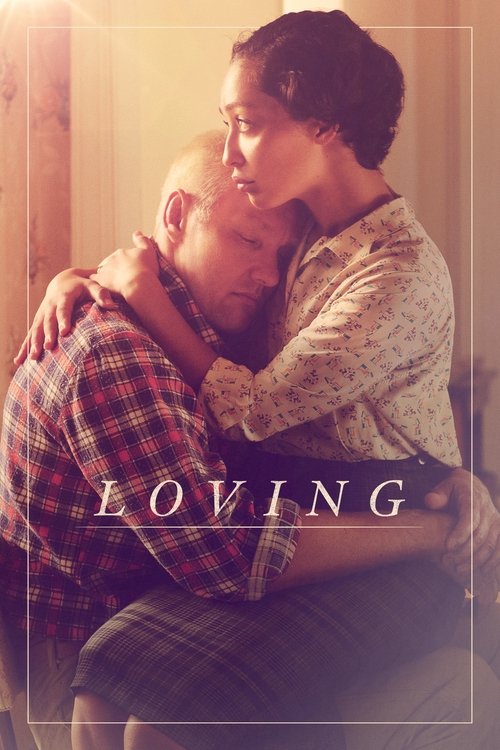
Loving (2016)
Directed by Jeff Nichols
No — Loving is not especially woke, scoring 34 out of 100 on our wokeness meter.
Jeff Nichols approaches the Loving case the way a stonemason approaches a wall: carefully, without flourish, and with an eye on the line.
Consciousness Markers
The film directly confronts Virginia's anti-miscegenation laws, racist social pressure, and the state's arguments against the Lovings, making racial injustice central to its narrative.
The film centers a Black/mixed-race woman and a white man as co-leads, with a predominantly Black supporting cast in a story where race is inseparable from the plot.
Mildred is portrayed as the emotional and strategic spine of the couple, but the film frames her agency through historical drama rather than explicit feminist argument.
The film carries a clear civil-rights message but delivers it through quiet observation and courtroom procedure rather than preachy speeches or direct audience lectures.
No LGBTQ+ themes or characters are present in the film.
There is no climate or environmental theme in the film.
The film does not engage with anti-capitalist or class-war themes.
No body-positivity themes or messaging are present.
Richard's quiet, uneducated manner is not framed as neurodivergence, and no neurodivergent themes are present.
The film is a restrained, faithful historical dramatization of the Loving case rather than a revisionist reinterpretation of history.
Why it received this score
Jeff Nichols approaches the Loving case the way a stonemason approaches a wall: carefully, without flourish, and with an eye on the line. The film centers Mildred Jeter, a Black and Native American woman, and Richard Loving, a white bricklayer, as genuine co-leads, and surrounds them with a Black community that is present, specific, and never decorative. Race is not subtext in this picture. It is the plot's entire engine. The anti-miscegenation statute produces the midnight raid, the guilty plea, the twenty-five-year exile, the appeal. Every domestic scene carries the weight of a law that has decided this marriage is a crime. That earns its representation marks honestly.
Negga's Mildred is the spine of the couple, and the film knows it. She writes to Robert Kennedy. She pushes the ACLU lawyers forward. She decides they will stop running. Richard, meanwhile, wants only to finish the house and be left alone. This registers as a soft feminist current, delivered through historical portraiture instead of argument. The sermonizing is minimal. There are no speeches to the camera, no villain monologues, and Sheriff Brooks is played as a man of his time and place, which is more unsettling than a caricature would have been. The message arrives through procedure, silence, and a courtroom we are allowed to watch without being told how to feel.
Elsewhere the ledger is empty. No LGBTQ content, no environmental crusade, no class-warfare grievance, no body-positive messaging, no neurodivergent framing. Richard's limited education and clipped manner are treated as character, not diagnosis. The film is also faithful to the record instead of reworking it, a restrained dramatization that reveres its subjects and declines to improve them. This is a well-mannered piece of social consciousness that trusts its audience to reach the obvious conclusion unaided. That trust is a rarer commodity than it ought to be, and we should probably not get used to it.
{"thematic_tags": ["true_story"]}
Analysis generated by our Consciousness Algorithm
Part of


Synopsis
In 1958, in the state of Virginia, the idea of interracial marriage was not only considered to be immoral to many, it was also illegal. When Richard and Mildred fall in love, they are aware of the eyes staring at them and the words said behind their backs. It's when they get married, however, that words and looks become actions, and the two are arrested. The couple decide to take their case all of the way to the Supreme Court in order to fight for their love. Based on a true story.
Questions about Loving
Is Loving woke?
No — Loving is not especially woke, scoring 34 out of 100 on our wokeness meter. That earns it a verdict of Based.
Does Loving have any woke elements?
3 of the 10 markers register at 30 or above, led by Racial Consciousness (70), Representation Casting (60) and Feminist Agenda (30). On Racial Consciousness: The film directly confronts Virginia's anti-miscegenation laws, racist social pressure, and the state's arguments against the Lovings, making racial injustice central to its narrative.
How does Loving compare to other 2016 movies?
It ranks #32 of the 285 films from 2016 we've scored; their average is 16. The wokest is 13th (92).
How is the Woke Score calculated?
An AI-assisted process researches the film and its reception, scores it 0–100 on ten markers, then combines those into one 0–100 Woke Score. It measures a specific set of 2020s cultural themes, not film quality.