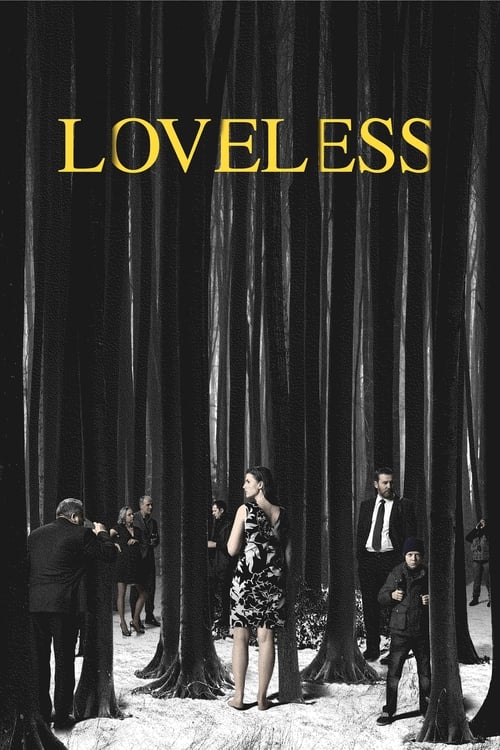
Loveless (2017)
Directed by Andrey Zvyagintsev
No — Loveless is not woke, scoring 0 out of 100 on our wokeness meter.
Andrey Zvyagintsev's Loveless is a winter film about a vanished boy and the parents who misplaced him long before he disappeared.
Consciousness Markers
The cast is entirely white Russian actors, with no deliberate diversity or representation casting.
No LGBTQ+ characters, themes, or subtext are present.
The film centers on a bitter divorce and parental neglect, but it does not advance a feminist agenda or critique patriarchy in modern woke terms.
Race and racial identity are not addressed in the film.
Winter weather and bleak landscapes are atmospheric, not part of a climate crusade.
The film critiques Russian social apathy and neglect, but it does not frame this as an anti-capitalist or eat-the-rich message.
No body-positivity themes or body-diversity messaging appear.
No neurodivergent characters or themes are present.
It references contemporary Russian life and the Donbas conflict as background, but it does not revise history in a woke ideological manner.
The film is a bleak, restrained drama with social themes, not a didactic progressive lecture.
Why it received this score
Andrey Zvyagintsev's Loveless is a winter film about a vanished boy and the parents who misplaced him long before he disappeared. The apartment is cold, the forest is colder, and the emotional temperature never rises. The cast is entirely white Russian, and the film makes no gesture toward representational casting. There are no LGBTQ characters, no racial themes, no climate concerns, no body-diversity message, and no neurodivergent framing. The remainder is a domestic catastrophe, observed with a surgeon's calm.
The social critique here is aimed at Russian apathy, police indifference, and a spiritual condition the title names. It is not a story about eating the rich. Wealth appears as an escape route for Zhenya, not as a system to be dismantled. The snowy landscapes are atmospheric, not activist. A feminist reading can be forced onto Zhenya's rejection of motherhood, but the film does not organize itself around a critique of patriarchy. It is too bleak for a platform and too honest for a slogan.
History is present only as radio noise and passing references to the Donbas conflict. The film does not revise the past to serve a contemporary moral. It also refuses to lecture. Zvyagintsev withholds judgment, or at least distributes it evenly among the careless adults. The search volunteers are decent, the police are useless, and the state is absent. That is a political observation, but it is not a sermon. The result is a devastating drama with no modern social-justice markers to speak of. It is a somber, exacting work, and by the standards of our current cultural taxonomy, it is a blank page.
Analysis generated by our Consciousness Algorithm


Synopsis
Zhenya and Boris are going through a vicious divorce marked by resentment, frustration and recriminations. Already embarking on new lives, each with a new partner, they are impatient to start again, to turn the page – even if it means threatening to abandon their 12-year-old son Alyosha. Until, after witnessing one of their fights, Alyosha disappears.
Questions about Loveless
Is Loveless woke?
No — Loveless is not woke, scoring 0 out of 100 on our wokeness meter. That earns it a verdict of Ultra Based.
Does Loveless have any woke elements?
No. All 10 markers score zero.
How does Loveless compare to other 2017 movies?
It ranks #281 of the 309 films from 2017 we've scored; their average is 19. The wokest is I Am Not Your Negro (92).
How is the Woke Score calculated?
An AI-assisted process researches the film and its reception, scores it 0–100 on ten markers, then combines those into one 0–100 Woke Score. It measures a specific set of 2020s cultural themes, not film quality.