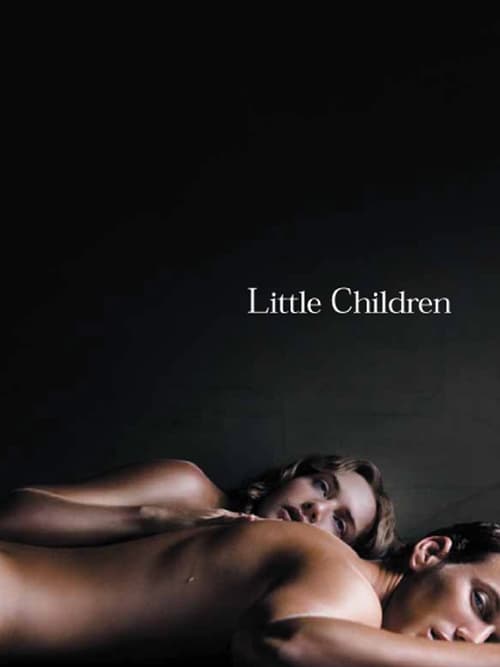
Little Children (2006)
Directed by Todd Field
No — Little Children is not woke, scoring 11 out of 100 on our wokeness meter.
Little Children arrives from 2006, a year when a film could still examine suburban malaise without a checklist attached.
Consciousness Markers
The film sympathetically examines the stifling constraints of the housewife role and the smug gender dynamics of suburban parenting, but it does so as literary character study rather than as an explicit feminist thesis.
The film satirizes bourgeois suburban complacency and status anxiety, but its critique is aimed at social conformity and self-deception rather than at capitalism or wealth itself.
The film is observational and literary rather than preachy, offering its suburban satire through character and incident instead of direct moral instruction.
The cast is uniformly white, with no deliberate diverse or color-conscious casting choices; the suburban Boston setting is depicted without any representational commentary.
There are no LGBTQ+ characters, themes, or subtext anywhere in the film.
Race is entirely absent as a subject; the film's milieu and conflicts are wholly within white suburbia with no racial themes or commentary.
No environmental or climate-related content of any kind.
There is no body-positivity messaging; the film's treatment of bodies is psychological and erotic rather than a statement about body acceptance.
No neurodivergent characters or themes are present or framed as such.
The film is a contemporary suburban drama with no historical subject matter to revise.
Why it received this score
Little Children arrives from 2006, a year when a film could still examine suburban malaise without a checklist attached. Todd Field adapts Tom Perrotta's novel with the patience of a short story writer, following Sarah Pierce through an affair with a stay-at-home father named Brad. The setting is Boston's leafy outskirts, where playgrounds function as courtrooms and everyone is quietly losing. It is a melodrama with satirical edges, and it trusts the audience to find the meaning without a narrator holding up cue cards.
The film's progressive instincts are faint and literary. It notices that Sarah's unhappiness is partly structural, that the housewife role has been built to smother her, and it watches the smug fathers condescend to the mothers at the park. These gestures never harden into argument. The critique of bourgeois comfort is present too, a mild sneer at status anxiety and self-satisfaction, but the target is conformity and self-deception, not wealth itself. Field observes; he does not sermonize. The camera sits back and lets the characters incriminate themselves.
What the film does not do is equally clear. The cast is uniformly white, with no color-conscious choices and no racial subject anywhere in the frame. There are no LGBTQ threads, no climate anxiety, no body-acceptance messaging, no neurodivergent characters. The story is contemporary, so there is no history to revise. Ronnie McGorvey, the paroled offender, is handled as tragedy and revulsion, not as a case study in empathy. This is a film about people failing privately, and it offers no instruction manual. We are left with the quiet terror of the suburbs and three Oscar nominations that did not convert. A sober, well-made work. Its cultural agenda, such as it is, fits on an index card.
Analysis generated by our Consciousness Algorithm


Synopsis
The lives of two lovelorn spouses from separate marriages, a registered sex offender, and a disgraced ex-police officer intersect as they struggle to resist their vulnerabilities and temptations.
Questions about Little Children
Is Little Children woke?
No — Little Children is not woke, scoring 11 out of 100 on our wokeness meter. That earns it a verdict of Ultra Based.
Does Little Children have any woke elements?
Very few. None of the 10 markers reaches 30, the level where a marker counts as present; the highest is Feminist Agenda at 20.
How does Little Children compare to other 2006 movies?
It ranks #67 of the 211 films from 2006 we've scored; their average is 11. The wokest is An Inconvenient Truth (92).
How is the Woke Score calculated?
An AI-assisted process researches the film and its reception, scores it 0–100 on ten markers, then combines those into one 0–100 Woke Score. It measures a specific set of 2020s cultural themes, not film quality.