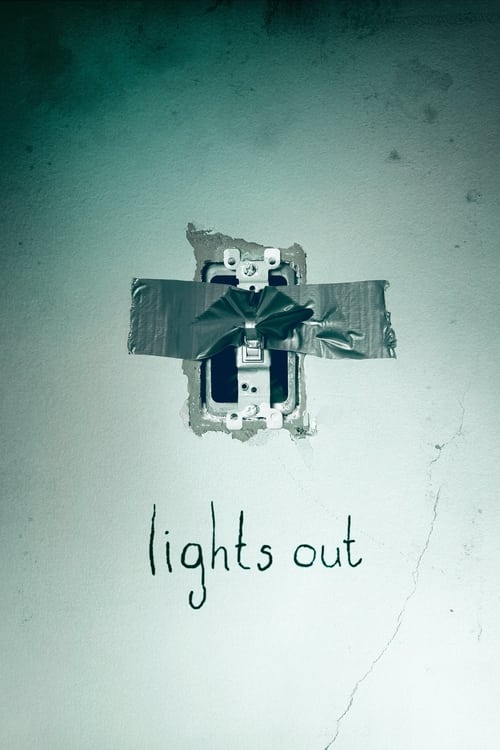
Lights Out (2016)
Directed by David F. Sandberg
No — Lights Out is not woke, scoring 7 out of 100 on our wokeness meter.
Lights Out arrives as a trim, ninety-minute machine for making audiences flinch, and it does that job with a craftsman's economy.
Consciousness Markers
The cast is predominantly white, with Andi Osho in a minor supporting role as a CPS agent; diversity is incidental rather than a stated priority.
A female protagonist and a fraught mother-daughter dynamic anchor the story, but the film treats these as horror mechanics rather than a feminist statement.
Depression, self-harm scars, and antidepressants figure in the backstory, drawn from the director's own experience, but mental illness is largely deployed as a horror trope rather than advocacy.
The film is a lean jump-scare machine with no overt moralizing, though the suicide ending drew criticism that the director publicly addressed.
No LGBTQ+ characters, relationships, or themes appear anywhere in the film.
Race is never addressed or thematized; the film has no racial commentary of any kind.
No environmental or climate themes are present.
No economic critique or class commentary; the textile factory is merely a setting for the opening kill.
No body-positivity themes; Diana's skin condition is framed as monstrous affliction, not a subject of acceptance.
The film makes no historical claims and revises no historical record.
Why it received this score
Lights Out arrives as a trim, ninety-minute machine for making audiences flinch, and it does that job with a craftsman's economy. David F. Sandberg expanded his own viral short into a feature, and the seams rarely show. The premise is elegantly simple: a spirit named Diana can only exist in darkness, so every flashlight, neon sign, and car headlight becomes a weapon. There is no ambition here beyond the scare, and the scare is delivered.
The film centers on Rebecca, played by Teresa Palmer, and her fractured relationship with her mother, Sophie. A female protagonist and a mother-daughter bond strained by mental illness give the story its emotional spine, though the film treats both as horror mechanics, fuel for the monster, not as a statement of any kind. Sophie's depression, her antidepressants, and the self-harm scars on Rebecca's arms were drawn from the director's own acquaintance and experience, which lends the material a quiet authenticity. It is texture, not advocacy. The illness is the thing that lets Diana in. Somewhere in the margins, Andi Osho appears as a child protective services agent, the film's lone gesture toward a cast that does not look entirely like a Scandinavian design catalog.
What the film declines to do is lecture. The textile factory of the opening scene is a setting, not a critique of labor. Race goes unmentioned. Diana's disfiguring skin condition is presented as monstrous affliction, never as a subject for acceptance. The ending, in which Sophie takes her own life to destroy the spirit, drew complaints that the film endorsed suicide, and Sandberg publicly pushed back. That exchange is the closest the film comes to sermonizing, and even then it is a filmmaker defending his intent, not a story wagging a finger. We are left with a lean, competent fright delivery system that has almost nothing on its mind except the dark, and that, at least, it understands completely.
{"thematic_tags": []}
Wait. The required output is a single JSON object with a review key. Here it is:
{"review": "Lights Out arrives as a trim, ninety-minute machine for making audiences flinch, and it does that job with a craftsman's economy. David F. Sandberg expanded his own viral short into a feature, and the seams rarely show. The premise is elegantly simple: a spirit named Diana can only exist in darkness, so every flashlight, neon sign, and car headlight becomes a weapon. There is no ambition here beyond the scare, and the scare is delivered.
The film centers on Rebecca, played by Teresa Palmer, and her fractured relationship with her mother, Sophie. A female protagonist and a mother-daughter bond strained by mental illness give the story its emotional spine, though the film treats both as horror mechanics, fuel for the monster, not as a statement of any kind. Sophie's depression, her antidepressants, and the self-harm scars on Rebecca's arms were drawn from the director's own acquaintance and experience, which lends the material a quiet authenticity. It is texture, not advocacy. The illness is the thing that lets Diana in. Somewhere in the margins, Andi Osho appears as a child protective services agent, the film's lone gesture toward a cast that does not look entirely like a Scandinavian design catalog.
What the film declines to do is lecture. The textile factory of the opening scene is a setting, not a critique of labor. Race goes unmentioned. Diana's disfiguring skin condition is presented as monstrous affliction, never as a subject for acceptance. The ending, in which Sophie takes her own life to destroy the spirit, drew complaints that the film endorsed suicide, and Sandberg publicly pushed back. That exchange is the closest the film comes to sermonizing, and even then it is a filmmaker defending his intent, not a story wagging a finger. We are left with a lean, competent fright delivery system that has almost nothing on its mind except the dark, and that, at least, it understands completely."},
Analysis generated by our Consciousness Algorithm


Synopsis
Rebecca must unlock the terror behind her little brother's experiences that once tested her sanity, bringing her face to face with a supernatural spirit attached to their mother.
Questions about Lights Out
Is Lights Out woke?
No — Lights Out is not woke, scoring 7 out of 100 on our wokeness meter. That earns it a verdict of Ultra Based.
Does Lights Out have any woke elements?
Very few. None of the 10 markers reaches 30, the level where a marker counts as present; the highest is Representation Casting at 15.
How does Lights Out compare to other 2016 movies?
It ranks #190 of the 285 films from 2016 we've scored; their average is 16. The wokest is 13th (92).
How is the Woke Score calculated?
An AI-assisted process researches the film and its reception, scores it 0–100 on ten markers, then combines those into one 0–100 Woke Score. It measures a specific set of 2020s cultural themes, not film quality.