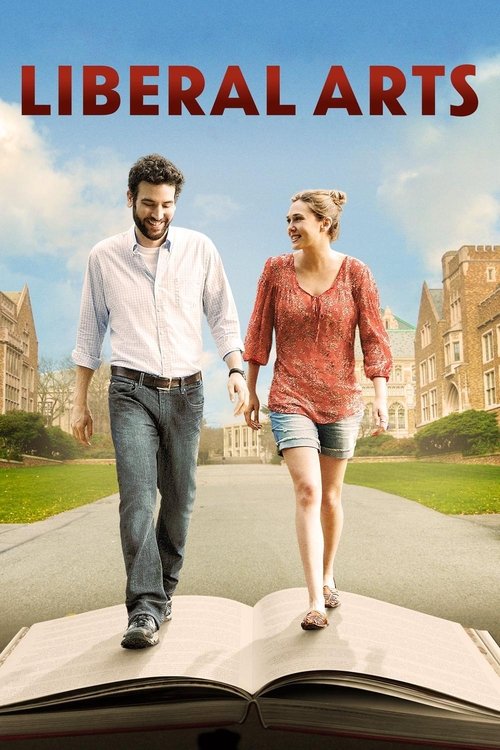
Liberal Arts (2012)
Directed by Josh Radnor
No — Liberal Arts is not woke, scoring 3 out of 100 on our wokeness meter.
The experience of watching Liberal Arts feels less like a cultural commentary and more like an extended trip to a very aesthetically pleasing campus.
Consciousness Markers
Characters discuss literature and life advice, but the film avoids preachy social-justice lecturing and remains a personal nostalgia piece.
The film features a young female lead and touches on age-gap dynamics, but it is told from a male perspective and lacks any explicit feminist agenda.
The main cast is overwhelmingly white, with no meaningful representation casting choices or diverse leads.
There are no LGBTQ+ characters, themes, or subtext in the film.
Race is not a theme, and the film does not engage with racial consciousness or systemic racism.
There is no environmental or climate-related content in the film.
The protagonist is dissatisfied with his job, but the film offers no critique of capitalism or wealth inequality.
Body image, size diversity, and body positivity are not addressed.
A supporting character is depressed and suicidal, but the film does not explore neurodivergence such as autism, ADHD, or related themes.
The film is a fictional contemporary story and does not revise or reinterpret historical events.
Why it received this score
The experience of watching Liberal Arts feels less like a cultural commentary and more like an extended trip to a very aesthetically pleasing campus. Director Josh Radnor offers a meditation on intellectual yearning and the comfortable gravity of aging, prioritizing the aroma of old books and autumnal melancholy over any modern progressive sensibilities. We are presented with a world where the central concerns are the merits of a well-written novel or the complicated mechanics of a youth-older relationship. This is a space of pure escapism, an intellectual nostalgia that remains largely untroubled by the contemporary cultural flashpoints.
The film operates within a purely personal orbit. While characters engage in deep discussions about literature and the human condition, the conversation remains confined to the internal emotional landscapes of the protagonists. We find no engagement with systemic issues like racial inequity, economic disparity, or urgent environmental concerns. The focus is decidedly inward, examining personal dissatisfaction and the pull of youthful idealism. The film allows us to inhabit a space where a 35-year-old man revisits his alma mater, finding moments of growth, without ever demanding that the setting evolve into a stage for a larger social agenda.
This is a study of mood, not a platform for social reform. The narrative favors the romanticism of the past over the demands of the present. By keeping the narrative tightly focused on personal connections and academic reflection, the film achieves a specific kind of intellectual lightness. It remains a pleasant, if somewhat unassuming, piece of cinema that values the quiet elegance of its setting. It simply offers a vision of college life that does not need to be burdened by the weight of a modern social consciousness.
Analysis generated by our Consciousness Algorithm


Synopsis
Newly single, 35, and uninspired by his job, Jesse Fisher worries that his best days are behind him. But no matter how much he buries his head in a book, life keeps pulling Jesse back. When his favorite college professor invites him to campus to speak at his retirement dinner, Jesse jumps at the chance.
Questions about Liberal Arts
Is Liberal Arts woke?
No — Liberal Arts is not woke, scoring 3 out of 100 on our wokeness meter. That earns it a verdict of Ultra Based.
Does Liberal Arts have any woke elements?
Very few. None of the 10 markers reaches 30, the level where a marker counts as present; the highest is Lecture Energy at 10.
How does Liberal Arts compare to other 2012 movies?
It ranks #178 of the 230 films from 2012 we've scored; their average is 12. The wokest is Killing Them Softly (92).
How is the Woke Score calculated?
An AI-assisted process researches the film and its reception, scores it 0–100 on ten markers, then combines those into one 0–100 Woke Score. It measures a specific set of 2020s cultural themes, not film quality.