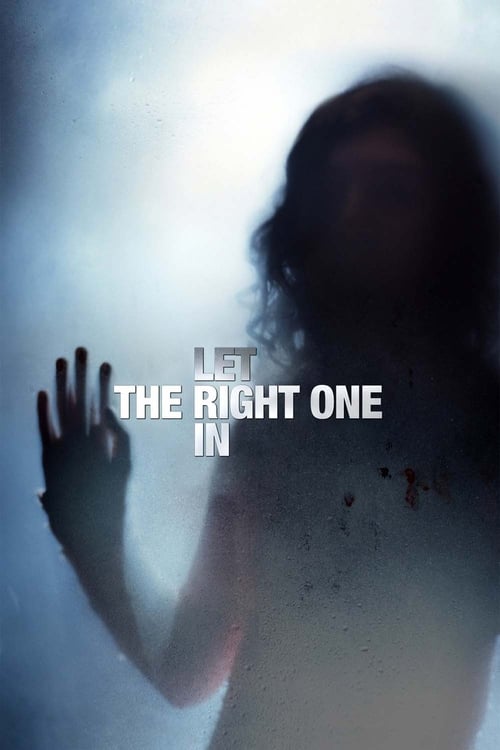
Let the Right One In (2008)
Directed by Tomas Alfredson
No — Let the Right One In is not woke, scoring 11 out of 100 on our wokeness meter.
Tomas Alfredson's 2008 adaptation of John Ajvide Lindqvist's novel arrives with a reputation for restraint, and the reputation holds.
Consciousness Markers
Eli's gender is left ambiguous ('I'm not a girl'), the character is androgynous, and the central romance carries queer-coded undertones, though the film treats this as unsettling vampire lore rather than identity advocacy.
Eli is a strong, predatory, female-presenting figure who rescues Oskar, but the film advances no feminist thesis and the dynamic is driven by horror and romance conventions.
The cast is uniformly Swedish and white, with no diversity-conscious casting; the only notable choice is the deliberately androgynous casting of Eli, which is aesthetic rather than representational in the modern sense.
The film is famously restrained and unsentimental, deliberately avoiding moralizing or message-delivery in favor of mood and ambiguity.
No engagement with race or racial themes whatsoever; the film is set in an ethnically homogeneous 1980s Stockholm suburb.
No environmental or climate themes present.
No critique of capitalism, wealth, or class economics; the story is a personal vampire romance.
No body-positivity messaging; the film's treatment of Eli's scarred, castrated body is one of horror and unease, not affirmation.
No neurodivergence themes; Oskar's isolation stems from bullying, not any coded condition.
No historical revisionism; the 1982 Swedish setting is period texture, not a re-reading of history.
Why it received this score
Tomas Alfredson's 2008 adaptation of John Ajvide Lindqvist's novel arrives with a reputation for restraint, and the reputation holds. Set in a snowbound Stockholm suburb in 1982, it follows a bullied boy named Oskar and the pale neighbor who moves in beside him. The camera sits still. The lighting stays diffused. Snow falls. At no point does a character turn toward us and explain the moral architecture of the proceedings. This is a vampire story that would prefer to be a love story, and a love story that would prefer to be a portrait of two lonely children in a cold country.
The cultural inventory here is thin, and the film seems content to leave it that way. The cast is uniformly Swedish, assembled through open auditions held across the country, with no representational agenda on display. Eli's gender remains deliberately unresolved, stated in a single line and never explained, and the central bond carries an undertone the film frames as unsettling folklore instead of identity. Eli is a predatory figure who rescues Oskar, which lends the story a certain charge, though no argument follows from it. Questions of race, class, climate, and bodily affirmation go unasked. The scar Oskar glimpses is presented as horror, not as instruction in self-acceptance.
What remains is craft. The sound design favors breathing and swallowing over score. The computer-generated imagery is sparse and nearly invisible. Alfredson stripped out the more explicit supernatural machinery of the book and kept the ambiguity, a choice few directors would make and fewer still would defend. The result resists the urge to instruct, and in an era of cinema that cannot stop instructing, that restraint reads almost as a provocation. We do not leave the theater improved. We leave it cold, quiet, and mildly unsettled. That is the intended effect, and it is achieved.
Analysis generated by our Consciousness Algorithm


Synopsis
When Oskar, a sensitive, bullied 12-year-old boy, meets his new neighbor, the mysterious and moody Eli, they strike up a friendship. Initially reserved with each other, Oskar and Eli slowly form a close bond, but it soon becomes apparent that she is no ordinary young girl.
Questions about Let the Right One In
Is Let the Right One In woke?
No — Let the Right One In is not woke, scoring 11 out of 100 on our wokeness meter. That earns it a verdict of Ultra Based.
Does Let the Right One In have any woke elements?
1 of the 10 markers register at 30 or above, led by LGBTQ+ Themes (35). On LGBTQ+ Themes: Eli's gender is left ambiguous ('I'm not a girl'), the character is androgynous, and the central romance carries queer-coded undertones, though the film treats this as unsettling vampire lore rather than identity advocacy.
How does Let the Right One In compare to other 2008 movies?
It ranks #83 of the 212 films from 2008 we've scored; their average is 12. The wokest is Milk (68).
How is the Woke Score calculated?
An AI-assisted process researches the film and its reception, scores it 0–100 on ten markers, then combines those into one 0–100 Woke Score. It measures a specific set of 2020s cultural themes, not film quality.