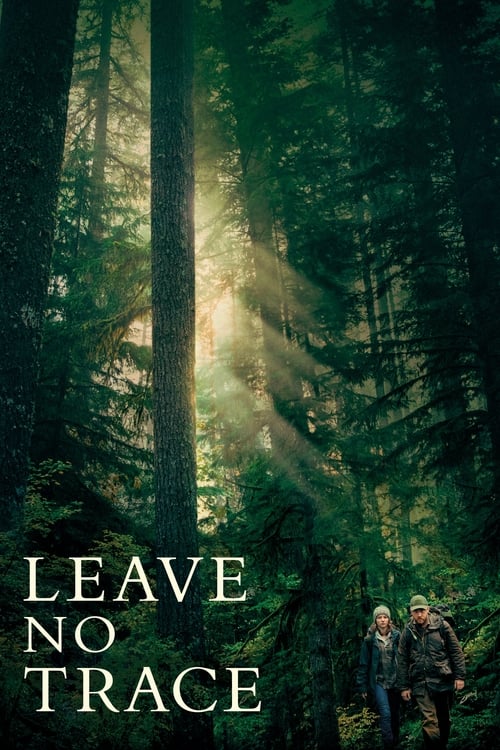
Leave No Trace (2018)
Directed by Debra Granik
No — Leave No Trace is not woke, scoring 12 out of 100 on our wokeness meter.
Debra Granik's Leave No Trace is a patient, nearly silent study of Will, a veteran with post-traumatic stress disorder, and Tom, his teenage daughter, living off the grid in an Oregon forest.
Consciousness Markers
Tom is a strong, self-possessed teenage girl whose arc centers on claiming her own life apart from her father, and the film is directed by Debra Granik; however, it avoids explicit feminist rhetoric.
The cast is almost entirely white and reflects the rural Oregon setting without any deliberate diversity casting; no marker evidence.
There are no LGBTQ+ characters, themes, or subtext in the film.
The film does not engage with race or racial consciousness as a theme.
Nature is a setting and survival resource, not a climate-crisis argument.
The film critiques bureaucratic social services and veteran neglect, but not capitalism or wealth inequality.
There is no body-positivity theme or messaging in the film.
PTSD and trauma are central, but the film does not frame them through the modern neurodivergence lens.
It is loosely inspired by a true story, but it does not revise or reinterpret history in the woke sense.
The film is restrained and empathetic rather than preachy; its social concerns are dramatized, not lectured.
Why it received this score
Debra Granik's Leave No Trace is a patient, nearly silent study of Will, a veteran with post-traumatic stress disorder, and Tom, his teenage daughter, living off the grid in an Oregon forest. The film is adapted from Peter Rock's novel, itself loosely drawn from a true story, but it has no interest in turning that material into a lesson. The cast is white and rural, which suits the setting and offers no deliberate representation casting. There are no LGBTQ characters or themes. Race is not engaged. The natural world is a refuge and a survival problem, not a climate argument. This is a film about two people, not a platform.
The social services that interrupt their lives are portrayed as wearying and bureaucratic, not as an indictment of capitalism or wealth inequality. There is no body-positivity thread. Will's trauma is treated as damage and grief, not through the modern language of neurodivergence. The story does not revise history. It does not lecture. Granik's restraint is the point. She lets the camera sit with the characters, and the emotional weight comes from what is not said. A lesser film would have added speeches, villains, or a redemption arc. This one simply watches.
The only faint contemporary pulse is Tom. She is a self-possessed girl who eventually chooses her own life apart from her father, and the film is directed by a woman with a clear feel for that interiority. That gives the movie a mild feminist undertow, though it never becomes rhetoric. When Tom tells Will that the same thing wrong with him is not wrong with her, the line lands because it has been earned, not announced. The ending, a silent food package left in the woods, is generous and unresolved. Leave No Trace is a serious, humane film. It is also, by the standards of current cultural signaling, almost entirely uninterested in being anything else.
Analysis generated by our Consciousness Algorithm


Synopsis
A father and daughter live a perfect but mysterious existence in Forest Park, a beautiful nature reserve near Portland, Oregon, rarely making contact with the world. But when a small mistake tips them off to authorities, they are sent on an increasingly erratic journey in search of a place to call their own.
Questions about Leave No Trace
Is Leave No Trace woke?
No — Leave No Trace is not woke, scoring 12 out of 100 on our wokeness meter. That earns it a verdict of Ultra Based.
Does Leave No Trace have any woke elements?
Very few. None of the 10 markers reaches 30, the level where a marker counts as present; the highest is Feminist Agenda at 20.
How does Leave No Trace compare to other 2018 movies?
It ranks #169 of the 325 films from 2018 we've scored; their average is 20. The wokest is Return (92).
How is the Woke Score calculated?
An AI-assisted process researches the film and its reception, scores it 0–100 on ten markers, then combines those into one 0–100 Woke Score. It measures a specific set of 2020s cultural themes, not film quality.