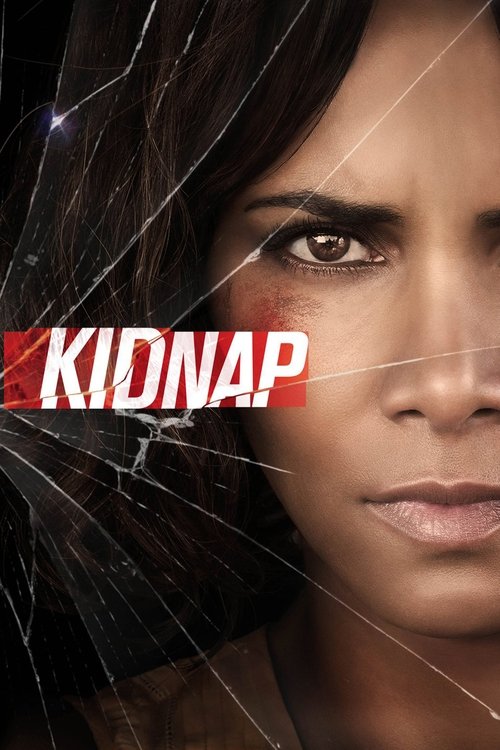
Kidnap (2017)
Directed by Luis Prieto
No — Kidnap is not especially woke, scoring 25 out of 100 on our wokeness meter.
Kidnap arrives as a specimen of the mid-budget action thriller, a 2017 vehicle built to let Halle Berry run, drive, and occasionally swim in pursuit of a stolen child.
Consciousness Markers
Halle Berry, a Black woman, headlines as the action lead, and the film received a ReFrame Stamp for gender representation; however, the story is largely colorblind and does not foreground identity.
The film centers a determined single mother as the action hero and earned a ReFrame Stamp for women's representation, but it offers little explicit feminist commentary beyond its female-driven premise.
No LGBTQ+ characters, themes, or subtext appear in the film.
The film features a Black lead and family but never engages with race, racism, or racial identity as a theme.
No environmental or climate-related themes are present.
No critique of capitalism, wealth, or class structures appears.
No body-positivity themes or diverse body representation are present.
No neurodivergent characters or themes are present.
The film is a fictional thriller with no historical revisionism.
The film is a straightforward action thriller and does not lecture on social issues.
Why it received this score
Kidnap arrives as a specimen of the mid-budget action thriller, a 2017 vehicle built to let Halle Berry run, drive, and occasionally swim in pursuit of a stolen child. The premise is elemental: a waitress and single mother loses her six-year-old at a carnival, watches him shoved into a green Mustang, and spends the next ninety minutes refusing to let go. Berry headlines as the action lead, itself a modest statistical event in a genre that prefers its avengers male, and the film carries a ReFrame Stamp for its representation of women along with an NAACP Image Award nomination for its star. The story makes little of that casting. The Dyson family is Black, and the screenplay treats race as though it were a rumor, never engaging it, never letting it shape a single beat. What we get is a colorblind chase picture in which identity is visible but silent.
The maternal drive supplies the engine, and the film leans hard on its single-mother heroine. She fights a kidnapper in a tunnel, drowns another in the water, and cracks a middleman across the skull with a shovel while announcing that he took the wrong kid. That is a female-led action premise with real conviction behind it, and yet the movie offers no argument, no thesis, no commentary on motherhood beyond the fact of it. The feminism here is structural, not rhetorical. It lives in who gets to drive the minivan, not in anything the minivan has to say.
Every other marker on the cultural ledger comes up empty. There is no climate anxiety, no indictment of the wealthy, no body-diverse casting, no neurodivergent character, no revision of history, no queer subtext, and no moment where the film pauses to instruct its audience on how to feel about the world. It is a B-movie with practical stunts, a $21 million budget, and a 35 percent approval rating, and it knows exactly what it is. The kidnapping ring is international, the villains are generic, and the moral is that a mother will do anything. We have seen this before, many times, and we will see it again. The sommelier notes a thin, serviceable vintage with a faint mineral finish of 1980s action cinema and almost no ideological aftertaste. It goes down easily. It leaves nothing behind.
Analysis generated by our Consciousness Algorithm


Synopsis
A mother (in her Minivan) stops at nothing to recover her kidnapped son.
Questions about Kidnap
Is Kidnap woke?
No — Kidnap is not especially woke, scoring 25 out of 100 on our wokeness meter. That earns it a verdict of Based.
Does Kidnap have any woke elements?
2 of the 10 markers register at 30 or above, led by Representation Casting (55) and Feminist Agenda (45). On Representation Casting: Halle Berry, a Black woman, headlines as the action lead, and the film received a ReFrame Stamp for gender representation; however, the story is largely colorblind and does not foreground identity.
How does Kidnap compare to other 2017 movies?
It ranks #74 of the 309 films from 2017 we've scored; their average is 19. The wokest is I Am Not Your Negro (92).
How is the Woke Score calculated?
An AI-assisted process researches the film and its reception, scores it 0–100 on ten markers, then combines those into one 0–100 Woke Score. It measures a specific set of 2020s cultural themes, not film quality.