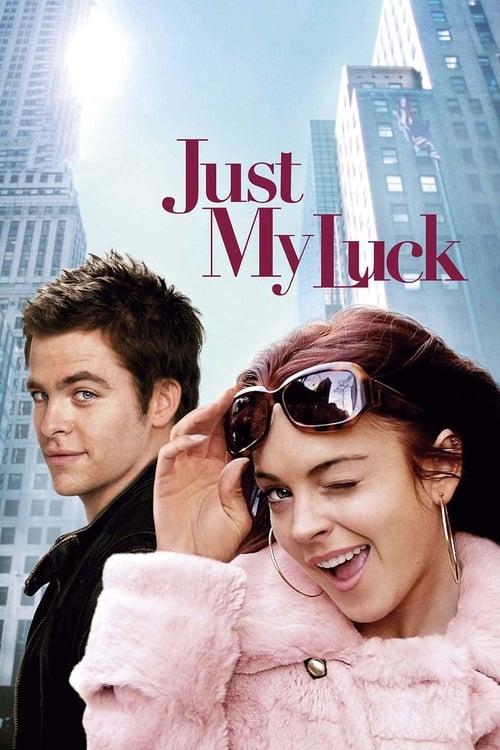
Just My Luck (2006)
Directed by Donald Petrie
No — Just My Luck is not woke, scoring 4 out of 100 on our wokeness meter.
Just My Luck arrives from 2006, a year when a romantic comedy could still be built on the premise that a Manhattan publicist has too much good fortune and a janitor has too little, and that a single kiss at a masquerade ball might redistribute both.
Consciousness Markers
The cast includes minority actors such as Faizon Love and Carlos Ponce in supporting roles, but this is incidental rather than a deliberate diversity agenda.
No LGBTQ+ themes or characters are present.
The film features a female lead but offers no feminist critique or agenda.
No racial themes or commentary are present.
No climate or environmental themes are present.
No anti-capitalist or eat-the-rich messaging is present.
No body positivity themes are present.
No neurodivergence themes or characters are present.
No historical revisionism is present.
The film does not lecture or preach on social issues.
Why it received this score
Just My Luck arrives from 2006, a year when a romantic comedy could still be built on the premise that a Manhattan publicist has too much good fortune and a janitor has too little, and that a single kiss at a masquerade ball might redistribute both. Lindsay Lohan plays Ashley, who loses her job, her apartment, and her dignity in quick succession once the luck transfers to Chris Pine's Jake, unpaid manager of the band McFly. The plot proceeds with the grim efficiency of a fortune cookie. Critics were unkind at the time, and the intervening years have not improved the film's standing. It is a machine for generating mild embarrassment, and it runs without complaint.
For those of us who catalogue the era's social signifiers, this one is a barren field. The cast includes Faizon Love and Carlos Ponce in supporting roles, and they are simply present, doing their jobs, unremarked upon by anyone. That is the whole of the film's demographic ambition. There is no argument to be made about gender, no economic grievance, no environmental anxiety, no reconsideration of the historical record. The movie wants only to place two attractive people inside a series of contrived inconveniences and then marry them off. Its most political gesture is the casting of a pop band as themselves in an extended advertisement for their own catalogue.
The result is a document of a vanished sensibility, when a studio could release something this weightless and expect nothing more from it than a B CinemaScore and a modest worldwide gross. There is something almost restful about it. No lessons are delivered. No viewer is scolded. The film ends with water raining down on the happy couple from a broken pipe, and the camera lingers as though this were a joke about karma. It is not. It is merely water.
Analysis generated by our Consciousness Algorithm


Synopsis
Manhattanite Ashley is known to many as the luckiest woman around. After a chance encounter with a down-and-out young man, however, she realizes that she's swapped her fortune for his.
Questions about Just My Luck
Is Just My Luck woke?
No — Just My Luck is not woke, scoring 4 out of 100 on our wokeness meter. That earns it a verdict of Ultra Based.
Does Just My Luck have any woke elements?
Very few. None of the 10 markers reaches 30, the level where a marker counts as present; the highest is Representation Casting at 10.
How does Just My Luck compare to other 2006 movies?
It ranks #147 of the 211 films from 2006 we've scored; their average is 11. The wokest is An Inconvenient Truth (92).
How is the Woke Score calculated?
An AI-assisted process researches the film and its reception, scores it 0–100 on ten markers, then combines those into one 0–100 Woke Score. It measures a specific set of 2020s cultural themes, not film quality.