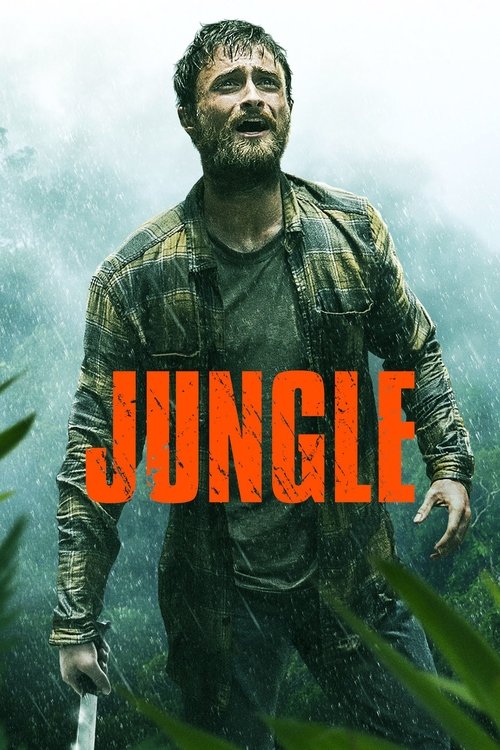
Jungle (2017)
Directed by Greg McLean
No — Jungle is not woke, scoring 0 out of 100 on our wokeness meter.
Jungle arrives in 2017 as a survival picture in the oldest sense of the term: a man, a river, a machete he does not have, and two weeks of hunger.
Consciousness Markers
The cast is led by Daniel Radcliffe as an Israeli adventurer, with supporting Bolivian and local roles that exist naturally in the survival story rather than as deliberate inclusive casting.
There are no LGBTQ+ themes, characters, or subtext in the film.
The film is a male-dominated survival narrative and contains no feminist agenda or gender-justice commentary.
Indigenous and Bolivian characters appear as part of the setting, but the film does not engage in racial consciousness or systemic-racism commentary.
The Amazon jungle is a survival threat and backdrop, not a vehicle for climate advocacy or environmental lecturing.
There is no critique of capitalism, wealth, or class exploitation in the film.
The film depicts physical deterioration and injury in survival terms, with no body-positivity messaging.
No neurodivergence themes or neurodiverse representation are present.
The film is based on a true survival account and makes minor dramatic changes, but it does not engage in ideological revisionist history.
The film aims for visceral survival drama rather than preaching or delivering social lectures.
Why it received this score
Jungle arrives in 2017 as a survival picture in the oldest sense of the term: a man, a river, a machete he does not have, and two weeks of hunger. Daniel Radcliffe plays Yossi Ghinsberg, an Israeli adventurer who talks three fellow travelers into a Bolivian expedition in 1981, and the film asks nothing of him beyond a willingness to be rained on, bitten, and reduced to a skeleton. There is no thesis here. No argument is being made about the world. It is a curious artifact, like finding a rotary telephone in a drawer.
The supporting cast, Bolivian and otherwise, moves through the frame as weather moves through the frame. A village appears, is visited, and recedes. Nobody explains anybody. The jungle itself is a threat and not a metaphor, which in this era feels almost perverse. When Yossi's body begins to fail, the film photographs the ruin plainly, without a single reassuring glance at the camera. The hallucinations that visit him in his solitude are private grief, not commentary. The Austrian guide Karl turns out to be a liar and possibly worse, and the film lets that land as a fact about one man, not a system.
The result is a film that seems to have been made by people who had not received the memo. There is no messaging, no corrective, no moment where a character turns to the audience to explain what we should think. The epilogue, which notes that Marcus and Karl were never seen again and dedicates the film to Marcus's memory, does its work quietly. Radcliffe remains, wet and skeletal, and the river does not care. We are left to classify it, and the classification is brief. A sommelier presented with a glass of clear water can still perform the ritual, but there is only so much to say about the vintage. This is a film about a man who got lost, and it is content to remain one. The absence of instruction is, in its own muted way, the whole of the experience, and the experience is enough for anyone who came for the rain and the leeches and the slow erasure of a man's body by a place that has no opinion about him at all. We note it, we file it, and we move to the next bottle.
{"thematic_tags": ["true_story", "book_adaptation"]}
Analysis generated by our Consciousness Algorithm


Synopsis
In 1981, an enthusiastic young adventurer follows his dreams into the Bolivian Amazon jungle with two friends and a guide with a mysterious past. Their journey quickly turns into a terrifying ordeal as the darkest elements of human nature and the deadliest threats of the wilderness lead to an all-out fight for survival.
Questions about Jungle
Is Jungle woke?
No — Jungle is not woke, scoring 0 out of 100 on our wokeness meter. That earns it a verdict of Ultra Based.
Does Jungle have any woke elements?
No. All 10 markers score zero.
How does Jungle compare to other 2017 movies?
It ranks #281 of the 309 films from 2017 we've scored; their average is 19. The wokest is I Am Not Your Negro (92).
How is the Woke Score calculated?
An AI-assisted process researches the film and its reception, scores it 0–100 on ten markers, then combines those into one 0–100 Woke Score. It measures a specific set of 2020s cultural themes, not film quality.