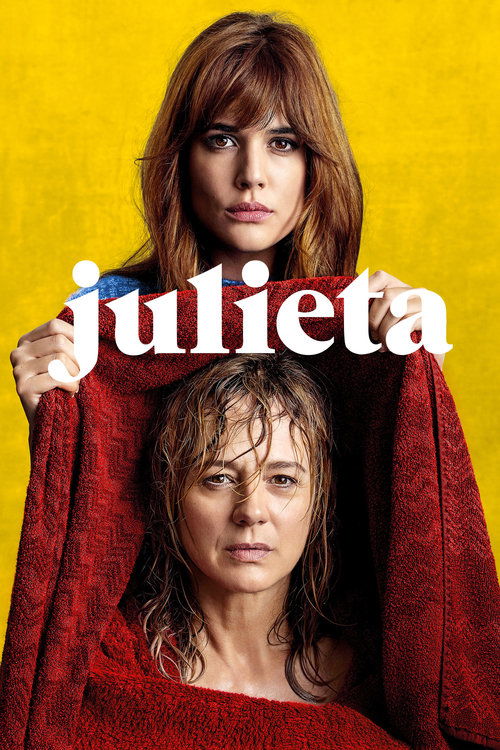
Julieta (2016)
Directed by Pedro Almodóvar
No — Julieta is not woke, scoring 10 out of 100 on our wokeness meter.
Julieta presents a grueling exercise in cinematic sorrow, a sprawling meditation on memory and maternal estrangement that feels deliberately resistant to the current clamor for ideological messaging.
Consciousness Markers
Almodóvar's self-described 'cinema of women' centers a mother's inner life and female bonds, but this is a traditional melodrama of grief and estrangement rather than a modern feminist polemic.
A same-sex relationship between Antía and Beatriz is revealed late in the plot and carries some emotional weight, but it is a narrative twist rather than an identity-forward theme.
The cast is entirely Spanish and European, assembled naturally for a Madrid-set melodrama rather than to satisfy any diversity mandate; no deliberate representation casting is evident.
Almodóvar deliberately stripped the film of humor and message-mongering, aiming for a dry, restrained melodrama; there is essentially no preaching.
Race plays no role in the story; the film is concerned with family, memory, and loss, not racial dynamics.
A storm at sea functions as tragic plot mechanics, not environmental messaging; there is no climate theme.
No economic critique or class-based 'eat the rich' content appears in this domestic drama.
The film does not engage with body image or body-positivity themes.
Depression, grief, and a mother's Alzheimer's appear as illness and sorrow, not as neurodivergent identity framed for advocacy.
The film is a contemporary personal story with no historical revisionism.
Why it received this score
Julieta presents a grueling exercise in cinematic sorrow, a sprawling meditation on memory and maternal estrangement that feels deliberately resistant to the current clamor for ideological messaging. Director Pedro Almodóvar crafts a meticulously paced drama where the weight of grief is the sole currency. The film is a study of the internal landscape of a woman navigating decades of personal loss, focusing on the quiet fracturing of female bonds. While the central premise anchors itself in a traditional melodrama, it is clear this is not a modern progressive statement; the emotional resonance exists within the confines of personal tragedy, not societal upheaval.
The progressive markers here are as subtle as the protagonist's shifting memory. We observe a self-described cinema of women, which serves as a foundation for the narrative but rarely ascends to a modern feminist polemic. There is a small subplot involving a same-sex relationship that functions as a narrative complication rather than an identity-driven thematic core. Critically, the film refuses to engage with the prevailing cultural obsessions of the 2020s. It is entirely devoid of racial dynamics, climate anxieties, or critiques of global economic disparity. The director maintains a severe restraint, ensuring the film remains rooted in its domestic drama rather than slipping into the territory of political sermonizing.
This is a profoundly effective piece of filmmaking precisely because of its lack of cultural baggage. It is an unapologetic exploration of sorrow, where the only 'crusade' occurring is the relentless search for a missing piece of a daughter's life. The execution is highly polished, delivering a sophisticated, restrained portrait of despair. It is a work that prioritizes the texture of human decay and complicated affection over any contemporary demand for urgent social consciousness. It is an old kind of cinema, and for that, we must grant it a certain grim respect.
Analysis generated by our Consciousness Algorithm


Synopsis
The film spans 30 years in Julieta’s life from a nostalgic 1985 where everything seems hopeful, to 2015 where her life appears to be beyond repair and she is on the verge of madness.
Questions about Julieta
Is Julieta woke?
No — Julieta is not woke, scoring 10 out of 100 on our wokeness meter. That earns it a verdict of Ultra Based.
Does Julieta have any woke elements?
Very few. None of the 10 markers reaches 30, the level where a marker counts as present; the highest is Feminist Agenda at 25.
How does Julieta compare to other 2016 movies?
It ranks #151 of the 285 films from 2016 we've scored; their average is 16. The wokest is 13th (92).
How is the Woke Score calculated?
An AI-assisted process researches the film and its reception, scores it 0–100 on ten markers, then combines those into one 0–100 Woke Score. It measures a specific set of 2020s cultural themes, not film quality.