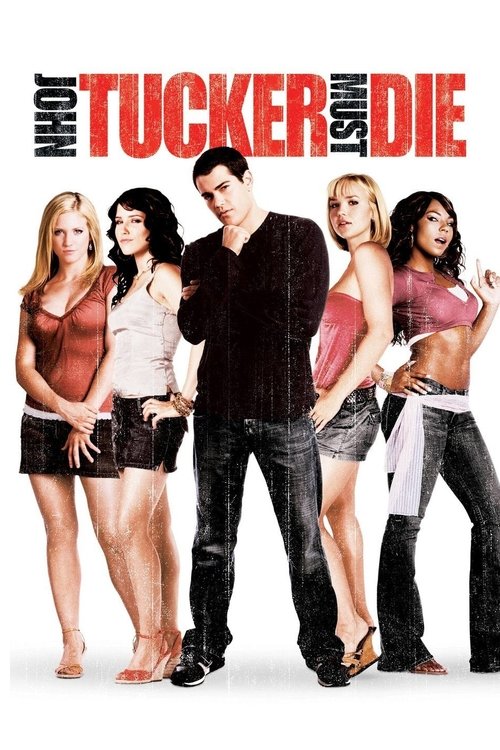
John Tucker Must Die (2006)
Directed by Betty Thomas
No — John Tucker Must Die is not especially woke, scoring 25 out of 100 on our wokeness meter.
The 2006 teen comedy John Tucker Must Die arrives with a premise that reads like a focus group transcript: three girls from different cliques discover they share a boyfriend, and they enlist a fourth to break his heart.
Consciousness Markers
The premise is a sisterhood of wronged girls uniting against a serial-cheating chauvinist, and Kate's arc culminates in the mild realization that being with or destroying John still centers him. A female director shepherds it, but critics noted it can't sustain its girl-power convictions.
The film assembles a deliberately diverse ensemble — a Black actress (Ashanti) as one of the three wronged girls and a multi-clique cast — but this diversity exists without comment; it's conventional teen-comedy casting, not a statement.
Any moral about honesty and self-respect is delivered lightly and in service of comedy; the film mostly prioritizes gags over messaging.
No LGBTQ+ characters or themes appear anywhere in the plot.
The film features a diverse cast but engages in no discussion of race, racism, or racial identity whatsoever.
Beth is tagged as a 'liberal vegan activist,' but this is a comedic clique label rather than any engagement with environmental or climate themes.
No economic critique or class commentary is present; the story is entirely about romance and social status at a suburban high school.
The makeover-and-cheerleader plot actively reinforces conventional beauty standards rather than challenging them; there is no body-positivity messaging.
No neurodivergent characters or themes are depicted.
Though loosely inspired by Shakespeare's Merry Wives of Windsor, the film makes no attempt to revise or reinterpret historical record.
Why it received this score
The 2006 teen comedy John Tucker Must Die arrives with a premise that reads like a focus group transcript: three girls from different cliques discover they share a boyfriend, and they enlist a fourth to break his heart. Betty Thomas directs with the efficient shrug of a veteran who has done this before. The film is loose in its debts to Shakespeare's The Merry Wives of Windsor and tighter in its debts to every high school revenge picture of the preceding decade.
The ensemble is noticeably integrated for its genre and era, with Ashanti cast as one of the wronged and a supporting roster drawn from assorted social strata. The film never mentions this. Race is not a subject here, and the casting functions as ordinary teen-comedy arithmetic. The gender politics are more deliberate and more muddled. A sisterhood of aggrieved girls unites against a serial cheater, and the script gestures toward the idea that a woman's life should not orbit a man. It cannot hold the pose. Kate's closing realization, that plotting against John and dating John amount to the same devotion, is a genuine flicker of self-awareness, and the film immediately trades it for a cake fight.
Any ethical instruction is administered lightly, in the manner of a vitamin slipped into a milkshake. The movie wants to be liked more than it wants to be right. It sits in the middle of its own ambitions, a revenge comedy that flinches at revenge and a romance that distrusts romance. We are left with a competent, amiable artifact of the Myspace era, an artifact that raises questions of female solidarity and then declines to answer them. The classification is straightforward. The film gestures at social consciousness the way a teenager gestures at a curfew, briefly and without conviction. The sommelier notes a pleasant nose of girl power, a thin body, and a finish that evaporates before the credits finish rolling.
Analysis generated by our Consciousness Algorithm


Synopsis
After discovering they are all dating the same same guy, three popular students from different cliques band together for revenge, so they enlist the help of a new gal in town and conspire to break the jerk's heart, while destroying his reputation.
Questions about John Tucker Must Die
Is John Tucker Must Die woke?
No — John Tucker Must Die is not especially woke, scoring 25 out of 100 on our wokeness meter. That earns it a verdict of Based.
Does John Tucker Must Die have any woke elements?
2 of the 10 markers register at 30 or above, led by Feminist Agenda (45) and Representation Casting (35). On Feminist Agenda: The premise is a sisterhood of wronged girls uniting against a serial-cheating chauvinist, and Kate's arc culminates in the mild realization that being with or destroying John still centers him.
How does John Tucker Must Die compare to other 2006 movies?
It ranks #21 of the 211 films from 2006 we've scored; their average is 11. The wokest is An Inconvenient Truth (92).
How is the Woke Score calculated?
An AI-assisted process researches the film and its reception, scores it 0–100 on ten markers, then combines those into one 0–100 Woke Score. It measures a specific set of 2020s cultural themes, not film quality.