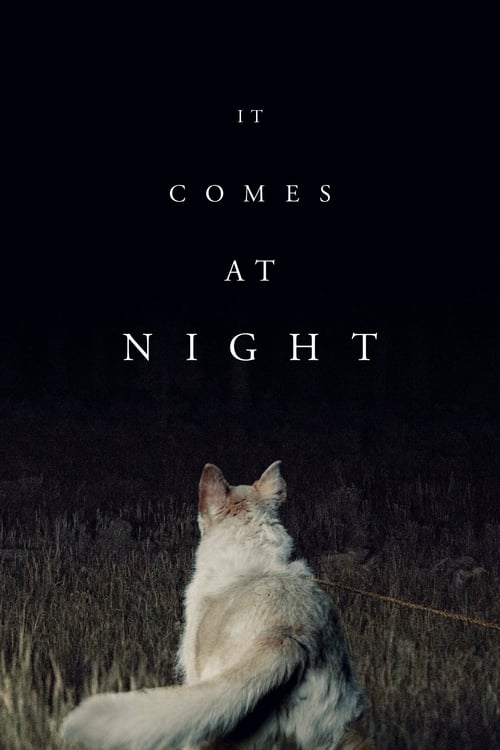
It Comes at Night (2017)
Directed by Trey Edward Shults
No — It Comes at Night is not woke, scoring 8 out of 100 on our wokeness meter.
It Comes at Night arrived in 2017 behind a marketing campaign that promised monsters and delivered instead a study in grief, paranoia, and the slow dissolution of trust between two families sharing a boarded-up house.
Consciousness Markers
A mixed-race family anchors the film, with Carmen Ejogo and Kelvin Harrison Jr. cast alongside Joel Edgerton, but the diversity is unremarked upon and organic to the story rather than a statement.
Sarah is given agency—she advocates taking in the strangers, wields a gun, and shoots Will—but the film has no feminist thesis; her competence is simply part of the ensemble's desperate pragmatism.
Shults favors minimalist dread over sermonizing; whatever thematic resonance exists about paranoia and distrust is delivered through atmosphere rather than explicit messaging.
No LGBTQ+ characters, themes, or subtext of any kind appear in this grim survivalist chamber piece.
Race is never addressed, examined, or made thematically relevant; the mixed-race family exists without a single line of commentary.
The apocalypse here is a contagious disease, not ecological collapse; no environmental themes are present.
There is no economic critique—the conflict is entirely about fear, trust, and contagion among individuals, not systems of wealth or power.
No body-positivity themes; the body is treated as a vector of disease and decay, which is the thematic opposite of the marker.
Travis suffers nightmares and possible infection-induced delirium, but these are horror mechanisms, not a depiction or advocacy of neurodivergence.
The film is a fictional, timeless post-apocalyptic tale with no historical revisionism whatsoever.
Why it received this score
It Comes at Night arrived in 2017 behind a marketing campaign that promised monsters and delivered instead a study in grief, paranoia, and the slow dissolution of trust between two families sharing a boarded-up house. Trey Edward Shults wrote it in the aftermath of his father's death, and the film carries that weight without ever announcing it. Audiences, having been sold a creature feature, answered with a CinemaScore of D. Critics answered with admiration. The split says something about the picture and rather more about the audience.
The cast is notably mixed. Carmen Ejogo and Kelvin Harrison Jr. play Sarah and Travis opposite Joel Edgerton's Paul, and the film never mentions it. No line, no glance, no gesture acknowledges the arrangement. The household simply is what it is. Sarah is competent and armed, she argues for taking the strangers in, and she fires the shot that ends Will. She is not a symbol. She is a woman in a house with a gun and a dead father, and the screenplay treats her competence as a fact of survival, not a position to be defended.
The rest of the modern cultural inventory goes unclaimed. No economic critique, no ecological lament, no revisionist accounting of the past. The body here is a vector of contamination, which runs against the current enthusiasm for the body as a site of celebration. The illness is not a metaphor for anything socially legible. It is illness, and it kills everyone in the end. Shults prefers atmosphere to argument, and his themes arrive through silence, locked doors, and a dog barking at nothing. On the matter of sermonizing, the picture is nearly innocent. Whatever it wishes to say about paranoia and distrust, it says by making us feel them. A grim, disciplined work, and we file it accordingly.
{"thematic_tags": []}
Analysis generated by our Consciousness Algorithm
Part of


Synopsis
Secure within a desolate home as an unnatural threat terrorizes the world, a man has established a tenuous domestic order with his wife and son, but this will soon be put to test when a desperate young family arrives seeking refuge.
Questions about It Comes at Night
Is It Comes at Night woke?
No — It Comes at Night is not woke, scoring 8 out of 100 on our wokeness meter. That earns it a verdict of Ultra Based.
Does It Comes at Night have any woke elements?
Very few. None of the 10 markers reaches 30, the level where a marker counts as present; the highest is Representation Casting at 22.
How does It Comes at Night compare to other 2017 movies?
It ranks #184 of the 309 films from 2017 we've scored; their average is 19. The wokest is I Am Not Your Negro (92).
How is the Woke Score calculated?
An AI-assisted process researches the film and its reception, scores it 0–100 on ten markers, then combines those into one 0–100 Woke Score. It measures a specific set of 2020s cultural themes, not film quality.