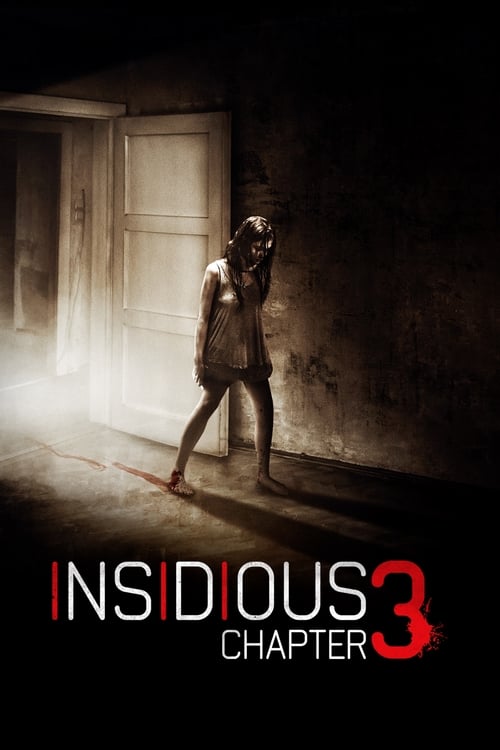
Insidious: Chapter 3 (2015)
Directed by Leigh Whannell
No — Insidious: Chapter 3 is not woke, scoring 5 out of 100 on our wokeness meter.
A prequel to a haunting we have already sat through twice, Insidious: Chapter 3 arrives with the resigned air of a franchise clearing its throat.
Consciousness Markers
The film centers on two female characters—teenager Quinn and the older psychic Elise—but this is standard horror-protagonist construction rather than a feminist statement. No overt gender-justice messaging.
The cast is overwhelmingly white, with the notable exception of a modestly diverse supporting presence. No deliberate diverse casting agenda is evident.
The film has a sincere emotional undercurrent about grief and letting go, but it never pauses to lecture or moralize to the audience.
There are no LGBTQ+ characters, themes, or subtext anywhere in the film.
Race is not a subject or theme of the film in any form.
There is no environmental or climate content whatsoever.
The film contains no critique of wealth, class, or capitalism. The fraud-hunter duo is a comedic device, not economic commentary.
No body-positivity themes; the horror imagery around the 'Man Who Can't Breathe' concerns supernatural affliction, not body acceptance.
A supporting character has dementia, but this is used as a creepy atmospheric device, not as neurodivergent representation or advocacy.
The film is a fictional supernatural horror with no historical subject matter to revise.
Why it received this score
A prequel to a haunting we have already sat through twice, Insidious: Chapter 3 arrives with the resigned air of a franchise clearing its throat. Leigh Whannell, who wrote the earlier entries, takes the director's chair for the first time and points the camera at a new family: Quinn Brenner, a teenager with a dead mother and theatrical ambitions, and Elise Rainier, the psychic who would prefer to stay retired. Both are women. Neither is a statement. Horror has always handed its screams to young actresses, and casting an older woman as the reluctant medium is a tradition older than the genre's current marketing. We note the demographic composition of the cast, which is very white, and we note that no particular effort was made to alter it. That is the entire ledger on that front.
The film's real investment is grief, which it handles with a sincerity that occasionally embarrasses the jump scares surrounding it. Quinn's longing for her mother drives the plot. Elise's dead husband appears in the Further, whispering encouragement toward suicide, and she recognizes the trick. This is competent emotional engineering, and it never once stops to instruct the audience on how to feel about it. A neighbor with dementia wanders through the corridors muttering cryptic warnings, a device borrowed from every haunted-house picture since the silent era, deployed here for atmosphere and nothing else. The fraud-hunting duo of Specs and Tucker provide comic relief and are revealed as hucksters, which is a plot point, not an economic thesis.
What remains is a serviceable haunted-house machine that understands its own mechanics. It is the third chapter of a Blumhouse property, which tells you the budget was modest and the returns were not. The scares are loud, the resolutions are soft, and the emotional core is genuine enough to carry the thing across the finish line. We have seen worse. We have seen better. We have, at this point, seen most of it before.
Analysis generated by our Consciousness Algorithm
Part of


Synopsis
A prequel set before the haunting of the Lambert family that reveals how gifted psychic Elise Rainier reluctantly agrees to use her ability to contact the dead in order to help a teenage girl who has been targeted by a dangerous supernatural entity.
Questions about Insidious: Chapter 3
Is Insidious: Chapter 3 woke?
No — Insidious: Chapter 3 is not woke, scoring 5 out of 100 on our wokeness meter. That earns it a verdict of Ultra Based.
Does Insidious: Chapter 3 have any woke elements?
Very few. None of the 10 markers reaches 30, the level where a marker counts as present; the highest is Feminist Agenda at 12.
How does Insidious: Chapter 3 compare to other 2015 movies?
It ranks #217 of the 289 films from 2015 we've scored; their average is 15. The wokest is Chi-Raq (78).
Is Insidious: Chapter 3 the most woke Insidious movie?
No. It ranks #3 of the 6 Insidious films we've scored; the wokest is Insidious: Out of the Further (18).