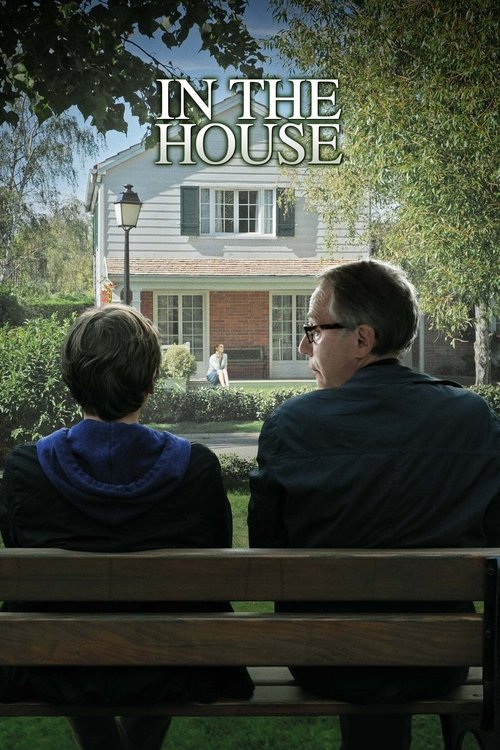
In the House (2012)
Directed by François Ozon
No — In the House is not woke, scoring 18 out of 100 on our wokeness meter.
François Ozon's In the House is a tidy, chilly machine about a sixteen-year-old named Claude who talks his way into a classmate's family and then writes about it, week by week, for the amusement of his literature teacher.
Consciousness Markers
The film carries a gay theme and homoerotic undercurrents through Claude's ambiguous sexuality and the teacher-student fixation, though it is not framed as modern LGBTQ+ advocacy.
The cast is a white French ensemble with no meaningful racial or ethnic representation as a thematic element.
Female characters function largely as objects of male desire and narrative manipulation, with no feminist agenda present.
Race and racial identity are not addressed or made visible in the film's story or themes.
There is no environmental or climate-related theme in the film.
The film does not engage with class struggle, economic inequality, or anti-capitalist critique.
Body image, size acceptance, or related themes are absent from the film.
Neurodivergence is not a theme or character element in the film.
The film is a contemporary fictional story and does not revise or reinterpret historical events.
Despite featuring a literature teacher, the film is not didactic or preachy about social issues.
Why it received this score
François Ozon's In the House is a tidy, chilly machine about a sixteen-year-old named Claude who talks his way into a classmate's family and then writes about it, week by week, for the amusement of his literature teacher. Germain is bored and vain, and the boy's essays give him back a reason to live. The film watches this arrangement with the patience of a man inspecting a piece of furniture for hidden drawers. It is about storytelling as trespass, and it has no interest in improving anybody.
Where the film does trip the instruments, it does so faintly, and in the key of appetite. Claude's sexuality is ambiguous, and the fixation between him and his teacher carries a homoerotic charge that the camera does not bother to deny. This is not advocacy. It is atmosphere, the humid air of a story about desire and control, and it arrives without a single speech about identity or acceptance. The film is far too pleased with its own mischief to stop and explain itself.
Elsewhere the ledger is blank. The women here are surfaces and appetites, props in a boy's composition. Race goes unmentioned. Class exists only as the texture of a bourgeois living room. Nobody worries about the planet, the body, the brain, or the past. And Germain, for all that he teaches literature, never once turns to the audience to instruct it. His only sermon concerns the pleasure of a good sentence, which is a sermon this critic can sit through. The film is elegant, cruel, and entirely innocent of the era's moral vocabulary.
Thematic tags: none apply. The screenplay derives from a stage play, which falls outside the adaptation categories under consideration, and the film won no Academy Award and reached no domestic box office summit. It stands alone, unsequeled, unremade, and unburdened by real events or capes.
Analysis generated by our Consciousness Algorithm


Synopsis
A sixteen-year-old boy insinuates himself into the house of a fellow student from his literature class and writes about it in essays for his French teacher. Faced with this gifted and unusual pupil, the teacher rediscovers his enthusiasm for his work, but the boy’s intrusion will unleash a series of uncontrollable events.
Questions about In the House
Is In the House woke?
No — In the House is not woke, scoring 18 out of 100 on our wokeness meter. That earns it a verdict of Ultra Based.
Does In the House have any woke elements?
1 of the 10 markers register at 30 or above, led by LGBTQ+ Themes (30). On LGBTQ+ Themes: The film carries a gay theme and homoerotic undercurrents through Claude's ambiguous sexuality and the teacher-student fixation, though it is not framed as modern LGBTQ+ advocacy.
How does In the House compare to other 2012 movies?
It ranks #46 of the 230 films from 2012 we've scored; their average is 12. The wokest is Killing Them Softly (92).
How is the Woke Score calculated?
An AI-assisted process researches the film and its reception, scores it 0–100 on ten markers, then combines those into one 0–100 Woke Score. It measures a specific set of 2020s cultural themes, not film quality.