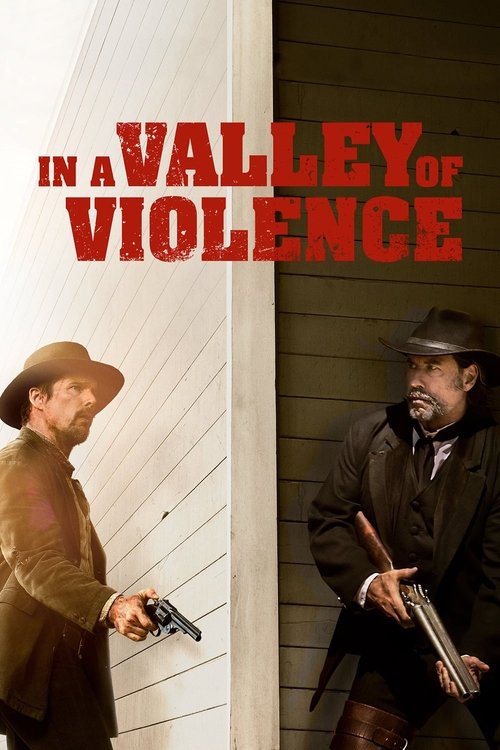
In a Valley of Violence (2016)
Directed by Ti West
No — In a Valley of Violence is not woke, scoring 6 out of 100 on our wokeness meter.
In a Valley of Violence presents a meticulously crafted exercise in genre adherence, offering a dusty landscape where contemporary progressive sensibilities are entirely absent.
Consciousness Markers
Mary-Anne is given some agency, sheltering Paul and ultimately shooting Gilly to save him, but the film remains a male-driven revenge narrative with the women largely serving the protagonist's arc.
The film is a lean genre exercise with a faint redemption note ('we could all use a little saving') but no overt moralizing or preaching.
The cast is overwhelmingly white, led by Ethan Hawke, John Travolta, Taissa Farmiga, and Karen Gillan, with no diverse casting choices made for representation's sake.
There are no LGBTQ+ characters, relationships, or themes anywhere in this frontier revenge Western.
The film engages no racial themes; its Old West town is populated entirely by white characters with no commentary on race.
No environmental or climate themes are present in this desert-set genre exercise.
A throwaway gag about a salesman tossed out of town for overpricing his wares is the only economic note, and it carries no anti-capitalist message.
No body positivity themes or messaging appear in the film.
No neurodivergent characters or themes are depicted.
This is a straightforward homage to classic Westerns rather than a revisionist reworking of history or the genre's myths.
Why it received this score
In a Valley of Violence presents a meticulously crafted exercise in genre adherence, offering a dusty landscape where contemporary progressive sensibilities are entirely absent. We find ourselves in a landscape populated exclusively by white actors and even whiter thematic preoccupations, making it a deeply traditional Western that resists any attempt at modern cultural commentary. The film eschews the usual demands for representation, leaving its small, isolated town populated by characters who exist solely to advance a narrative of personal vengeance. There is no engagement with climate change, race, or the socio-economic anxieties of late capitalism. It is a singular dedication to the form.
Where the film does find some measure of cultural awareness is in the agency granted to its few female characters. Mary-Anne’s role as the innkeeper provides a rare moment of agency within this otherwise male-driven revenge narrative. Her actions carry the weight of a quiet, necessary defiance against the surrounding brutality. This is a notable instance of a female character making definitive choices that impact the plot, even if the surrounding framework remains an unapologetic homage to classic frontier tropes.
Overall, the piece is a lean, functional piece of cinema. It provides a faint, almost vestigial note of moral consideration, perhaps suggesting that even this brutal cycle of violence could benefit from a small element of mercy. But this is not a film designed to challenge the audience with sweeping social critiques. It is a self-contained piece of genre work, an elegant piece of traditional filmmaking that prioritizes atmosphere over ideological statement.
Analysis generated by our Consciousness Algorithm
Part of


Synopsis
The story of a drifter named Paul who arrives in a small town seeking revenge on the thugs who murdered his friend. Sisters Mary Anne and Ellen, who run the town's hotel, help Paul in his quest for vengeance.
Questions about In a Valley of Violence
Is In a Valley of Violence woke?
No — In a Valley of Violence is not woke, scoring 6 out of 100 on our wokeness meter. That earns it a verdict of Ultra Based.
Does In a Valley of Violence have any woke elements?
Very few. None of the 10 markers reaches 30, the level where a marker counts as present; the highest is Feminist Agenda at 10.
How does In a Valley of Violence compare to other 2016 movies?
It ranks #202 of the 285 films from 2016 we've scored; their average is 16. The wokest is 13th (92).
How is the Woke Score calculated?
An AI-assisted process researches the film and its reception, scores it 0–100 on ten markers, then combines those into one 0–100 Woke Score. It measures a specific set of 2020s cultural themes, not film quality.