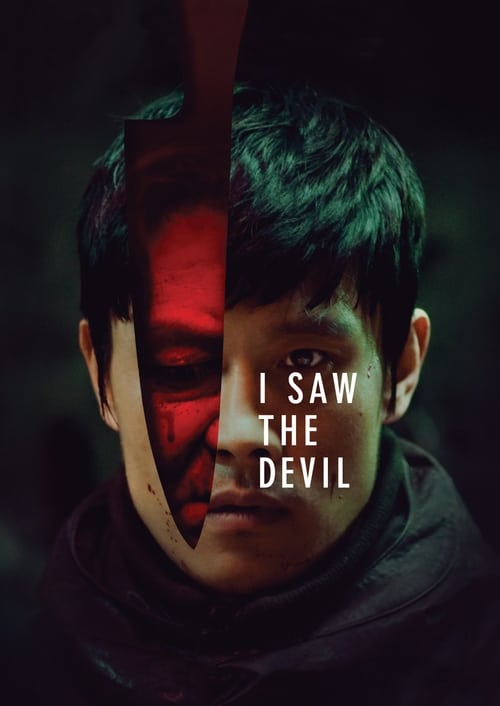
I Saw the Devil (2010)
Directed by Kim Jee-woon
No — I Saw the Devil is not woke, scoring 0 out of 100 on our wokeness meter.
I Saw the Devil arrives from 2010, a South Korean revenge thriller in which a National Intelligence Service agent named Soo-hyun learns that his fiancée has been dismembered by a school bus driver with a taste for slow cruelty.
Consciousness Markers
The cast is entirely Korean, reflecting the film's natural setting rather than any deliberate modern diversity or inclusion agenda.
There are no LGBTQ+ themes, characters, or subtext in the film.
Women are primarily victims of brutal violence; the film offers no feminist critique or empowerment narrative.
The film does not engage with racial identity, systemic racism, or racial justice themes.
There is no environmental or climate-related messaging in the film.
The film contains no critique of capitalism, wealth inequality, or corporate power.
The film does not address body image, size acceptance, or related themes.
The killer's psychopathy is portrayed as monstrous evil, not as a neurodivergent identity or social justice concern.
The film is a fictional revenge thriller with no historical revisionism.
The film is visceral and morally bleak rather than preachy or didactic about social issues.
Why it received this score
I Saw the Devil arrives from 2010, a South Korean revenge thriller in which a National Intelligence Service agent named Soo-hyun learns that his fiancée has been dismembered by a school bus driver with a taste for slow cruelty. He does not call a lawyer. He does not organize a vigil. He implants a tracking device in the man's stomach and begins a campaign of escalating mutilation designed to prolong suffering. Kim Jee-woon films all of this with a cold, immaculate eye, and the result is one of the least consoling two and a half hours available in the modern cinema.
There is nothing here for the cultural auditor to file. The cast is Korean because the film is Korean. The women exist to be brutalized and mourned, which is a grim tradition of the genre and not a statement in either direction. The killer's psychopathy is presented as monstrous appetite, not as an identity awaiting accommodation. No corporation is indicted. No glacier melts. No character pauses to explain the correct position on anything. The film's entire moral argument is that vengeance is a machine which consumes the person operating it, and it makes that argument by showing us the machine.
This is, in the ledger's terms, a clean sheet. Zero across every column. A picture this committed to despair has no room for instruction, and it offers none. The final image, a man weeping in a car while a family screams through a transmitter, is many things. It is not a lesson. It is not a plea. It is a very good film about how badly people can behave, and it has the good manners to leave us alone with that.
Analysis generated by our Consciousness Algorithm


Synopsis
Kyung-chul is a dangerous psychopath who kills for pleasure. Soo-hyeon, a top-secret agent, decides to track down the murderer himself. He promises himself that he will do everything in his power to take vengeance against the killer, even if it means that he must become a monster himself.
Questions about I Saw the Devil
Is I Saw the Devil woke?
No — I Saw the Devil is not woke, scoring 0 out of 100 on our wokeness meter. That earns it a verdict of Ultra Based.
Does I Saw the Devil have any woke elements?
No. All 10 markers score zero.
How does I Saw the Devil compare to other 2010 movies?
It ranks #204 of the 238 films from 2010 we've scored; their average is 11. The wokest is My Name Is Khan (84).
How is the Woke Score calculated?
An AI-assisted process researches the film and its reception, scores it 0–100 on ten markers, then combines those into one 0–100 Woke Score. It measures a specific set of 2020s cultural themes, not film quality.