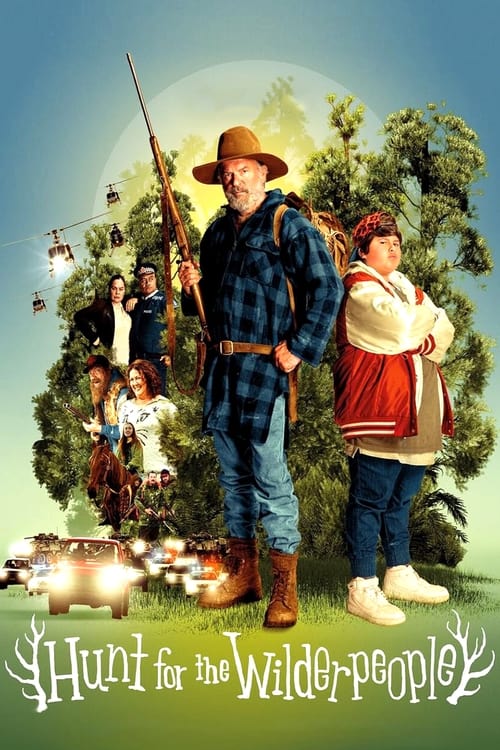
Hunt for the Wilderpeople (2016)
Directed by Taika Waititi
No — Hunt for the Wilderpeople is not woke, scoring 8 out of 100 on our wokeness meter.
Taika Waititi's 2016 adaptation of Barry Crump's Wild Pork and Watercress arrives with a great deal of warmth and almost none of the ideological apparatus that later became his house style.
Consciousness Markers
The cast is overwhelmingly Māori and Pacific Islander (Dennison, House, Ngatai-Melbourne, Kightley, Walker), but this reflects the natural demographics of a New Zealand production rather than a deliberate representational program, and the film never comments on it.
Māori cultural texture and a Māori child navigating the state foster-care system are present, but the film treats these as lived setting rather than as a thesis about race or systemic injustice.
Waititi's touch is warm and comic rather than preachy; any social observation about the foster system is folded into character and humor rather than delivered as a sermon.
Bella is a warm maternal presence and Paula Hall a determined female antagonist, but neither is deployed in service of any feminist argument; the film is squarely a male-bonding adventure.
No LGBTQ+ characters, themes, or subtext appear anywhere in the film.
The bush and wilderness are a backdrop for survival comedy, not a vehicle for environmental advocacy.
The film's mild institutional critique targets child protective services bureaucracy, not capitalism or wealth.
Ricky's size generates a few affectionate gags, but there is no body-positivity message or framework.
Ricky is labeled a 'delinquent' by the state, but this is behavioral framing, not a depiction of neurodivergence.
The film is a contemporary fictional adventure with no historical revisionism of any kind.
Why it received this score
Taika Waititi's 2016 adaptation of Barry Crump's Wild Pork and Watercress arrives with a great deal of warmth and almost none of the ideological apparatus that later became his house style. Sam Neill and Julian Dennison play a foster uncle and his reluctant charge, and the film's pleasures are old-fashioned: a chase, a dog, a waterfall, a boy learning to shoot straight. The cast is heavily Māori and Pacific Islander, which is simply what a New Zealand production looks like. Nobody in the film announces this, and nobody in the film needs to.
The social observation here is real but thin on the ground. Ricky is a ward of the state, shuffled between homes and labeled a delinquent, and the child welfare bureaucracy is drawn as petty and vindictive. That is a critique of an institution, not of an economic order, and the film never reaches for a larger argument about race or class. Bella is a warm maternal presence who dies early. Paula Hall is a determined antagonist in a government lanyard. Neither is deployed in service of anything resembling a feminist reading, and the bush itself is a survival comedy set, not a climate parable. Ricky's build generates a few affectionate gags and no message whatsoever.
Where the film earns its acclaim is in its refusal to lecture. Any point about the foster system is folded into character and joke, delivered sideways, and the result is a movie that trusts its audience to feel something without being told what to feel. We are left with a generous, funny adventure about two people who need each other. In the current cultural climate that restraint reads as almost radical. It is not, of course. It is just good filmmaking, and the classification reflects that.
Analysis generated by our Consciousness Algorithm


Synopsis
Ricky is a defiant young city kid who finds himself on the run with his cantankerous foster uncle in the wild New Zealand bush. A national manhunt ensues, and the two are forced to put aside their differences and work together to survive.
Questions about Hunt for the Wilderpeople
Is Hunt for the Wilderpeople woke?
No — Hunt for the Wilderpeople is not woke, scoring 8 out of 100 on our wokeness meter. That earns it a verdict of Ultra Based.
Does Hunt for the Wilderpeople have any woke elements?
1 of the 10 markers register at 30 or above, led by Representation Casting (35). On Representation Casting: The cast is overwhelmingly Māori and Pacific Islander (Dennison, House, Ngatai-Melbourne, Kightley, Walker), but this reflects the natural demographics of a New Zealand production rather than a deliberate representational program, and the film never comments on it.
How does Hunt for the Wilderpeople compare to other 2016 movies?
It ranks #170 of the 285 films from 2016 we've scored; their average is 16. The wokest is 13th (92).
How is the Woke Score calculated?
An AI-assisted process researches the film and its reception, scores it 0–100 on ten markers, then combines those into one 0–100 Woke Score. It measures a specific set of 2020s cultural themes, not film quality.