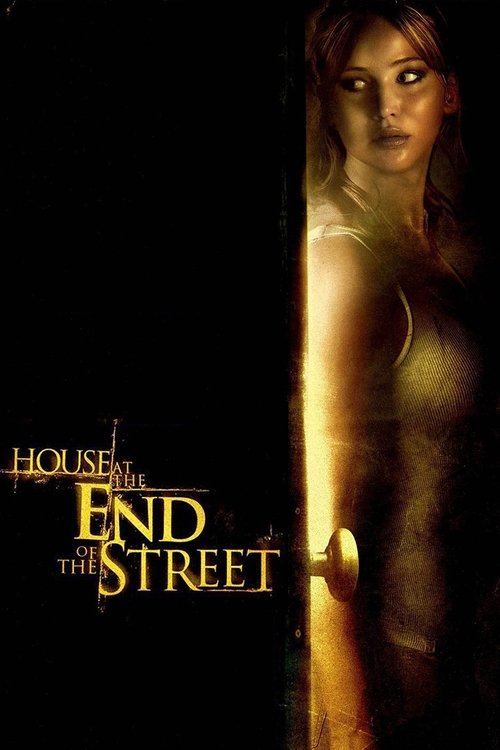
House at the End of the Street (2012)
Directed by Mark Tonderai
No — House at the End of the Street is not woke, scoring 0 out of 100 on our wokeness meter.
House at the End of the Street arrives from 2012 as a psychological thriller with Jennifer Lawrence before her ascent, and it behaves like a genre exercise assembled from familiar parts.
Consciousness Markers
The cast is overwhelmingly white, led by Jennifer Lawrence, Max Thieriot, and Elisabeth Shue, with no meaningful diverse or inclusive casting choices.
The film's cross-dressing element is deployed as a horror/abuse trope (a boy forced to dress as his dead sister), not as LGBTQ+ representation or affirmation.
A female protagonist and a divorced mother exist in the story, but the film offers no feminist commentary or agenda; women function largely as victims of a male captor.
No engagement with race, racial identity, or racial justice themes whatsoever.
No environmental or climate-related content.
No critique of capitalism, wealth, or class structures; the upscale suburb is mere backdrop.
No body positivity themes; the film trades in conventional horror imagery.
Brain injury and mental illness are framed as monstrous and villainous (Carrie Anne's aggression, Ryan's psychosis), the opposite of neurodivergence advocacy.
No historical revisionism; the film is a contemporary fictional thriller.
A straightforward genre thriller with no moralizing, messaging, or didactic social commentary.
Why it received this score
House at the End of the Street arrives from 2012 as a psychological thriller with Jennifer Lawrence before her ascent, and it behaves like a genre exercise assembled from familiar parts. A divorced mother, a new suburb, a house with a double homicide, a quiet boy next door. The machinery is efficient enough. The film wants to unsettle, and occasionally it does, though mostly it wants to get from one basement revelation to the next.
On the cultural ledger, the film is a blank page. Its cast is white and its concerns are domestic and carceral in the narrow thriller sense. Cross-dressing appears as an abuse artifact, a mother forcing a son into a dead sister's clothes, and the film treats that as pathology, not identity. Mental injury is villainous. Women are victims and final girls. The upscale neighborhood is a backdrop, not a target for class critique. No climate, no racial inquiry, no body politics, no historical revision. The film has no sermon to deliver. It is not trying to educate anyone. It is trying to make a profit and occasionally make you jump.
That absence is not a moral failure. It is a classification result. This is a modestly budgeted horror product that opened well on a Friday and then settled into second place for the weekend, which tells you more about the marketplace than the text. As a specimen of social consciousness, it is inert. As a thriller, it is panned and forgettable. The verdict is a clean zero across the board, and a film that will not trouble the cultural archive.
Analysis generated by our Consciousness Algorithm


Synopsis
A mother and daughter move to a new town and find themselves living next door to a house where a young girl murdered her parents. When the daughter befriends the surviving son, she learns the story is far from over.
Questions about House at the End of the Street
Is House at the End of the Street woke?
No — House at the End of the Street is not woke, scoring 0 out of 100 on our wokeness meter. That earns it a verdict of Ultra Based.
Does House at the End of the Street have any woke elements?
No. All 10 markers score zero.
How does House at the End of the Street compare to other 2012 movies?
It ranks #193 of the 230 films from 2012 we've scored; their average is 12. The wokest is Killing Them Softly (92).
How is the Woke Score calculated?
An AI-assisted process researches the film and its reception, scores it 0–100 on ten markers, then combines those into one 0–100 Woke Score. It measures a specific set of 2020s cultural themes, not film quality.