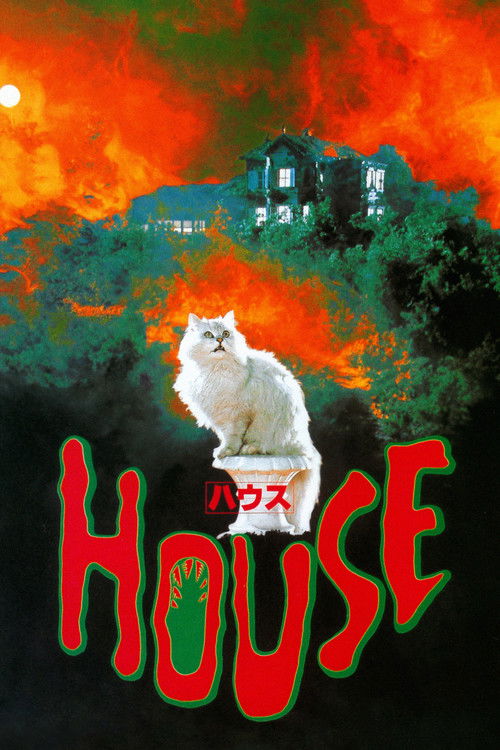
House (1977)
Directed by Nobuhiko Obayashi
No — House is not woke, scoring 0 out of 100 on our wokeness meter.
House arrives from 1977, a Toho production assembled from a child's nightmares and a studio's envy of Jaws.
Consciousness Markers
All-Japanese cast in a Japanese production; no deliberate diverse or inclusive casting choices.
No LGBTQ+ characters, themes, or subtext.
Female protagonists are victims of supernatural horror; no feminist agenda or commentary.
No exploration of race or racial issues.
No environmental or climate themes.
No critique of capitalism or wealth inequality.
No body positivity themes; instead features body horror and objectification.
No neurodivergent characters or themes.
Uses WWII atomic bomb trauma as plot device, but not a revisionist historical narrative.
Surreal and playful; does not lecture or preach.
Why it received this score
House arrives from 1977, a Toho production assembled from a child's nightmares and a studio's envy of Jaws. A schoolgirl called Gorgeous travels to her aunt's country home with six friends, each named for a single trait, and the house eats them one by one with a piano, a mattress, and a flying severed head. Nobuhiko Obayashi shot it without a storyboard on one of the largest sets the studio owned. The result is a fever dream governed by the logic of a playground game. It is silly. It is gorgeous. It is not, by any measure this office recognizes, a vehicle for instruction.
The film's darker current runs through the aunt, a woman ruined by a fiance who never returned from the war. Obayashi, born in Hiroshima, folded his own grief over the bombings into that ghost, and the bitterness reads as private mourning, not as an argument about history. The seven girls are archetypes, and they are devoured. Nothing here asks us to admire their empowerment, interrogate their bodies, or reconsider the arrangement of wealth and labor. The casting drew on models from the director's commercials and on the crew's own families, a practical decision with no stated social ambition. The nudity and the blood exist for spectacle.
What remains is a haunted house picture that behaves like a cartoon and a nightmare at once, playful where its contemporaries were solemn. It lectures no one. It has no thesis to deliver, no grievance to air, no lesson to press upon a captive audience. The ledger of contemporary cultural markers comes back empty, and the emptiness is the point. Forty-eight years on, the house still eats girls, and it does so without a single word of moral instruction.
Analysis generated by our Consciousness Algorithm


Synopsis
Hoping to find a sense of connection to her late mother, Gorgeous takes a trip with her friends to visit her aunt's ancestral house in the countryside. The girls soon discover that there is more to the old house than meets the eye.
Questions about House
Is House woke?
No — House is not woke, scoring 0 out of 100 on our wokeness meter. That earns it a verdict of Ultra Based.
Does House have any woke elements?
No. All 10 markers score zero.
How does House compare to other 1977 movies?
It ranks #25 of the 27 films from 1977 we've scored; their average is 8. The wokest is A Special Day (60).
How is the Woke Score calculated?
An AI-assisted process researches the film and its reception, scores it 0–100 on ten markers, then combines those into one 0–100 Woke Score. It measures a specific set of 2020s cultural themes, not film quality.