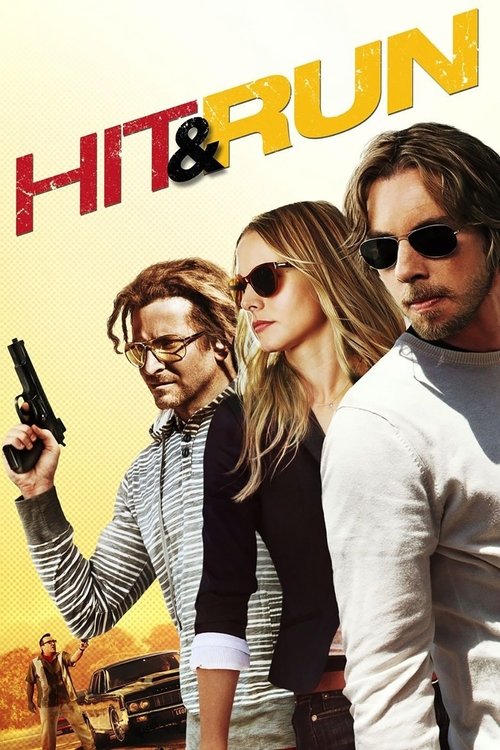
Hit & Run (2012)
Directed by Dax Shepard
No — Hit & Run is not woke, scoring 15 out of 100 on our wokeness meter.
Hit & Run arrives from 2012, a year when the action comedy still believed it could get by on a souped-up Lincoln and the sight of Tom Arnold discharging a firearm in the general vicinity of his own van.
Consciousness Markers
A minor subplot reveals that U.S. Marshal Randy and police officer Terry enter into a same-sex relationship by the end.
Annie's non-violent conflict resolution background provides mild didactic banter, but it is comedic rather than preachy.
The cast includes a Black supporting actress, but her presence is incidental and not framed as deliberate representation.
Annie has a doctorate and a career, but the film does not advance a feminist agenda or critique patriarchy.
No racial themes, commentary, or consciousness are present in the story.
No environmental or climate-related themes appear in the film.
The bank-robbery backstory is criminal plotting, not an anti-capitalist or eat-the-rich message.
No body-positivity themes or messaging are present.
No neurodivergence themes or characters are present.
The film is a fictional action comedy with no historical revisionism.
Why it received this score
Hit & Run arrives from 2012, a year when the action comedy still believed it could get by on a souped-up Lincoln and the sight of Tom Arnold discharging a firearm in the general vicinity of his own van. Dax Shepard writes, co-directs and stars as Charlie Bronson, a former getaway driver in witness protection who jeopardizes his new identity to drive his girlfriend Annie to a job interview at UCLA. Annie holds a doctorate in Non-Violent Conflict Resolution. This is the film's lone concession to the modern sensibility, and it is deployed mostly as a punchline. Roger Ebert liked it. Richard Roeper gave it an F. Both responses are defensible.
The progressive content here is thin and arrives late. A U.S. Marshal and a small-town police officer, having spent the picture in pursuit, drift into a same-sex relationship during the closing minutes, acknowledged with a shrug and a shared exam. It is a gesture, not a thesis, and the film treats it as one more loose end to tie off. Annie's academic specialty supplies a few lines of mediation advice during a hostage negotiation, all of it played for comedy. The film has no interest in lecturing us about anything, which is either a relief or a void, depending on taste.
What we do not find is equally instructive. There is no racial commentary, no environmental anxiety, no critique of the wealthy, no body-positivity thread, no neurodivergent character, no rewriting of history. The bank robberies are a plot device, not a political statement. This is a modest, somewhat smug chase picture that wants only to entertain, and it does so with a cultural temperature near room level.
Analysis generated by our Consciousness Algorithm


Synopsis
When former getaway driver Charlie Bronson jeopardises his Witness Protection Plan identity in order to help his girlfriend get to Los Angeles, the feds and Charlie's former gang chase them on the road.
Questions about Hit & Run
Is Hit & Run woke?
No — Hit & Run is not woke, scoring 15 out of 100 on our wokeness meter. That earns it a verdict of Ultra Based.
Does Hit & Run have any woke elements?
Very few. None of the 10 markers reaches 30, the level where a marker counts as present; the highest is LGBTQ+ Themes at 25.
How does Hit & Run compare to other 2012 movies?
It ranks #57 of the 230 films from 2012 we've scored; their average is 12. The wokest is Killing Them Softly (92).
How is the Woke Score calculated?
An AI-assisted process researches the film and its reception, scores it 0–100 on ten markers, then combines those into one 0–100 Woke Score. It measures a specific set of 2020s cultural themes, not film quality.