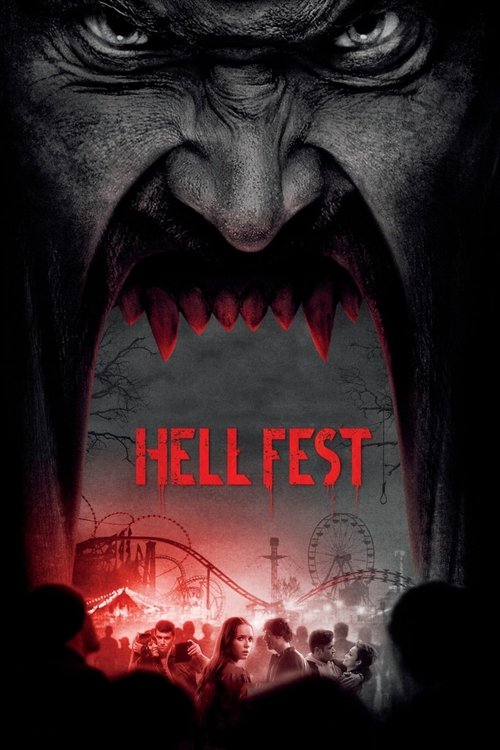
Hell Fest (2018)
Directed by Gregory Plotkin
No — Hell Fest is not woke, scoring 10 out of 100 on our wokeness meter.
Hell Fest arrives in 2018 as a modest proposition: a traveling Halloween carnival, a masked killer the credits name The Other, and six young people who mistake genuine slaughter for elaborate stagecraft.
Consciousness Markers
The cast includes Black and queer-identifying performers in prominent roles, but the film does not foreground identity or make representation a thematic point.
The film has a final girl and a female friend duo, and one critic noted vaguely feminist subtext, but it largely follows standard slasher gender tropes.
No LGBTQ+ themes, relationships, or subtext appear in the film; Taylor is in a heterosexual relationship.
No racial themes or commentary; minority characters exist without the film addressing race.
No environmental or climate-related themes are present.
The horror theme park setting is commercial, but the film does not critique capitalism or wealth.
No body positivity themes or messaging are present.
No neurodivergence themes or characters are present.
The film is a contemporary slasher with no historical revisionism.
The film is a straightforward slasher with no didactic or preachy messaging.
Why it received this score
Hell Fest arrives in 2018 as a modest proposition: a traveling Halloween carnival, a masked killer the credits name The Other, and six young people who mistake genuine slaughter for elaborate stagecraft. Gregory Plotkin, an editor by trade, directs with the efficiency of a man who knows the budget is $5.5 million. The picture grossed $18.1 million worldwide, finished sixth in its opening weekend, and collected a 41 percent approval rating from critics who found it neither clever nor frightening. Tony Todd appears briefly as a barker, which is the closest the film comes to genuine menace.
The ensemble is more integrated than the genre's 1980s forebears, with Black and queer performers among the principals, and the script never asks them to be anything except future victims. Identity is not the subject. The subject is a man with a mallet. Whatever progressive texture the film possesses comes from well-worn architecture: Natalie endures as the final girl, and her frayed friendship with Brooke supplies the third act with a stake beyond the body count. A critic at IndieWire detected vaguely feminist subtext. The rest of us detected a guillotine.
Nothing else in the ledger. No environmental sermon, no indictment of the theme park's commercial machinery, no bodily affirmation, no neurodivergent arc, no corrected history, no lecturing. The killer drives home to a suburban house, files his mask among a cabinet of trophies, and hands his sleeping daughter a stuffed animal. That is the film's lone flourish of psychology, offered without thesis. What remains is a clean specimen: a slasher that wants only to slash, assembled by people who understood the assignment and declined to attach a message to it. Horror as commerce, not catechism.
Analysis generated by our Consciousness Algorithm
Part of


Synopsis
On Halloween night at a horror theme park, a costumed killer begins slaying innocent patrons who believe that it's all part of the festivities.
Questions about Hell Fest
Is Hell Fest woke?
No — Hell Fest is not woke, scoring 10 out of 100 on our wokeness meter. That earns it a verdict of Ultra Based.
Does Hell Fest have any woke elements?
Very few. None of the 10 markers reaches 30, the level where a marker counts as present; the highest is Representation Casting at 25.
How does Hell Fest compare to other 2018 movies?
It ranks #191 of the 325 films from 2018 we've scored; their average is 20. The wokest is Return (92).
How is the Woke Score calculated?
An AI-assisted process researches the film and its reception, scores it 0–100 on ten markers, then combines those into one 0–100 Woke Score. It measures a specific set of 2020s cultural themes, not film quality.