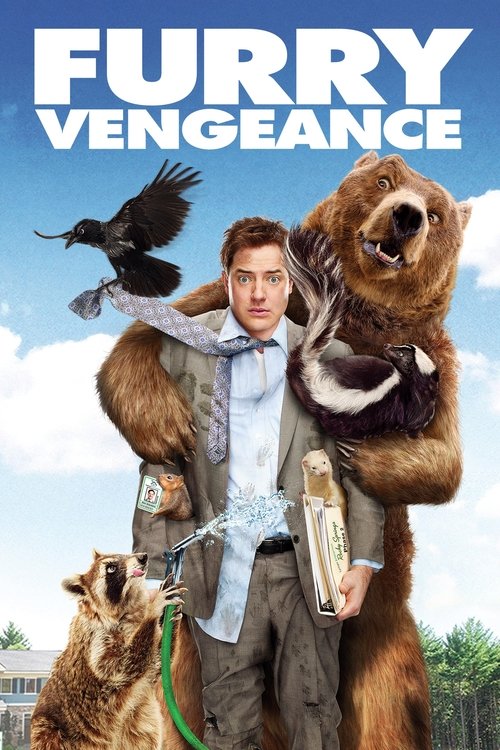
Furry Vengeance (2010)
Directed by Roger Kumble
Partly — Furry Vengeance is somewhat woke, scoring 49 out of 100 on our wokeness meter.
Furry Vengeance is a 2010 family comedy in which woodland creatures torment a real estate developer.
Consciousness Markers
The villain is a greedy corporate CEO and real estate developer pushing a soulless subdivision and shopping mall, giving the film a clear anti-big-business, anti-development streak.
The central conflict is environmental conservation: animals defend their forest from development, and the film ends with a nature preserve and eco-friendly messaging.
The film carries an obvious environmental moral about protecting wildlife and the forest, but it delivers the message through slapstick rather than sustained preaching.
The cast includes minority actors, but they are largely used for broad ethnic stereotypes that critics condemned as racist, not as progressive representation.
No LGBTQ+ characters, themes, or subtext are present.
Female characters exist as wives, teachers, and love interests, but the film advances no feminist agenda or commentary.
The film's racial humor relies on stereotypes rather than any racial consciousness or social justice critique.
No body-positive themes, characters, or messaging appear.
No neurodivergent characters or themes are present; a senile elderly teacher is played for comedy, not as representation.
No historical revisionism or reimagining of past events is attempted.
Why it received this score
Furry Vengeance is a 2010 family comedy in which woodland creatures torment a real estate developer. The film's moral architecture is simple: forest good, subdivision bad. It earns its environmental stripes. The villain is a corporate CEO, the climax involves an eco-friendly fair, and the resolution is a nature preserve. That gives it a genuine anti-development, anti-big-business pulse. The message arrives through skunk sprays and crotch bites, so it never ascends to sermon. A modest lecture energy, then, but not nothing. The animals are right, the developer is wrong, and the film knows it.
Elsewhere, the film offers nothing for the modern cultural ledger. It has no interest in identity, no feminist argument, no historical reclamation, no body-positive or neurodivergent thread. Its racial politics are actively backward. Critics at the time flagged the obsequious Hispanic foreman, the Asian boss speaking in high-pitched accents, the greedy Indian investor. That is stereotype, not consciousness. The cast may be diverse, but the film uses difference as a joke. There is no queer presence, no revisionist impulse, no attempt to say anything about who we are now. The film's idea of diversity is a punchline delivered by Ken Jeong.
So we are left with a curious specimen: a crude slapstick comedy that accidentally stumbles into an environmental and anti-corporate position, then undermines it with lazy ethnic gags and a dancing credits sequence. It is not a film of ideas. It is a film of boulders, portable toilets, and contractual obligations. The progressive content is real but narrow, a thin green coating on a very stupid machine. We classify it accordingly.
Analysis generated by our Consciousness Algorithm


Synopsis
When real estate developer Dan Sanders finalizes plans to level a swath of pristine Oregon forest to make way for a soulless housing subdivision, a band of woodland creatures rises up to throw a monkey wrench into the greedy scheme. Just how much mischief from the furry critters can the businessman take before he calls it quits?
Questions about Furry Vengeance
Is Furry Vengeance woke?
Partly — Furry Vengeance is somewhat woke, scoring 49 out of 100 on our wokeness meter. That earns it a verdict of Woke-Adjacent.
What makes Furry Vengeance woke?
3 of the 10 markers register at 30 or above, led by Eat the Rich (60), Climate Crusade (55) and Lecture Energy (35). On Eat the Rich: The villain is a greedy corporate CEO and real estate developer pushing a soulless subdivision and shopping mall, giving the film a clear anti-big-business, anti-development streak.
How does Furry Vengeance compare to other 2010 movies?
It ranks #9 of the 238 films from 2010 we've scored; their average is 11. The wokest is My Name Is Khan (84).
How is the Woke Score calculated?
An AI-assisted process researches the film and its reception, scores it 0–100 on ten markers, then combines those into one 0–100 Woke Score. It measures a specific set of 2020s cultural themes, not film quality.