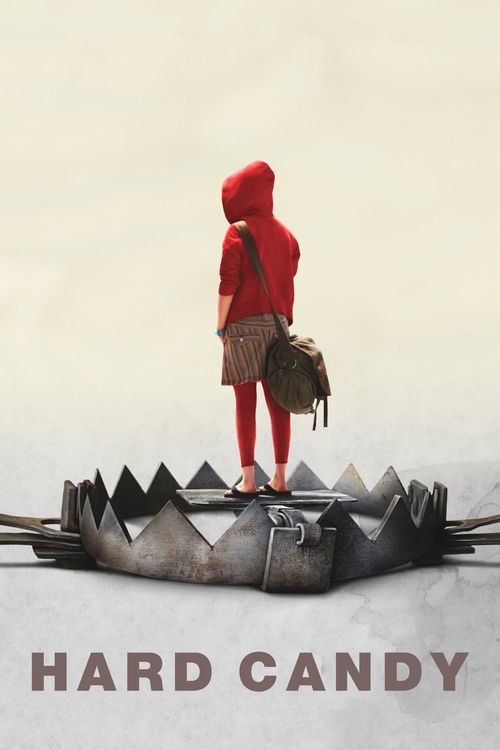
Hard Candy (2006)
Directed by David Slade
No — Hard Candy is not woke, scoring 0 out of 100 on our wokeness meter.
David Slade's Hard Candy arrived in 2005 as a two-hander with a small budget and a large mean streak, and it has aged into something close to a period piece.
Consciousness Markers
No deliberate representation casting; Sandra Oh's supporting role exists without comment, which does not count.
No LGBTQ+ themes in the film.
While featuring a female vigilante, the film lacks a feminist agenda or explicit commentary.
No racial themes or consciousness.
No climate themes.
No anti-capitalist themes.
No body positivity themes.
No neurodivergence themes.
No revisionist history.
The film is a thriller and does not lecture the audience.
Why it received this score
David Slade's Hard Candy arrived in 2005 as a two-hander with a small budget and a large mean streak, and it has aged into something close to a period piece. A fourteen-year-old girl named Hayley lures a fashion photographer into his own home, drugs him, binds him to a chair, and spends the remaining running time dismantling him. The film is a revenge picture, and it knows it. There is no thesis about the internet, no sermon about predators in general, no appeal to the audience to amend its behavior. Just a red hoodie, a scalpel, and a very cold room.
What the film does have is craft. Slade shoots in close, the color grade shifts with Hayley's temper, and Page carries the whole enterprise with a stillness more unsettling than any scream. The screenplay by Brian Nelson keeps its moral questions deliberately unresolved. Hayley may be right about Jeff. She may also be a monster. The film declines to referee, which is precisely why it resists the tidy cultural instruction a later era might have demanded. It is a nasty film about nasty people, and it does not apologize for the transaction.
In the ledger of contemporary social consciousness, the picture is a blank. There is no representation casting of note, no identity politics, no climate anxiety, no critique of capital, no body-positive or neurodivergent framing, no revisionist history, no lecture. Sandra Oh appears in a small supporting role and is simply a neighbor. The film's feminism, if we are generous, amounts to a girl holding a man accountable, which is a plot point, not a program. What remains is a lean, cruel thriller that trusts its audience to sit in discomfort without a pamphlet. It is the kind of movie that gets made once, cheaply, and then not again for a while. We classify it, and we move on to the next screening with the same weary diligence we bring to all of them, noting that the vintage here is bitter, and that bitterness is not a political position.
Thematic tags: none apply. The film won festival prizes, not Academy Awards. It is not a sequel, remake, or adaptation. It is fiction inspired loosely by a news segment, which does not meet the bar for a true story. No superheroes report for duty, and the limited release never touched the top of the domestic chart.
Analysis generated by our Consciousness Algorithm

Synopsis
Hayley’s a smart, charming teenage girl. Jeff’s a handsome, smooth fashion photographer. An Internet chat, a coffee shop meet-up, an impromptu fashion shoot back at Jeff’s place. Jeff thinks it’s his lucky night. He’s in for a surprise.
Questions about Hard Candy
Is Hard Candy woke?
No — Hard Candy is not woke, scoring 0 out of 100 on our wokeness meter. That earns it a verdict of Ultra Based.
Does Hard Candy have any woke elements?
No. All 10 markers score zero.
How does Hard Candy compare to other 2006 movies?
It ranks #177 of the 211 films from 2006 we've scored; their average is 11. The wokest is An Inconvenient Truth (92).
How is the Woke Score calculated?
An AI-assisted process researches the film and its reception, scores it 0–100 on ten markers, then combines those into one 0–100 Woke Score. It measures a specific set of 2020s cultural themes, not film quality.