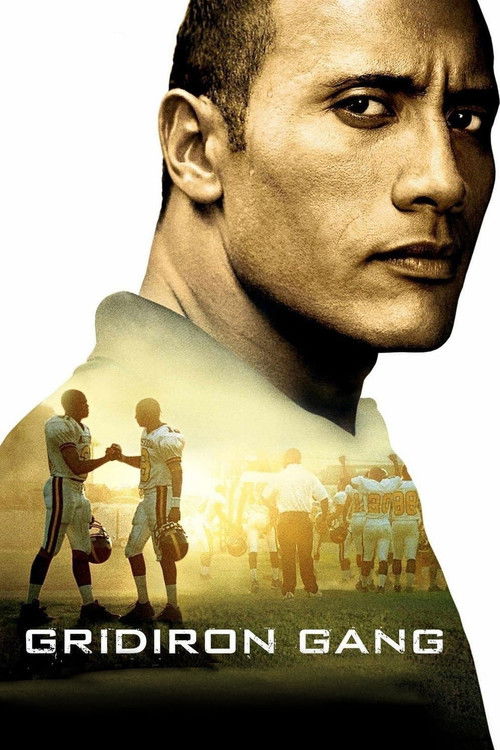
Gridiron Gang (2006)
Directed by Phil Joanou
No — Gridiron Gang is not especially woke, scoring 20 out of 100 on our wokeness meter.
Gridiron Gang arrives from 2006, a year when a football movie could still address juvenile delinquency with wind sprints and a firm handshake.
Consciousness Markers
The film features a predominantly Black and Latino cast, including Dwayne Johnson and Xzibit, reflecting the true story's setting in a juvenile detention center. However, this diversity is organic to the narrative rather than a modern casting initiative.
The film includes motivational speeches about discipline and teamwork, but these are not progressive social lectures.
No LGBTQ+ characters, themes, or subtext are present.
Female characters are peripheral, and the film does not engage with feminist themes or gender politics.
While the film depicts minority youth and gang conflict, it does not examine systemic racism or racial identity in a conscious way.
No environmental themes or climate advocacy appear.
The film focuses on personal redemption and discipline, with no critique of capitalism or wealth inequality.
No body positivity themes or diverse body representation are present.
No neurodivergent characters or themes are depicted.
The film is a straightforward dramatization of a true story, not a revisionist historical narrative.
Why it received this score
Gridiron Gang arrives from 2006, a year when a football movie could still address juvenile delinquency with wind sprints and a firm handshake. Dwayne Johnson plays Sean Porter, a probation officer at a Los Angeles detention center who assembles the Kilpatrick Mustangs out of rival gang members and teaches them to block for one another. The cast is predominantly Black and Latino, which reflects the actual population of the facility and the true story being told. Nobody in the production appears to be congratulating themselves for it. That is the entire extent of the film's representational ambition.
The moral program here is discipline, accountability, and the transformative power of organized sport. Gang affiliation is treated as a poor decision made by boys who need structure, not as the downstream product of any system worth naming. There is no lecture about poverty, no indictment of the carceral apparatus, no scene in which a character explains that the whole arrangement is unjust. The speeches are motivational, delivered by a man with a whistle, and they concern effort and brotherhood. Audiences in 2006 would have found nothing here to object to and nothing to champion.
Women appear in supporting capacities and are not asked to carry a thesis. There is no romantic subplot demanding renegotiation, no coming-out arc, no teammate who teaches the roster about acceptance during a third-act montage. What remains is a formula picture with an A CinemaScore and a 44 percent critical approval rating, which tells us audiences wanted the formula and critics had grown tired of it. The film's cultural footprint is modest. Its ideological footprint is smaller. We file it under sincere, dated, and harmless. The Mustangs win a playoff game, lose the championship, and disperse into ordinary lives. So does the movie.
Analysis generated by our Consciousness Algorithm


Synopsis
Under the leadership of their counselor, teenagers at a juvenile detention center gain self-esteem by playing football together. Based on a true story.
Questions about Gridiron Gang
Is Gridiron Gang woke?
No — Gridiron Gang is not especially woke, scoring 20 out of 100 on our wokeness meter. That earns it a verdict of Based.
Does Gridiron Gang have any woke elements?
1 of the 10 markers register at 30 or above, led by Representation Casting (40). On Representation Casting: The film features a predominantly Black and Latino cast, including Dwayne Johnson and Xzibit, reflecting the true story's setting in a juvenile detention center.
How does Gridiron Gang compare to other 2006 movies?
It ranks #34 of the 211 films from 2006 we've scored; their average is 11. The wokest is An Inconvenient Truth (92).
How is the Woke Score calculated?
An AI-assisted process researches the film and its reception, scores it 0–100 on ten markers, then combines those into one 0–100 Woke Score. It measures a specific set of 2020s cultural themes, not film quality.