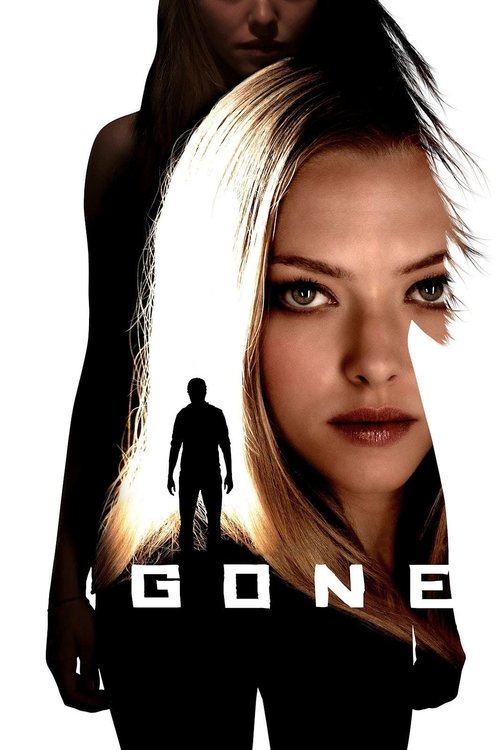
Gone (2012)
Directed by Heitor Dhalia
No — Gone is not woke, scoring 14 out of 100 on our wokeness meter.
There is a particular kind of February thriller that arrives, does its business, and departs without leaving fingerprints, and Heitor Dhalia's Gone is a pristine specimen of the form.
Consciousness Markers
The story centers on a female survivor who takes investigation into her own hands after male authorities dismiss her, a mild woman-fights-back empowerment beat, but it plays as standard genre material rather than an agenda.
A female protagonist anchors the film and a Black actor (Daniel Sunjata) plays Detective Hood, but the cast is otherwise conventional and no casting choices are framed as representative gestures.
The protagonist's prior institutionalization is used to explain why police disbelieve her, faintly touching on stigma against mental illness, but it functions as a plot device rather than advocacy.
A faint 'believe survivors' undercurrent exists, but the film prioritizes suspense mechanics and never sermonizes to the audience.
A Black detective exists naturally in the story with no commentary on race, racism, or racial identity.
Despite Kate Moennig appearing in the cast, the film contains no LGBTQ+ characters, relationships, or themes.
No environmental or climate themes whatsoever.
No critique of wealth, capitalism, or class structures.
No body image or body positivity content.
The film is a fictional contemporary thriller with no historical revisionism.
Why it received this score
There is a particular kind of February thriller that arrives, does its business, and departs without leaving fingerprints, and Heitor Dhalia's Gone is a pristine specimen of the form. Amanda Seyfried plays Jill Conway, a year removed from a kidnapping that the Portland police declined to take seriously on account of her having once been institutionalized. When her sister Molly disappears, the authorities resume their skepticism, and Jill sets out to solve the case herself. The film holds a twelve percent rating on Rotten Tomatoes, which feels generous in the way that a shrug feels generous. It is competent, anonymous, and gone.
The cultural inventory here is modest and largely incidental. Jill is a woman whom men in authority refuse to believe, and she responds by arming herself and doing the work, which registers as a faint empowerment beat and nothing more. Detective Hood, played by Daniel Sunjata, is a Black man who exists in the story without anyone remarking upon it, which is the correct and unremarkable state of affairs. Kate Moennig appears in the cast, though the film offers no romantic or identity content of any kind. Jill's history of psychiatric treatment is deployed strictly as a mechanism to explain why nobody trusts her, a plot lever rather than a statement about stigma. There is no wealth to redistribute, no climate to mourn, no bodies to celebrate, no history to revise.
What remains is a survival narrative with a low pulse, and the film never stops to address the audience about its meaning. A theme about believing women hums somewhere beneath the surface, faint enough that a viewer could miss it while checking the time. The direction is aggressively anonymous, the script a layer cake of conveniences, and the whole enterprise evaporates with the last credit. We classify it, we note its small sympathetic gestures, and we move on to the next screening.
Analysis generated by our Consciousness Algorithm


Synopsis
Jill Conway is trying to rebuild her life after escaping a terrifying kidnapping. Though she is having a difficult time, she takes small steps toward normalcy by starting a new job and inviting her sister, Molly, to move in with her. Returning home from work one morning, Jill discovers that Molly has vanished, and she is certain that the same man who previously abducted her has returned for revenge.
Questions about Gone
Is Gone woke?
No — Gone is not woke, scoring 14 out of 100 on our wokeness meter. That earns it a verdict of Ultra Based.
Does Gone have any woke elements?
1 of the 10 markers register at 30 or above, led by Feminist Agenda (30). On Feminist Agenda: The story centers on a female survivor who takes investigation into her own hands after male authorities dismiss her, a mild woman-fights-back empowerment beat, but it plays as standard genre material rather than an agenda.
How does Gone compare to other 2012 movies?
It ranks #67 of the 230 films from 2012 we've scored; their average is 12. The wokest is Killing Them Softly (92).
How is the Woke Score calculated?
An AI-assisted process researches the film and its reception, scores it 0–100 on ten markers, then combines those into one 0–100 Woke Score. It measures a specific set of 2020s cultural themes, not film quality.