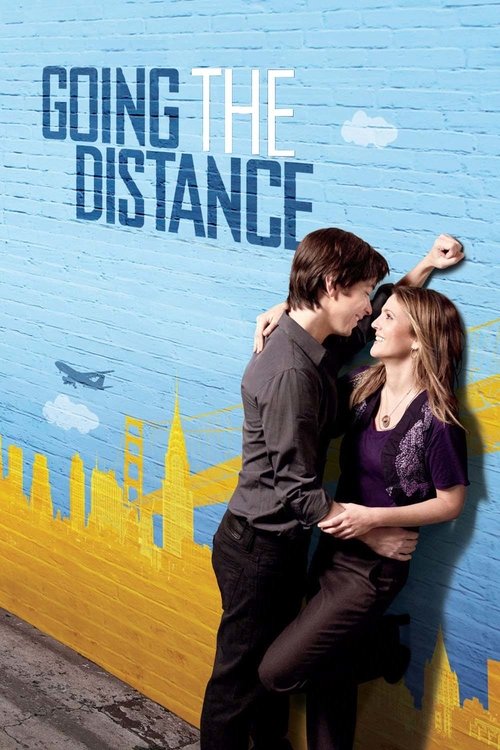
Going the Distance (2010)
Directed by Nanette Burstein
No — Going the Distance is not woke, scoring 11 out of 100 on our wokeness meter.
Going the Distance arrives from 2010, a vintage whose romantic comedies were already being pronounced dead by people paid to pronounce such things.
Consciousness Markers
Directed by a woman and centered on a female journalism grad whose career is taken seriously rather than sacrificed for romance, but the framework remains a conventional heterosexual rom-com.
A standard late-2000s rom-com ensemble with Natalie Morales in a supporting role; diversity is incidental rather than a stated priority.
A recession-era backdrop and Garrett's loathing of his record-label job gesture faintly at economic precarity, but there is no systemic critique.
A raunchy, joke-forward comedy that never pauses to preach; any messaging is incidental to the gags.
No engagement with race as a theme; the cast is mostly white with no commentary on the matter.
No LGBTQ+ characters or themes appear anywhere in the film.
No environmental content whatsoever.
No body-positivity themes; the film trades in conventional rom-com attractiveness.
No neurodivergent characters or themes.
A contemporary fictional romance with no historical subject matter to revise.
Why it received this score
Going the Distance arrives from 2010, a vintage whose romantic comedies were already being pronounced dead by people paid to pronounce such things. Nanette Burstein directs Drew Barrymore and Justin Long through a long-distance arrangement conducted by webcam, phone sex, and frequent-flyer miles. The humor is raunchy and relentless, the kind that treats a dining-room-table encounter interrupted by a silent brother-in-law as a set piece rather than an embarrassment. The film never stops to sermonize. It is too busy making jokes about masturbation and awkward video calls to instruct anyone about anything, which leaves its messaging resting on incidental gestures alone.
A woman occupies the director's chair, and the screenplay treats its heroine's journalism career as a genuine stake instead of a decorative obstacle to be discarded at the altar. Erin's front-page story matters. Her Chronicle offer matters. When the couple separates, the split honors her ambition. That is a modest progressive sensibility, threaded through a framework that remains a conventional heterosexual courtship. The recession hovers at the edges. Garrett despises his record-label job, and the economy is described as shrinking, but nobody organizes a march. The cast is mostly white, with Natalie Morales in a supporting turn, and race never enters the conversation. Diversity here is weather, not policy.
The remaining categories offer nothing to report. No LGBTQ characters appear. No environmental concern surfaces. The bodies on display are the standard rom-com bodies, toned and unexamined. No neurodivergent character exists. There is no history to revise, this being a contemporary fiction about two people and their phone bills. This is a modest, funny, faintly melancholy comedy about logistics. The cultural agenda, such as it is, amounts to letting a woman keep her job. In 2010 that qualified as a statement. The bar has since moved.
THEMATIC TAGS: []
Analysis generated by our Consciousness Algorithm


Synopsis
Erin and Garrett are very much in love. When Erin moves to San Francisco to finish her journalism degree and Garrett stays behind in New York to work in the music industry, they gamely keep the romance alive with webcams and frequent-flyer miles. But just when it seems the lovers will soon be reunited, they each score a big break that could separate them for good.
Questions about Going the Distance
Is Going the Distance woke?
No — Going the Distance is not woke, scoring 11 out of 100 on our wokeness meter. That earns it a verdict of Ultra Based.
Does Going the Distance have any woke elements?
Very few. None of the 10 markers reaches 30, the level where a marker counts as present; the highest is Feminist Agenda at 28.
How does Going the Distance compare to other 2010 movies?
It ranks #77 of the 238 films from 2010 we've scored; their average is 11. The wokest is My Name Is Khan (84).
How is the Woke Score calculated?
An AI-assisted process researches the film and its reception, scores it 0–100 on ten markers, then combines those into one 0–100 Woke Score. It measures a specific set of 2020s cultural themes, not film quality.