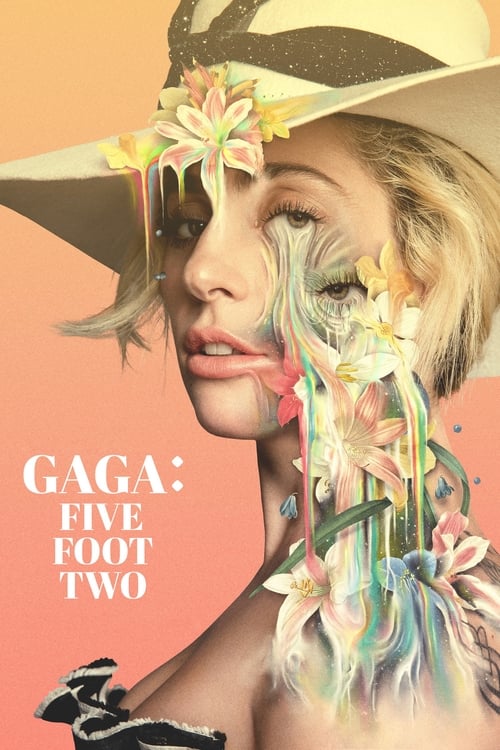
Gaga: Five Foot Two (2017)
Directed by Chris Moukarbel
Partly — Gaga: Five Foot Two is somewhat woke, scoring 47 out of 100 on our wokeness meter.
Chris Moukarbel's camera follows Lady Gaga through eight months of recording, promoting and rehearsing, and it does so with a discipline that borders on the monastic.
Consciousness Markers
The film includes Gaga's reflections on womanhood, the pressures of fame on women, and frustration with male producers' power in the music industry, giving it a clear feminist thread.
There are reflective monologues about fame, sexism, and personal struggle, but the film remains largely observational rather than preachy or didactic.
The documentary features Lady Gaga and her real-life collaborators, family, and friends; there is no deliberate diverse casting or commentary on representation.
Although Lady Gaga is an LGBTQ icon, the film does not foreground LGBTQ themes, activism, or queer identity as a narrative focus.
There is no substantive engagement with racial inequality, systemic racism, or racial identity in the documentary.
The film contains no environmental or climate-related themes.
The documentary critiques some industry dynamics but does not advance an anti-capitalist or eat-the-rich message.
While Gaga appears topless and discusses personal vulnerability, the film does not engage with body positivity as a social movement or theme.
The film focuses on chronic pain and fibromyalgia, which are not framed as neurodivergence or neurodiversity.
The documentary is a present-tense portrait and does not attempt to revise or reinterpret historical narratives.
Why it received this score
Chris Moukarbel's camera follows Lady Gaga through eight months of recording, promoting and rehearsing, and it does so with a discipline that borders on the monastic. No talking heads. No archival montage to explain the iconography. Just a woman cooking at home, then a woman in a studio, then a woman in a doctor's chair being told her body will not cooperate. The chronic pain sequences carry the film's emotional weight, and they are handled without a thesis attached. Fibromyalgia is presented as an affliction, not a platform.
The film does lean forward when it comes to gender. Gaga speaks about the power male producers hold over women in her industry, about Marilyn Monroe and Anna Nicole Smith as cautionary figures, about the machinery that consumes female performers and then bills them for the wreckage. These passages give the documentary a discernible feminist pulse. They are also the only passages that do. The film never organizes itself around an argument, and it never asks the audience to applaud a position.
That restraint is the whole of its character. A performer this closely identified with queer audiences makes a documentary that treats that identification as ambient rather than central. A topless scene by a pool arrives and departs without a word about bodies as a political subject. Race, climate, and the economics of the music business go untouched, though a Walmart aisle makes a brief, silent cameo. The result is a portrait of an artist negotiating the conditions of her own labor, occasionally sermonizing, mostly just tired. It is a modest film about a large person, and it knows better than to raise its voice.
Analysis generated by our Consciousness Algorithm


Synopsis
Follow pop provocateur Lady Gaga as she releases a new album, preps for her Super Bowl halftime show, and confronts physical and emotional struggles.
Questions about Gaga: Five Foot Two
Is Gaga: Five Foot Two woke?
Partly — Gaga: Five Foot Two is somewhat woke, scoring 47 out of 100 on our wokeness meter. That earns it a verdict of Woke-Adjacent.
What makes Gaga: Five Foot Two woke?
1 of the 10 markers register at 30 or above, led by Feminist Agenda (55). On Feminist Agenda: The film includes Gaga's reflections on womanhood, the pressures of fame on women, and frustration with male producers' power in the music industry, giving it a clear feminist thread.
How does Gaga: Five Foot Two compare to other 2017 movies?
It ranks #40 of the 309 films from 2017 we've scored; their average is 19. The wokest is I Am Not Your Negro (92).
How is the Woke Score calculated?
An AI-assisted process researches the film and its reception, scores it 0–100 on ten markers, then combines those into one 0–100 Woke Score. It measures a specific set of 2020s cultural themes, not film quality.