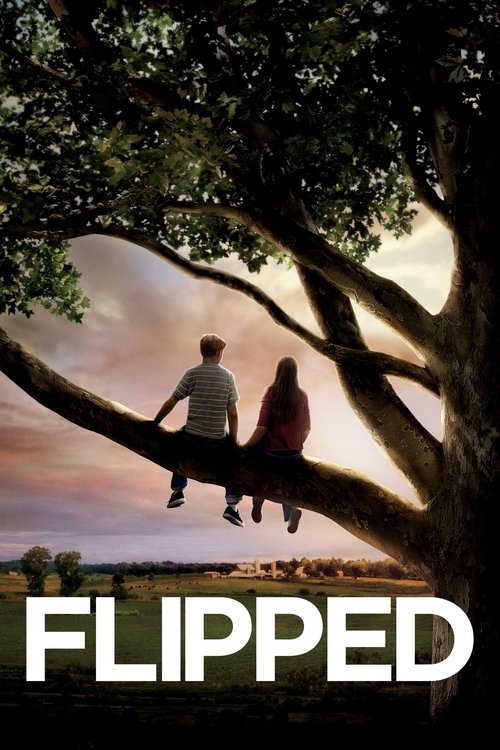
Flipped (2010)
Directed by Rob Reiner
No — Flipped is not woke, scoring 6 out of 100 on our wokeness meter.
Rob Reiner's Flipped arrived in 2010 to a shrug, earned $4.3 million against a $14 million budget, and then quietly became the sort of cult favorite that gets passed around on home video by people who own the disc.
Consciousness Markers
Juli is a proactive female protagonist with her own interests and agency, but the film is a conventional heterosexual romance rather than a feminist statement.
Juli's uncle Daniel is described as mentally disabled and his care is a family concern, but the film does not explore neurodivergence as a central theme.
There is mild class commentary about the Bakers renting and the Loskis owning, but no systemic anti-capitalist critique.
The cast is almost entirely white, with no meaningful racial, ethnic, or LGBTQ+ representation in the principal roles.
There are no LGBTQ+ characters, relationships, or themes in the film.
The film does not engage with race or racial issues at all.
The sycamore tree is a personal symbol for Juli, not a vehicle for climate or environmental activism.
The film does not address body image, size diversity, or body positivity.
The 1950s–60s setting is nostalgic and period-typical, not a revisionist or critical reinterpretation of history.
The film tells its story through character interactions and nostalgia rather than preachy moral instruction.
Why it received this score
Rob Reiner's Flipped arrived in 2010 to a shrug, earned $4.3 million against a $14 million budget, and then quietly became the sort of cult favorite that gets passed around on home video by people who own the disc. It is a gentle two-hander about two Ohio children who spend six years misunderstanding each other across a driveway. The film is set in the late 1950s and early 1960s, and it treats that era as a warm bath of Everly Brothers records and front porches. No irony is applied. No historical reckoning is attempted.
The picture registers modestly on two fronts. Juli Baker is a protagonist with genuine agency: she raises chickens, sells the eggs, climbs a sycamore tree to stop a crew from felling it, and eventually decides she may not like the boy after all. That is a real interior life, though the film remains a standard heterosexual courtship from first crush to clasped hands. Her uncle Daniel, described as mentally disabled, is cared for by a family whose finances bend around him, and the film handles this with quiet decency. It is a supporting detail, not a thesis. A brief exchange about renters and landlords gestures at class, and then the movie moves on to the basket auction.
Everything else is simply absent. The cast is white. There are no queer characters, no engagement with race, no environmental argument attached to the tree, no body politics, no revisionist reading of midcentury America. Reiner tells his story through small humiliations and small kindnesses, and he never stops to instruct anyone. This is a film about two children learning to look at each other. That is the whole of its ambition, and it is enough.
Analysis generated by our Consciousness Algorithm


Synopsis
When Juli meets Bryce in the second grade, she knows it's true love. After spending six years trying to convince Bryce the same, she's ready to give up - until he starts to reconsider.
Questions about Flipped
Is Flipped woke?
No — Flipped is not woke, scoring 6 out of 100 on our wokeness meter. That earns it a verdict of Ultra Based.
Does Flipped have any woke elements?
Very few. None of the 10 markers reaches 30, the level where a marker counts as present; the highest is Feminist Agenda at 10.
How does Flipped compare to other 2010 movies?
It ranks #138 of the 238 films from 2010 we've scored; their average is 11. The wokest is My Name Is Khan (84).
How is the Woke Score calculated?
An AI-assisted process researches the film and its reception, scores it 0–100 on ten markers, then combines those into one 0–100 Woke Score. It measures a specific set of 2020s cultural themes, not film quality.