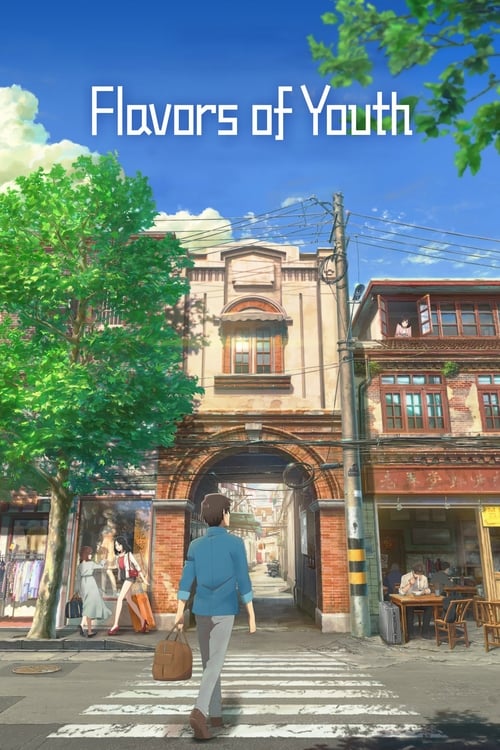
Flavors of Youth (2018)
Directed by Joshua
No — Flavors of Youth is not woke, scoring 13 out of 100 on our wokeness meter.
Flavors of Youth is a 2018 Chinese-Japanese animated anthology, three stories of noodles, fashion, and first love in modern China.
Consciousness Markers
The fashion-model segment centers two sisters and critiques beauty-industry pressure and overwork, though it is not explicitly feminist advocacy.
A Chinese-Japanese co-production with Chinese characters and settings, but the casting is not framed as a modern diversity-casting statement.
The noodle-shop story mildly laments commercialization and the loss of traditional foodways, but it is not an explicit eat-the-rich critique.
The fashion segment shows harmful beauty standards and a model fainting from overexercise, but it does not advocate body positivity directly.
The film offers gentle nostalgic life lessons about memory and adulthood, but it is not preachy or lecture-driven.
No LGBTQ+ characters, themes, or subtext are present.
The film depicts Chinese life and cities, but it does not engage racial justice or racial-consciousness themes.
No climate-change or environmental-advocacy themes appear.
No neurodivergence themes or characters are present.
The film is a fictional anthology and does not revise or reinterpret historical events.
Why it received this score
Flavors of Youth is a 2018 Chinese-Japanese animated anthology, three stories of noodles, fashion, and first love in modern China. It is an anthology of three stories, each set in a different Chinese city, and each concerned with memory and the passage of time. The co-production status and Chinese settings give it a modest representational weight, though the casting carries no modern diversity-statement framing. The film contains no LGBTQ characters or themes, no racial-consciousness engagement, and no climate advocacy. These absences are total and unremarkable.
The fashion segment follows two sisters, a model and a designer, and it critiques beauty-industry pressure and overwork. Yi Lin exercises to exhaustion and faints at a show. The film observes this harm but does not advocate body positivity directly, so its feminist and body-image gestures remain mild. The noodle-shop story offers a mild lament for commercialization and lost traditional foodways, an anti-capitalist note that never reaches eat-the-rich territory. The film's lecture energy is minimal: gentle nostalgic life lessons about memory and adulthood, delivered without a pulpit.
No neurodivergence themes appear. No historical events are revised. The anthology is sentimental and modest, with polished background art and weak character animation, as critics have noted. It does not set out to instruct viewers in contemporary social consciousness. It simply wants to make them feel a little wistful about noodles and first love. That is a modest ambition, and the film achieves it without turning into a sermon. The final classification is a low-stakes affair, the cinematic equivalent of a lukewarm bowl of san xian noodles: comforting, forgettable, and free of ideological aftertaste.
Analysis generated by our Consciousness Algorithm


Synopsis
The rigorous city life of China, while bustling and unforgiving, contains the everlasting memories of days past. Three stories told in three different cities, follow the loss of youth and the daunting realization of adulthood. Though reality may seem ever changing, unchangeable are the short-lived moments of one's childhood days. A plentiful bowl of noodles, the beauty of family and the trials of first love endure the inevitable flow of time, as three different characters explore the strength of bonds and the warmth of cherished memories. Within the disorder of the present world, witness these quaint stories recognize the comfort of the past, and attempt to revive the neglected flavors of youth.
Questions about Flavors of Youth
Is Flavors of Youth woke?
No — Flavors of Youth is not woke, scoring 13 out of 100 on our wokeness meter. That earns it a verdict of Ultra Based.
Does Flavors of Youth have any woke elements?
1 of the 10 markers register at 30 or above, led by Feminist Agenda (30). On Feminist Agenda: The fashion-model segment centers two sisters and critiques beauty-industry pressure and overwork, though it is not explicitly feminist advocacy.
How does Flavors of Youth compare to other 2018 movies?
It ranks #160 of the 325 films from 2018 we've scored; their average is 20. The wokest is Return (92).
How is the Woke Score calculated?
An AI-assisted process researches the film and its reception, scores it 0–100 on ten markers, then combines those into one 0–100 Woke Score. It measures a specific set of 2020s cultural themes, not film quality.