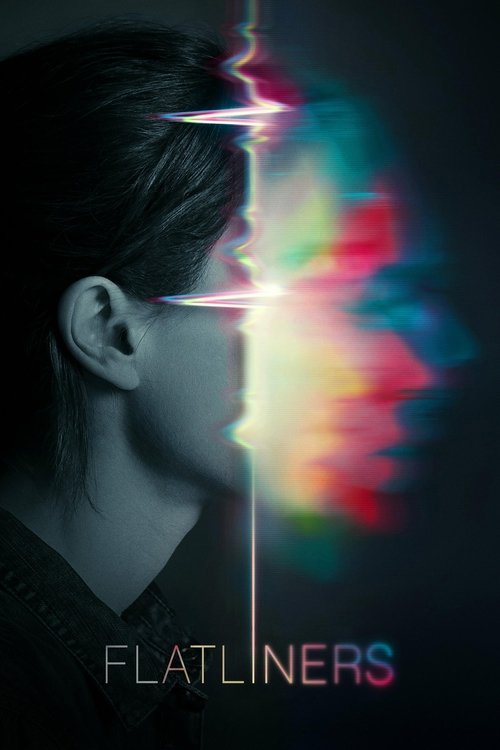
Flatliners (2017)
Directed by Niels Arden Oplev
No — Flatliners is not woke, scoring 17 out of 100 on our wokeness meter.
Flatliners arrives as a remake and a loose sequel, a distinction that matters to nobody in the room.
Consciousness Markers
The remake deliberately assembled a more diverse ensemble than the 1990 original, including women, a Black co-lead, and a Latino co-lead, though the film makes no explicit identity commentary.
Several central medical students are women and the lead is female, but the film does not articulate a feminist thesis or critique gender dynamics.
The ending carries a mild self-help moral about confession and self-forgiveness, but the film is not structured as a social or political lecture.
There are no LGBTQ+ characters, relationships, or themes in the story, and the casting of Elliot Page does not itself make the film LGBTQ+ content.
The cast is racially diverse, but race is not a subject of the plot, dialogue, or thematic argument.
The film is concerned with near-death experiences and guilt, not environmental crisis or climate messaging.
There is no critique of capitalism, wealth, or class structures in the medical-school experiment premise.
Body image, body acceptance, and physical appearance politics are absent from the film.
Near-death hallucinations and guilt are presented as supernatural/psychological horror, not as neurodivergence or mental-health representation.
The film is a remake/sequel, but it does not revise or reinterpret historical events or figures.
Why it received this score
Flatliners arrives as a remake and a loose sequel, a distinction that matters to nobody in the room. Its ensemble is more varied than the 1990 model: a female lead, a Black co-lead, a Latino co-lead, and several women in central medical roles. The film never pauses to congratulate itself or explain the arrangement. That restraint is almost admirable. It is also the full extent of the film's social program. Diversity here is casting furniture, arranged attractively and left unexamined. No character discusses race, and no relationship or line of dialogue opens the door to LGBTQ material, despite the presence of Elliot Page. A performer's offscreen identity is not a screenplay.
The women are competent, competitive, and haunted by guilt at the same rate as the men. This is progress of a low, practical order. The film has no thesis about gender, no critique of the medical hierarchy, and no interest in how women navigate a profession built on quiet cruelty. It simply lets them flatline. The same neutrality covers everything else. There is no environmental sermon, no attack on wealth, no body-image politics, and no attempt to frame the near-death hallucinations as neurodivergence or mental-health representation. Guilt is guilt, and the afterlife is a haunted house with a hospital bill. We are left with a horror film that has misplaced its horror and found a cast.
The closing movement reaches for confession and self-forgiveness. Characters admit their sins, apologize, and are rewarded with a mild thaw in their personal weather. This is a self-help pamphlet stapled to a supernatural thriller, not a political lecture. The moral is sincere, soft, and entirely personal. It asks us to forgive ourselves and then rolls credits. As cultural analysis, the film is a polite shrug. As a remake, it revises nothing except the cast list, and even that revision is left to speak for itself. The result is a film with progressive casting and almost no progressive argument, which is either restraint or exhaustion. We have seen both before. The difference is not always clear.
Analysis generated by our Consciousness Algorithm


Synopsis
Five medical students, hoping to understand the mystery of what lies beyond life, embark on a dangerous experiment. When their hearts are stopped for a short period of time, they have a near-death experience…
Questions about Flatliners
Is Flatliners woke?
No — Flatliners is not woke, scoring 17 out of 100 on our wokeness meter. That earns it a verdict of Ultra Based.
Does Flatliners have any woke elements?
1 of the 10 markers register at 30 or above, led by Representation Casting (45). On Representation Casting: The remake deliberately assembled a more diverse ensemble than the 1990 original, including women, a Black co-lead, and a Latino co-lead, though the film makes no explicit identity commentary.
How does Flatliners compare to other 2017 movies?
It ranks #109 of the 309 films from 2017 we've scored; their average is 19. The wokest is I Am Not Your Negro (92).
How is the Woke Score calculated?
An AI-assisted process researches the film and its reception, scores it 0–100 on ten markers, then combines those into one 0–100 Woke Score. It measures a specific set of 2020s cultural themes, not film quality.