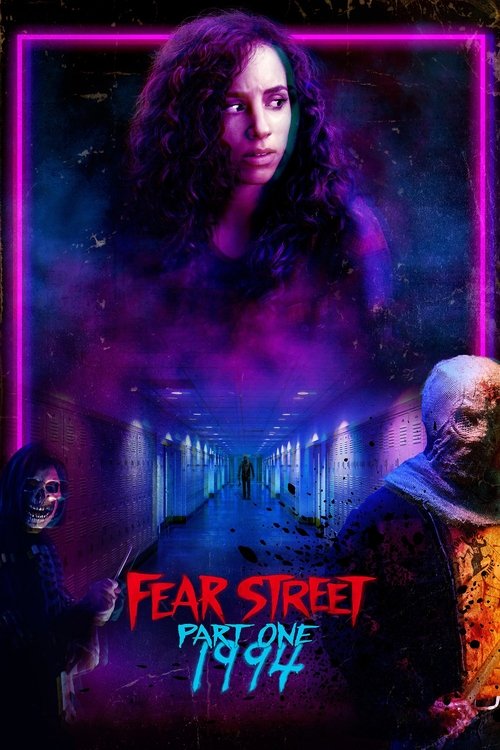
Fear Street: 1994 (2021)
Directed by Leigh Janiak
Yes — Fear Street: 1994 is woke, scoring 60 out of 100 on our wokeness meter.
Fear Street Part One: 1994 arrives as the opening movement in a trilogy that Netflix distributed weekly, like a serialized novel tossed at subscribers in three tidy installments.
Consciousness Markers
A same-sex relationship is central to the plot, and the lead characters reconcile and publicly come out as a couple.
The cast is led by a Black queer actress and features a notably diverse ensemble, though the diversity is woven naturally into the story rather than spotlighted.
A female director and a female protagonist anchor the film, with several girls and women showing agency, but the story does not explicitly push a feminist thesis.
The poor Shadyside versus wealthy Sunnyvale contrast adds mild class resentment, and characters sell drugs to escape town, but there is no explicit anti-capitalist argument.
The film has a diverse cast but no meaningful racial commentary or racial-justice framing; the Shadyside/Sunnyvale divide is presented as class and geography rather than race.
The film delivers its queer and class themes through genre mechanics and character drama rather than preachy exposition or direct moral instruction.
There is no climate-related content or environmental messaging.
No body-positivity themes or body-diversity messaging are present.
No neurodivergence themes or neurodivergent representation are developed.
The witch-curse mythology is fictional horror world-building, not a revisionist rewriting of real history for ideological ends.
Why it received this score
Fear Street Part One: 1994 arrives as the opening movement in a trilogy that Netflix distributed weekly, like a serialized novel tossed at subscribers in three tidy installments. Leigh Janiak directs with a genuine fondness for the slasher machinery of the era, and the film honors its R.L. Stine source material without apology. The neon-soaked mall, the undead killers, the wicked little witch curse: all present and accounted for. This entry distinguishes itself from the standard retro slasher through its emotional center, a same-sex romance between Deena and Sam that carries the plot instead of decorating it. The relationship is the engine. The reconciliation and the public declaration near the film's close land with sincerity, and the young cast around them, notably diverse, treats the material as though it matters. It does.
Where the film resists the temptations of its own moment is in its delivery. Class resentment between the cursed Shadyside and the affluent Sunnyvale simmers throughout, and the kids who sell drugs to escape their town are sketched with a light hand. But the film never stops to lecture. It prefers the knife to the sermon, and the social content arrives through genre mechanics, through character, through the blood. There is a female director and a female protagonist with real agency, though no explicit feminist thesis is mounted. Racial commentary is largely absent; the town's divide reads as economics and geography, not race. Climate concerns, body politics, and neurodivergence do not appear at all, which is a relief in a film that has killers to resurrect.
The result is a curious artifact: a horror film that carries progressive sensibilities quietly, without waving them overhead. It is not a tract. It is a slasher with a heart, and in this reviewer's ledger that counts for something. The sommelier detects leather, blood, and a faint note of sincerity. Recommended with mild enthusiasm and no small amount of fatigue.
---METADATA---
thematic_tags: ["book_adaptation"]
woke_score: 0
---MARKERS---
representation_casting: 78
lgbtq: 88
feminist: 40
racial_consciousness: 15
climate: 0
anti_capitalist: 18
body_positivity: 0
neurodivergence: 0
revisionist_history: 0
lecture_energy: 12
Analysis generated by our Consciousness Algorithm


Synopsis
After a series of brutal slayings, a teen and her friends take on an evil force that's plagued their notorious town for centuries.
Questions about Fear Street: 1994
Is Fear Street: 1994 woke?
Yes — Fear Street: 1994 is woke, scoring 60 out of 100 on our wokeness meter. That earns it a verdict of Woke.
What makes Fear Street: 1994 woke?
3 of the 10 markers register at 30 or above, led by LGBTQ+ Themes (88), Representation Casting (78) and Feminist Agenda (40). On LGBTQ+ Themes: A same-sex relationship is central to the plot, and the lead characters reconcile and publicly come out as a couple.
How does Fear Street: 1994 compare to other 2021 movies?
It ranks #12 of the 242 films from 2021 we've scored; their average is 23. The wokest is The Forever Purge (83).
Is Fear Street: 1994 the most woke Fear Street movie?
Yes. It scores highest of the 3 Fear Street films we've scored.