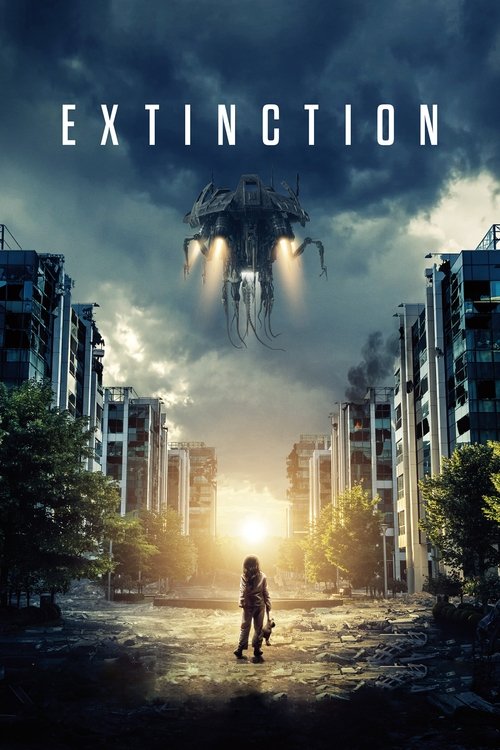
Extinction (2018)
Directed by Ben Young
No — Extinction is not woke, scoring 15 out of 100 on our wokeness meter.
Extinction arrives with the weary dignity of a film that Universal built, shelved, and handed to Netflix like a casserole nobody wanted at the potluck.
Consciousness Markers
The film features a Latino lead and a Black supporting actor in a mainstream sci-fi setting, but their presence is not framed as a statement or accompanied by commentary.
The ending gestures toward tolerance and peace between humans and synthetics, but it is delivered as a mild moral rather than a lecture.
No LGBTQ+ characters, relationships, or themes are present.
Female characters are largely defined by familial roles and are not given a feminist arc or agency-driven narrative.
The human-vs-synthetic conflict is a sci-fi allegory at most; it does not engage with real-world racial consciousness or racial justice.
No environmental or climate themes appear.
The factory setting and corporate hierarchy are incidental; the film offers no critique of capitalism or wealth.
No body-positivity themes or diverse body representation are present.
Peter's visions are a plot device about suppressed memories, not a portrayal of neurodivergence.
The twist revises the film's fictional history, not real-world historical narratives.
Why it received this score
Extinction arrives with the weary dignity of a film that Universal built, shelved, and handed to Netflix like a casserole nobody wanted at the potluck. Ben Young directs Michael Peña as Peter, a factory mechanic plagued by dreams of invasion, and the film dutifully assembles its pieces: a strained marriage, two daughters, an ominous boss, a rifle that only Peter can fire. The pacing lurches. The dialogue sits flat on the screen. Belgrade stands in for an unnamed city, and the location budget appears to have gone entirely to the tunnel.
Then comes the turn, and it is a decent one. Peter and his wife Alice are not human. They are synthetics who scrubbed their own memories after driving humanity off the planet and into exile on Mars. The invading soldiers are the returning humans, and Peter's nightmares are not prophecy but recollection. Casting Michael Peña and Mike Colter in a mainstream science fiction picture is a quietly pleasant fact, though the film never remarks upon it, and the human-versus-synthetic conflict remains a closed allegorical loop that declines to touch any terrestrial arrangement of power. The studio simply hired good actors and let them work.
What lingers is the ending, where Peter proposes that humans and synthetics might someday find peace, a sentiment offered so gently it barely registers as a lesson. There are no sermons about the planet, no indictments of the factory's owners, no speeches about identity. The film is a cautionary tale with the caution filed down. It wants to be about tolerance and lands somewhere near politeness. In the ledger of our current cultural moment, this is a modest entry, a B-movie that stumbled into a conversation it never intended to join. The twenty-five critics on Rotten Tomatoes were not kind, and their unkindness was fair. Not offensive. Not instructive. Just there.
Analysis generated by our Consciousness Algorithm

Synopsis
A chief mechanic at a factory, haunted by apocalyptic nightmares, becomes a hero when Earth is invaded by a mysterious army bent on destruction.
Questions about Extinction
Is Extinction woke?
No — Extinction is not woke, scoring 15 out of 100 on our wokeness meter. That earns it a verdict of Ultra Based.
Does Extinction have any woke elements?
1 of the 10 markers register at 30 or above, led by Representation Casting (30). On Representation Casting: The film features a Latino lead and a Black supporting actor in a mainstream sci-fi setting, but their presence is not framed as a statement or accompanied by commentary.
How does Extinction compare to other 2018 movies?
It ranks #137 of the 325 films from 2018 we've scored; their average is 20. The wokest is Return (92).
How is the Woke Score calculated?
An AI-assisted process researches the film and its reception, scores it 0–100 on ten markers, then combines those into one 0–100 Woke Score. It measures a specific set of 2020s cultural themes, not film quality.