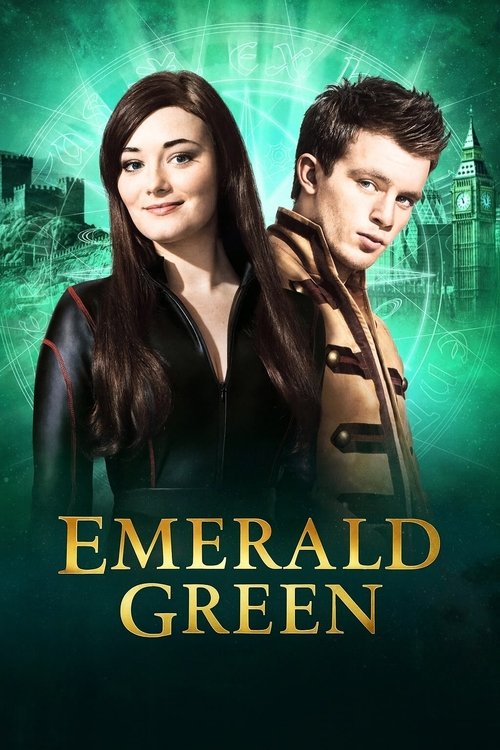
Emerald Green (2016)
Directed by Katharina Schöde
No — Emerald Green is not woke, scoring 0 out of 100 on our wokeness meter.
Emerald Green is the concluding chapter of Kerstin Gier's Ruby Red trilogy, a German production about a young woman discovering her place in a time-traveling secret society.
Consciousness Markers
The cast is entirely white European, with no evident diversity-conscious casting.
No LGBTQ+ characters, themes, or subtext are present.
A female protagonist and woman director are present, but the film does not advance a feminist agenda or critique patriarchy.
No racial themes, commentary, or consciousness are present.
No climate or environmental themes are present.
No anti-capitalist or eat-the-rich themes are present.
No body positivity themes or messaging are present.
No neurodivergence themes or representation are present.
The time-travel fantasy does not engage in historical revisionism or reclamation.
The film is a romantic fantasy adventure and does not lecture the audience on social issues.
Why it received this score
Emerald Green is the concluding chapter of Kerstin Gier's Ruby Red trilogy, a German production about a young woman discovering her place in a time-traveling secret society. Katharina Schöde directs with competence. The film has a female protagonist, a woman at the helm, and a European cast. In the current cultural ledger, these facts are simply facts. They do not constitute a program. The plot concerns Gwen, her fated partner Gideon, and a secret society that treats genealogy as destiny. The movie wants to deliver romance, intrigue, and period-costume set pieces. It does that.
We search for markers of contemporary social consciousness and find none. No identity-driven casting choices. No LGBTQ subplot. No racial reckoning. No climate sermon. No critique of wealth and capital. No body-positive messaging. No neurodivergent representation. No revisionist history. The time travel is a plot device, not a platform for correcting the past. The romance is heterosexual and conventional. The villainy is personal, not systemic. The camera lingers on ballrooms and velvet, not on injustice. There is no lecture. There is no agenda beyond the commercial imperative to conclude a trilogy for its existing fans.
This is not a failing. It is a classification. The film belongs to a pre-existing mode of young adult fantasy, where the stakes are hearts and family secrets, not social reform. It treats its audience as paying customers, not students in a seminar. There is no sermon, no checklist, no attempt to educate the viewer about their complicity in anything. The result is pleasant, forgettable, and entirely untroubled by the cultural questions of the 2020s. We find nothing to record in any category we track. It is a clean vintage. Not a complex one. Just clean.
Analysis generated by our Consciousness Algorithm
Synopsis
Emerald Green is the stunning conclusion to Kerstin Gier's Ruby Red Trilogy, picking up where Sapphire Blue left off, reaching new heights of intrigue and romance as Gwen finally uncovers the secrets of the time-traveling society and learns her fate.
Questions about Emerald Green
Is Emerald Green woke?
No — Emerald Green is not woke, scoring 0 out of 100 on our wokeness meter. That earns it a verdict of Ultra Based.
Does Emerald Green have any woke elements?
No. All 10 markers score zero.
How does Emerald Green compare to other 2016 movies?
It ranks #264 of the 285 films from 2016 we've scored; their average is 16. The wokest is 13th (92).
Is Emerald Green the most woke Gwendolyn Shepherd movie?
No. It ranks #2 of the 3 Gwendolyn Shepherd films we've scored; the wokest is Ruby Red (9).