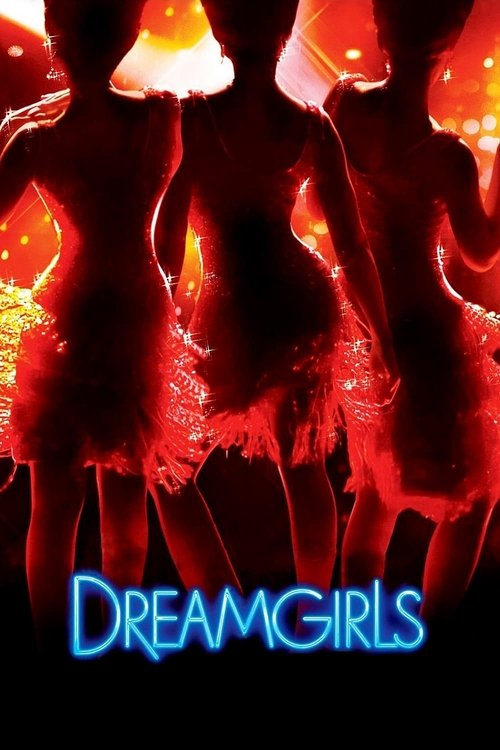
Dreamgirls (2006)
Directed by Bill Condon
No — Dreamgirls is not especially woke, scoring 38 out of 100 on our wokeness meter.
Dreamgirls presents itself as a lavish musical drama tracing a Detroit girl group's ascent through the 1960s and 1970s.
Consciousness Markers
The film is deeply preoccupied with the racial dynamics of the music industry — Black artists being repackaged to appeal to white audiences, payola, and the rejection of Jimmy's politically charged single — though it dramatizes historical racism rather than delivering a contemporary ideological thesis.
The film boasts a predominantly African-American starring ensemble and was, at the time, the most expensive film with an all-black principal cast in Hollywood history — a genuine representational milestone, though the casting is organic to a story about Black musicians rather than a modern diversity mandate.
The story centers on women navigating a male-controlled industry, with Deena ultimately rejecting her controlling husband and Effie reclaiming her voice and career; the arc of female agency and liberation from a manipulative man carries a clear feminist undercurrent.
Effie is demoted and eventually dropped because her 'plus size figure' is deemed unmarketable to white audiences, making size discrimination a genuine plot driver — though the film depicts the injustice rather than championing a body-positive message.
Curtis Taylor Jr. is a ruthless executive who exploits, controls, and discards his artists for commercial gain, and the film critiques the corporate machinery of the record industry — but the indictment is personal and showbiz-specific rather than a systemic 'eat the rich' polemic.
Themes of race, exploitation, and female agency are embedded in the drama and delivered through song and story rather than direct preaching, keeping the didacticism low.
The film is a fictionalized 'à clef' retelling of Motown and the Supremes, but it presents itself as fiction inspired by history rather than reinterpreting the historical record through a modern ideological lens.
There are no LGBTQ+ characters, relationships, or themes anywhere in the narrative.
No environmental or climate-related content appears in the film.
No neurodivergent characters or themes are present.
Why it received this score
Dreamgirls presents itself as a lavish musical drama tracing a Detroit girl group's ascent through the 1960s and 1970s. Its status as the most expensive film with an all-black principal cast in Hollywood history is a representational milestone, though the narrative's racial dynamics arise organically from the music industry it depicts. The film examines how Black artists were repackaged for white audiences, a subject treated with historical specificity. This is not a contemporary ideological thesis but a dramatization of past inequities. The result feels earned, not mandated.
The feminist undercurrent is unmistakable as women navigate a male-controlled industry. Deena eventually rejects her controlling husband, and Effie reclaims her voice after being discarded for her plus-size figure. That size discrimination drives the plot, yet the film depicts the injustice without championing a body-positive message. Similarly, the critique of corporate exploitation targets one ruthless executive, not a systemic economic order. The themes are embedded in song and story, keeping the sermonizing to a minimum. There is no LGBTQ+ content, no climate concern, no neurodivergent representation. The film's social consciousness is of a piece with its era.
We are left with a well-crafted period piece that engages with race, gender, and exploitation through character and melody. It avoids the heavy-handed lecturing that might have sunk a lesser work. The cultural awareness on display is genuine but restrained, a vintage that has not been fortified with modern additives. It respects its audience's intelligence while never forgetting to entertain. For those who catalog such things, it earns a respectable place on the shelf, neither a relic nor a polemic. It simply is what it is: a solid musical drama with a conscience, served neat.
Analysis generated by our Consciousness Algorithm
Part of


Synopsis
A trio of female soul singers cross over to the pop charts in the early 1960s, facing their own personal struggles along the way.
Questions about Dreamgirls
Is Dreamgirls woke?
No — Dreamgirls is not especially woke, scoring 38 out of 100 on our wokeness meter. That earns it a verdict of Based.
Does Dreamgirls have any woke elements?
5 of the 10 markers register at 30 or above, led by Racial Consciousness (60), Representation Casting (55) and Feminist Agenda (45). On Racial Consciousness: The film is deeply preoccupied with the racial dynamics of the music industry — Black artists being repackaged to appeal to white audiences, payola, and the rejection of Jimmy's politically charged single — though it dramatizes historical racism rather than delivering a contemporary ideological thesis.
How does Dreamgirls compare to other 2006 movies?
It ranks #10 of the 211 films from 2006 we've scored; their average is 11. The wokest is An Inconvenient Truth (92).
How is the Woke Score calculated?
An AI-assisted process researches the film and its reception, scores it 0–100 on ten markers, then combines those into one 0–100 Woke Score. It measures a specific set of 2020s cultural themes, not film quality.