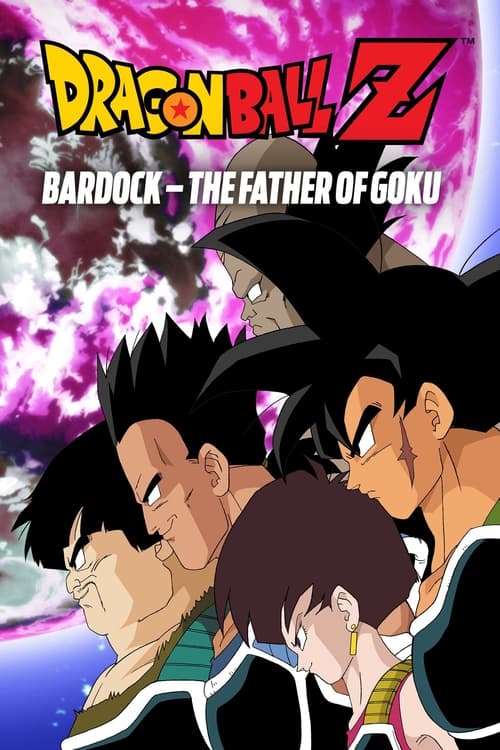
Dragon Ball Z: Bardock - The Father of Goku (1990)
Directed by Mitsuo Hashimoto
No — Dragon Ball Z: Bardock - The Father of Goku is not woke, scoring 3 out of 100 on our wokeness meter.
Bardock arrives from 1990, a television special built on manga lore, and it conducts itself with the grim efficiency of a military tragedy.
Consciousness Markers
The film depicts the Saiyans as a marginalized race facing genocide, which is a basic allegory for systemic oppression, but it lacks modern social justice depth.
Frieza functions as a tyrannical, oppressive power structure, providing a minimal critique of authoritarian rule, but it is not a modern 'eat the rich' commentary.
The film features standard anime character designs and does not engage with modern issues of diverse representation or casting.
There is no evidence of LGBTQ+ themes, characters, or positive representation within the narrative.
The plot focuses entirely on the male Saiyan military structure and Bardock's struggle, offering no feminist commentary or agenda.
The destruction of Planet Vegeta is attributed to Frieza's military action, not environmental collapse or climate change concerns.
The Saiyan characters are depicted as powerful, muscular warriors, adhering to traditional action genre aesthetics rather than promoting body positivity.
No characters exhibit traits or conditions related to neurodivergence.
The film serves as a canonical prequel, reinforcing established lore rather than challenging or revising historical narratives for social commentary.
The film is a straightforward action drama and does not dedicate time to lecturing the audience on complex social or political issues.
Why it received this score
Bardock arrives from 1990, a television special built on manga lore, and it conducts itself with the grim efficiency of a military tragedy. The Saiyans are a warrior race, and their extermination at Frieza's hand gives the story a faint current of racial grievance. That current is real, but it is ancient and mythic, not modern. The special treats genocide as a personal vendetta and a cosmic betrayal, not as a platform for contemporary social instruction. Bardock himself is a low-ranking soldier with a gift of precognition, a wife absent, a son rocketed away. The emotional register is paternal regret and vengeance. There is no casting agenda, no identity discourse, no intersectional framework.
The women are few and mostly background. The men are muscular, scarred, and emotionally constipated in the traditional shonen manner. No LGBTQ thread appears. No climate allegory attaches to Planet Vegeta's destruction; Frieza's Supernova is a political murder, not a carbon footprint. The critique of power is present in the tyrant and his paranoid court, but it is the critique of kings and empires, not of billionaires and late capitalism. Neurodivergence does not enter the frame. Body positivity is not on the agenda; these are bodies designed to punch through stone. The special has no interest in lecturing us about our diets, our pronouns, or our carbon offsets.
The special leaves us a lean, moody prequel with a famous final image: a father's ghost watching his son inherit a fight. The story revises nothing. It fills in canon. Its social conscience extends only to the basic notion that slaughtering a people is bad, which is a start. For a 1990 anime special, that is enough. The modern viewer seeking the full constellation of progressive markers will leave unsatisfied. The rest of us can admire the efficiency. It is a tragedy of prophecy and payback, and it knows exactly what it is. No sermons. No checklist. Just a planet exploding and a baby in a space pod. That, at least, is honest.
Analysis generated by our Consciousness Algorithm


Synopsis
Bardock, Son Goku's father, is a low-ranking Saiyan soldier who was given the power to see into the future by the last remaining alien on a planet he just destroyed. He witnesses the destruction of his race and must now do his best to stop Frieza's impending massacre.
Questions about Dragon Ball Z: Bardock - The Father of Goku
Is Dragon Ball Z: Bardock - The Father of Goku woke?
No — Dragon Ball Z: Bardock - The Father of Goku is not woke, scoring 3 out of 100 on our wokeness meter. That earns it a verdict of Ultra Based.
Does Dragon Ball Z: Bardock - The Father of Goku have any woke elements?
Very few. None of the 10 markers reaches 30, the level where a marker counts as present; the highest is Eat the Rich at 5.
How does Dragon Ball Z: Bardock - The Father of Goku compare to other 1990 movies?
It ranks #46 of the 68 films from 1990 we've scored; their average is 9. The wokest is Nightbreed (60).
How is the Woke Score calculated?
An AI-assisted process researches the film and its reception, scores it 0–100 on ten markers, then combines those into one 0–100 Woke Score. It measures a specific set of 2020s cultural themes, not film quality.