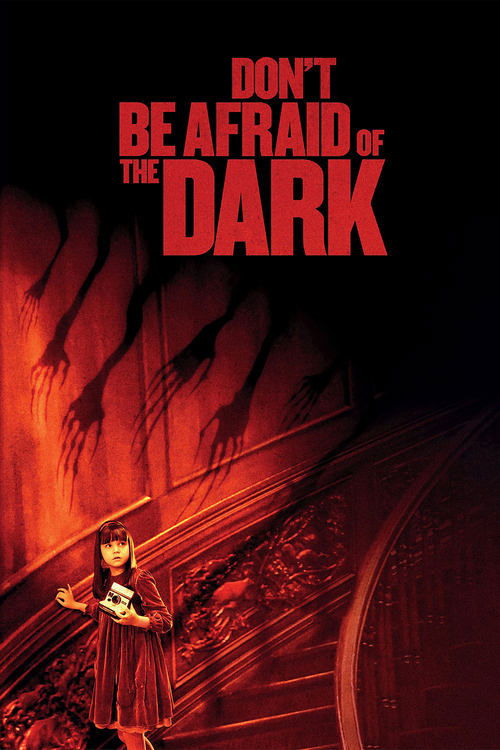
Don't Be Afraid of the Dark (2010)
Directed by Troy Nixey
No — Don't Be Afraid of the Dark is not woke, scoring 2 out of 100 on our wokeness meter.
Don't Be Afraid of the Dark arrives with a respectable pedigree and no agenda whatsoever.
Consciousness Markers
The cast is predominantly white with no narrative emphasis on diverse representation; the lone minority performer is a background caterer.
No LGBTQ+ characters, relationships, or themes appear.
Although Sally and Kim are central, the film does not advance a feminist agenda or critique patriarchy.
Race is not a thematic concern; no racial commentary or consciousness is present.
No environmental or climate themes.
The home-renovation backdrop is incidental; there is no eat-the-rich or anti-capitalist message.
No body-positivity themes or body-diversity messaging.
Sally's depression and Adderall use are plot texture, not a neurodivergence advocacy or representation theme.
The film is a horror remake, not a revisionist historical narrative.
It aims to scare rather than lecture; no preachy social messaging.
Why it received this score
Don't Be Afraid of the Dark arrives with a respectable pedigree and no agenda whatsoever. Guillermo del Toro wrote it, Troy Nixey directed it, and the entire enterprise concerns a 19th-century Rhode Island mansion, a sealed ash pit, and a colony of small tooth-collecting creatures who would like an eight-year-old girl for their own. The film is a remake of a 1973 television movie, which means its instincts are nostalgic instead of reformist. It wants to frighten us. That is the whole of its program.
The cast is white, the central couple is heterosexual, the basement is damp, and the moral universe extends no further than the question of whether a child should be left alone with something living under the floor. Sally takes Adderall because her mother is careless with her, and the film treats this as texture, a detail of a sad childhood, not a platform. Katie Holmes has her legs broken in a rope trap and is dragged into a fireplace. This is not a statement about anything. It is a woman being dragged into a fireplace, and the camera watches with the enthusiasm of a child at a puppet show.
We search the frame for a sermon and find only teeth. The house is being renovated for a wealthy client, a detail that could have supported a modest observation about money and does not. The creatures are vermin with fairy lore, borrowed from Arthur Machen, and their politics begin and end with appetite. The result is a rare artifact: a film that would sooner scare us than instruct us, asking nothing but a willingness to be scared. We grade it accordingly. Zero across the ledger, and a small, private gratitude for the restraint.
Analysis generated by our Consciousness Algorithm


Synopsis
A young girl sent to live with her father and his new girlfriend discovers creatures in her new home who want to claim her as one of their own.
Questions about Don't Be Afraid of the Dark
Is Don't Be Afraid of the Dark woke?
No — Don't Be Afraid of the Dark is not woke, scoring 2 out of 100 on our wokeness meter. That earns it a verdict of Ultra Based.
Does Don't Be Afraid of the Dark have any woke elements?
No. All 10 markers score zero.
How does Don't Be Afraid of the Dark compare to other 2010 movies?
It ranks #191 of the 238 films from 2010 we've scored; their average is 11. The wokest is My Name Is Khan (84).
How is the Woke Score calculated?
An AI-assisted process researches the film and its reception, scores it 0–100 on ten markers, then combines those into one 0–100 Woke Score. It measures a specific set of 2020s cultural themes, not film quality.