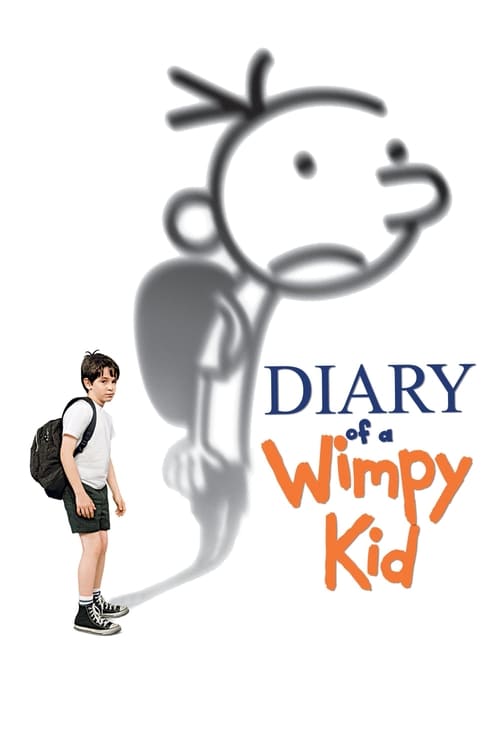
Diary of a Wimpy Kid (2010)
Directed by Thor Freudenthal
No — Diary of a Wimpy Kid is not woke, scoring 0 out of 100 on our wokeness meter.
Diary of a Wimpy Kid arrives from 2010, a year that now reads as a kind of cultural DMZ between the earnest and the agitated.
Consciousness Markers
The cast is largely white, and the few minority characters exist naturally without any commentary or deliberate representation framing.
There are no LGBTQ+ themes, characters, or subtext in the film.
Female characters are present, but the film does not advance or comment on feminist themes.
The film does not engage with race, racism, or racial identity as a theme.
There is no environmental or climate-related messaging in the story.
The film contains no critique of capitalism, wealth, or class structures.
The film does not promote body positivity or challenge body-image norms.
There is no exploration of neurodivergence or neurodiverse identity.
The film is a contemporary middle-school comedy and does not revise or reinterpret historical narratives.
The film is a light coming-of-age comedy and does not deliver progressive social lectures.
Why it received this score
Diary of a Wimpy Kid arrives from 2010, a year that now reads as a kind of cultural DMZ between the earnest and the agitated. Thor Freudenthal's adaptation of Jeff Kinney's illustrated novel follows Greg Heffley through his first year of middle school, a gauntlet of moldy cheese, missing bathroom stall doors, and the grim arithmetic of popularity. The film is nimble enough, occasionally funny, and entirely content to be about a boy who wants to be liked. Zachary Gordon plays him with a practiced smirk, and Robert Capron's Rowley supplies the sweetness the script otherwise declines to distribute.
Consider what the film declines to do. It casts a broadly white ensemble and lets its handful of minority students exist as students, without ceremony or commentary. Race is not a subject. Neither is gender, beyond the observation that middle school is unkind to everyone equally. There is no romance to interrogate, no closet to open, no carbon footprint to offset, no class struggle simmering beneath the cafeteria trays. The body is a source of wedgies, not affirmation. Neurodivergence goes unnamed. History, revisionist or otherwise, is simply not on the syllabus. Susan Heffley's mothering is affectionate and unexamined, and the film does not lecture, not once, about any of it. It wants only to get Greg to the yearbook page.
That absence is the whole point. This is a film from a moment when a children's comedy could still be merely a children's comedy, and the resulting object is amiable, weightless, and innocent of any agenda beyond the delivery of a cheese joke. Roger Ebert found it bright and knowing. Others found Greg unpleasant company. Both verdicts are defensible. What no one could accuse it of is ambition beyond its station. A relic, then, of a quieter dispensation, and a reminder that not every story carries a message. Some carry only a diary.
Analysis generated by our Consciousness Algorithm
Part of


Synopsis
Greg Heffley is headed for big things, but first he has to survive the scariest, most humiliating experience of any kid’s life – middle school! That won’t be easy, considering he’s surrounded by hairy-freckled morons, wedgie-loving bullies and a moldy slice of cheese with nuclear cooties!
Questions about Diary of a Wimpy Kid
Is Diary of a Wimpy Kid woke?
No — Diary of a Wimpy Kid is not woke, scoring 0 out of 100 on our wokeness meter. That earns it a verdict of Ultra Based.
Does Diary of a Wimpy Kid have any woke elements?
No. All 10 markers score zero.
How does Diary of a Wimpy Kid compare to other 2010 movies?
It ranks #204 of the 238 films from 2010 we've scored; their average is 11. The wokest is My Name Is Khan (84).
Is Diary of a Wimpy Kid the most woke Diary of a Wimpy Kid movie?
No. It ranks #3 of the 4 Diary of a Wimpy Kid films we've scored; the wokest is Diary of a Wimpy Kid: Rodrick Rules (6).