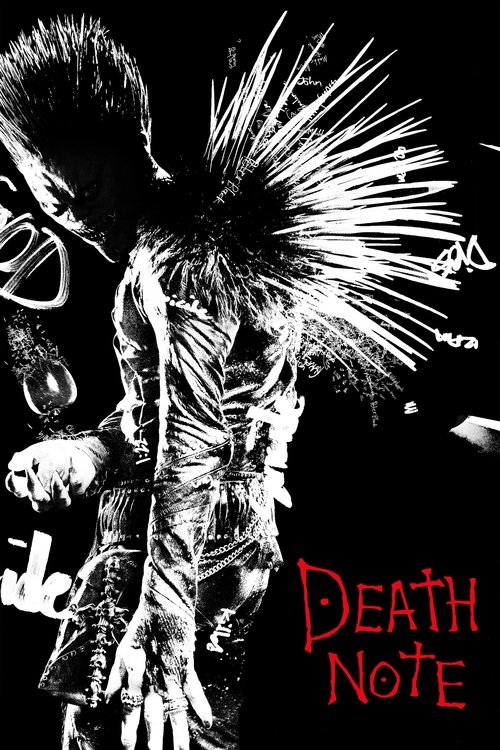
Death Note (2017)
Directed by Adam Wingard
No — Death Note is not woke, scoring 19 out of 100 on our wokeness meter.
Adam Wingard's Death Note is an American remix of a Japanese manga, and it carries the baggage of that transaction into every frame.
Consciousness Markers
The supporting cast is notably diverse, with LaKeith Stanfield as L and Paul Nakauchi as Watari, but the film drew sustained whitewashing criticism for casting Nat Wolff as the Japanese-origin lead Light.
Mia Sutton is reworked from a passive love interest into an active co-conspirator who inherits the manga-Light's ruthless sociopathy and drives the third act, giving the female lead unusual agency.
L is portrayed as a socially eccentric, quirky genius with odd mannerisms, a long-standing 'eccentric detective' coding that some viewers read as neurodivergent, though the film never names or thematizes it.
The film practices colorblind casting without ever engaging racial themes; the whitewashing debate lives entirely outside the text rather than within it.
Themes of morality and justice are present but handled as thriller texture rather than sermon; the film rarely stops to preach at the audience.
No LGBTQ+ characters, relationships, or themes appear anywhere in the film.
No environmental or climate themes are present.
The vigilante premise targets criminals and terrorists, not economic structures; there is no eat-the-rich messaging.
No body positivity themes or messaging.
The film is a contemporary supernatural thriller with no historical subject matter to revise.
Why it received this score
Adam Wingard's Death Note is an American remix of a Japanese manga, and it carries the baggage of that transaction into every frame. The supporting cast offers LaKeith Stanfield as L and Paul Nakauchi as Watari, yet Nat Wolff plays the Japanese-origin lead as a Seattle high schooler named Light Turner. That choice turned the release into a whitewashing argument, and the argument stays outside the film. Inside, the movie practices a cheerful colorblindness that never engages race as a subject. The result is a cast that looks diverse in the margins and a text that has nothing to say about it.
Margaret Qualley's Mia Sutton is the single place where the film shows a pulse of modern social awareness. She is not a passive love interest; she becomes an active co-conspirator, absorbs the manga Light's ruthless streak, and drives the third act with real appetite for power. Stanfield's L is a socially eccentric genius with strange posture, stranger eating habits, and the usual coded-neurodivergent detective mannerisms, though the film never names any of it. Elsewhere the ledger is blank. No LGBTQ themes, no climate concerns, no body positivity, no eat-the-rich anger. The vigilante campaign targets criminals and terrorists, not economic structures. Morality and justice appear as thriller texture, not sermon. The film rarely stops to lecture. It is too busy arranging elaborate deaths and a Ferris wheel climax.
As an adaptation, this is loose, contemporary, and untroubled by history. There is no past to revise, only a manga to Americanize. The film wants to be dark and dangerous, but it plays like a glossy pilot with a higher body count. Its cultural consciousness is sporadic, mostly off-screen, and not enough to rescue a mediocre supernatural crime thriller.
Analysis generated by our Consciousness Algorithm


Synopsis
Light Turner finds a supernatural notebook and uses it to mete out death, attracting the attention of a detective, a demon and a girl in his class.
Questions about Death Note
Is Death Note woke?
No — Death Note is not woke, scoring 19 out of 100 on our wokeness meter. That earns it a verdict of Ultra Based.
Does Death Note have any woke elements?
2 of the 10 markers register at 30 or above, led by Representation Casting (40) and Feminist Agenda (30). On Representation Casting: The supporting cast is notably diverse, with LaKeith Stanfield as L and Paul Nakauchi as Watari, but the film drew sustained whitewashing criticism for casting Nat Wolff as the Japanese-origin lead Light.
How does Death Note compare to other 2017 movies?
It ranks #96 of the 309 films from 2017 we've scored; their average is 19. The wokest is I Am Not Your Negro (92).
How is the Woke Score calculated?
An AI-assisted process researches the film and its reception, scores it 0–100 on ten markers, then combines those into one 0–100 Woke Score. It measures a specific set of 2020s cultural themes, not film quality.