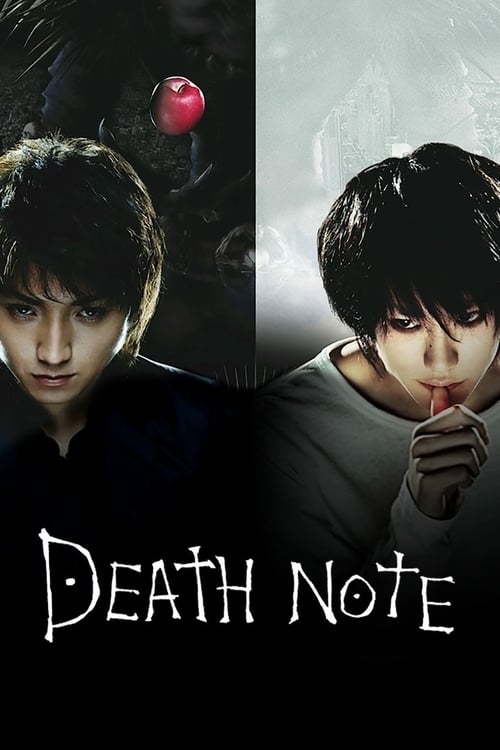
Death Note (2006)
Directed by Shusuke Kaneko
No — Death Note is not woke, scoring 0 out of 100 on our wokeness meter.
Shusuke Kaneko's 2006 adaptation of the Tsugumi Ohba and Takeshi Obata manga arrives with a premise that could, in clumsier hands, become a sermon about capital punishment and the corrupting nature of power.
Consciousness Markers
The film engages with moral ambiguity and the ethics of vigilante justice, but it does so through a psychological thriller narrative rather than direct lecturing.
The cast is entirely Japanese, reflecting the source material's setting; this is authentic casting rather than a deliberate modern representation initiative.
No LGBTQ+ characters or themes are present.
Female characters exist but the film does not advance a feminist agenda or critique patriarchy.
No exploration of racial identity, systemic racism, or racial justice.
No environmental or climate change themes.
The conflict is about crime and justice, not economic inequality or class struggle.
No body positivity themes or diverse body representation.
L's eccentricities are character quirks, not an exploration of neurodivergence.
No historical revisionism; the story is fictional and contemporary.
Why it received this score
Shusuke Kaneko's 2006 adaptation of the Tsugumi Ohba and Takeshi Obata manga arrives with a premise that could, in clumsier hands, become a sermon about capital punishment and the corrupting nature of power. A Tokyo student named Light Yagami finds a notebook that kills anyone whose name is written inside it, and he sets about exterminating the world's criminals. The film declines to tell us what to think. It observes. The result is a taut psychological duel between Light and the detective L, conducted like a chess match played by two people who each believe they are the reasonable one.
There is no cast assembled to make a point, no ideological checklist pinned to the wall. The performers are Japanese because the story is Japanese, and the film treats this as unremarkable. Women appear, scheme, and die, and the narrative does not pause to interrogate the patriarchy on their behalf. No character lectures about the climate, the economy, or the correct way to feel about one's own body. The killing is the point, and the ethics of it are left to curdle quietly in the viewer's stomach.
What the film does offer, faintly, is a moral argument conducted through suspense. Kaneko has said he wanted to focus on psychological pain, and he does, letting the audience draw its own conclusions about whether Kira is a savior or a monster. This is the closest the film comes to instruction, and it is gentle. A lesser production would have had someone stand up and explain the lesson out loud. This one trusts the audience to arrive there alone, which in the present cultural climate feels almost quaint. The notebook kills. Nobody explains why that is bad. We are simply expected to know.
The classification is straightforward. A story about a boy with a magic murder book, told without a single raised finger of reproach, and all the more unsettling for it.
Thematic tags: book_adaptation, sequel (no), remake (no). The film is the first in its own series and adapted from a manga, so it qualifies as a book adaptation and nothing else on the list. It did top the Japanese box office, but that is not the domestic market this classification tracks, so the honor is withheld. No Oscars, no superheroes, no true story. Just a notebook, a detective, and the uncomfortable silence that follows a well-told joke about death.
{"thematic_tags": ["book_adaptation"]}
Analysis generated by our Consciousness Algorithm
Synopsis
Light Yagami finds the "Death Note," a notebook with the power to kill, and decides to create a Utopia by killing the world's criminals, and soon the world's greatest detective, "L," is hired to find the mysterious murderer. An all out battle between the two greatest minds on earth begins and the winner will control the world.
Questions about Death Note
Is Death Note woke?
No — Death Note is not woke, scoring 0 out of 100 on our wokeness meter. That earns it a verdict of Ultra Based.
Does Death Note have any woke elements?
Very few. None of the 10 markers reaches 30, the level where a marker counts as present; the highest is Lecture Energy at 10.
How does Death Note compare to other 2006 movies?
It ranks #177 of the 211 films from 2006 we've scored; their average is 11. The wokest is An Inconvenient Truth (92).
How is the Woke Score calculated?
An AI-assisted process researches the film and its reception, scores it 0–100 on ten markers, then combines those into one 0–100 Woke Score. It measures a specific set of 2020s cultural themes, not film quality.