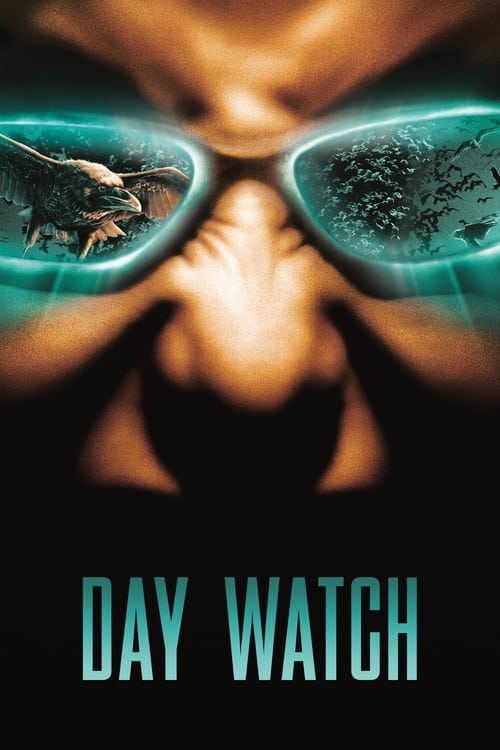
Day Watch (2006)
Directed by Timur Bekmambetov
No — Day Watch is not woke, scoring 3 out of 100 on our wokeness meter.
The Russian fantasy sequel Day Watch arrives with vampires, a shapeshifter, and eight hundred visual effects shots marshaled toward an apocalypse undone by a stick of chalk.
Consciousness Markers
Svetlana and Olga are capable female Others, but their roles serve the plot rather than any feminist thesis; no gender-politics commentary is present.
The cast is a uniformly white Russian ensemble with no evident diversity-casting agenda; characters are cast for the Slavic setting rather than representation.
No LGBTQ+ characters, themes, or subtext appear anywhere in the film.
The film engages no racial themes or commentary; the conflict is between metaphysical Light and Dark factions.
No environmental or climate themes appear in the story.
No critique of capitalism or wealth; the Chalk of Fate is a magical MacGuffin, not an economic allegory.
No body-positivity themes or messaging are present.
No neurodivergence themes or characters are depicted.
The Chalk of Fate rewrites history, but this is a fantasy plot device (Tamerlane's conquests) rather than a revisionist reframing of real historical events for ideological purposes.
The film delivers its fantasy action and twists without moralizing or preaching to the audience.
Why it received this score
The Russian fantasy sequel Day Watch arrives with vampires, a shapeshifter, and eight hundred visual effects shots marshaled toward an apocalypse undone by a stick of chalk. It asks nothing of us beyond attention to its twists. Timur Bekmambetov directs this second entry in the World of Watches saga with the energy of a man who has just discovered that cameras can move faster than the eye, and the result is busy, cheesy, and occasionally inventive. The cast is a uniformly Slavic ensemble, assembled for the Moscow setting and not for any representational arithmetic. Nobody stops the plot to explain what their presence is meant to signify.
A faint pulse of female capability runs through the middle act. Svetlana trains as a Great Other, Olga swaps bodies with Anton and carries several scenes, and Alisa wields the Chalk of Fate with real menace. None of them exists to deliver a thesis about gender. Their powers are plot mechanics, their arguments are romantic, and the film has no interest in interrogating either. The body-swap comedy, in which a grown man inhabits a sorceress and confesses his love through her mouth, is played for laughs and confusion. It is not an occasion for commentary.
The Chalk of Fate can rewrite history, which sounds like raw material for a sermon on memory and power. It is instead a MacGuffin with a Tamerlane backstory, used to reset 1992 and spare Anton his bargain with the witch. No economic grievance gets aired. No climate anxiety intrudes. No character is diagnosed, affirmed, or invited to check their privilege. The film wants to show us Moscow crumbling and then un-crumble, and it does so with a straight face and a taste for spectacle. We are left with a competent genre picture from a pre-2010 disposition, content to entertain and unwilling to instruct. There is something almost restful in that.
Analysis generated by our Consciousness Algorithm


Synopsis
A man who serves in the war between the forces of Light and Dark comes into possession of a device that can restore life to Moscow, which was nearly destroyed by an apocalyptic event.
Questions about Day Watch
Is Day Watch woke?
No — Day Watch is not woke, scoring 3 out of 100 on our wokeness meter. That earns it a verdict of Ultra Based.
Does Day Watch have any woke elements?
Very few. None of the 10 markers reaches 30, the level where a marker counts as present; the highest is Feminist Agenda at 8.
How does Day Watch compare to other 2006 movies?
It ranks #164 of the 211 films from 2006 we've scored; their average is 11. The wokest is An Inconvenient Truth (92).
How is the Woke Score calculated?
An AI-assisted process researches the film and its reception, scores it 0–100 on ten markers, then combines those into one 0–100 Woke Score. It measures a specific set of 2020s cultural themes, not film quality.