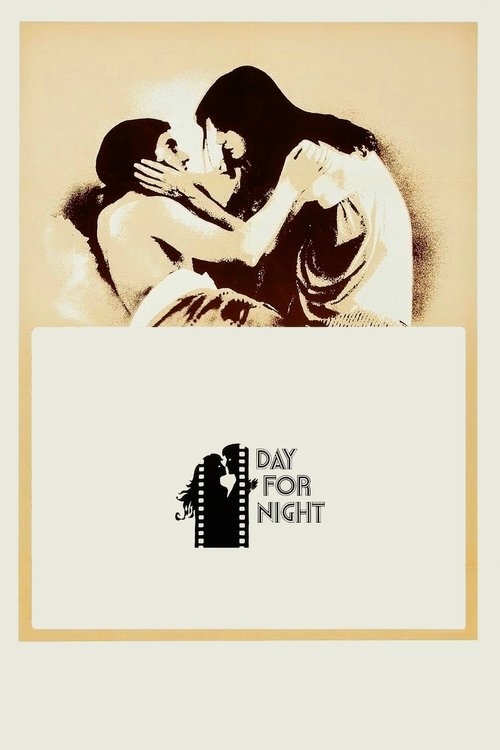
Day for Night (1973)
Directed by François Truffaut
No — Day for Night is not woke, scoring 4 out of 100 on our wokeness meter.
François Truffaut's Day for Night concerns the making of a film and the small catastrophes that attend it: an actor's death, an unexpected pregnancy, a nervous breakdown, a string of romantic betrayals that resolve into very little.
Consciousness Markers
Bisset noted Truffaut 'likes working with women,' and the film grants its actresses substantial interiority, but this is humanist character writing rather than a feminist thesis.
The film is didactic only about the craft of cinema (the day-for-night technique, the love of movies), never about social politics.
The film gently contrasts artistic devotion with the commercial machinery of production, but it is a love letter to cinema, not an indictment of capital.
The international cast (Bisset, Cortese, Léaud) was assembled for mythological star quality and linguistic practicality, not as any deliberate diversity mandate.
No LGBTQ+ characters or themes appear anywhere in the film's romantic entanglements.
Race is entirely absent as a subject; the film concerns itself with the white European film industry.
No environmental themes whatsoever.
No body-positivity themes present.
Alphonse's infantilism and Julie's nervous breakdown are treated as melodramatic character traits, not as neurodivergent identity.
No historical revisionism; the film is a contemporary, self-reflexive fiction about filmmaking.
Why it received this score
François Truffaut's Day for Night concerns the making of a film and the small catastrophes that attend it: an actor's death, an unexpected pregnancy, a nervous breakdown, a string of romantic betrayals that resolve into very little. The picture is dedicated to the Gish sisters and populated by performers selected for star quality and linguistic convenience. No casting agenda animates the ensemble. Race never surfaces as a subject. No LGBTQ storyline troubles the heterosexual roundelay. The environment goes unmentioned. Alphonse's infantile tantrums and Julie's exhaustion are fuel for melodrama, not identity. On seven of our ten measures, the film is a clean slate, which is not an accusation, merely a finding.
Where the film registers at all, it registers faintly. Bisset observed that Truffaut liked working with women, and the actresses here are granted interiority, wit, and a certain weary competence. That is humane character writing, not a thesis. The script glances at the commercial machinery surrounding artistic labor, then adores the machinery anyway. Truffaut built the thing as a love letter to his trade, and love letters do not indict. The only sermonizing on offer concerns craft: how to fake night with a filter, why a tracking shot moves us. The lecturing is about cinema, never about politics.
Godard walked out in disgust and called it a lie, which remains the most energetic review the film has received. Everyone else lined up to call it the most beloved movie ever made about movies, and the Academy handed it a statuette for Best Foreign Language Film. It is warm, it is skillful, and it is untroubled by the questions that occupy our present moment. We classify it accordingly: enormous charm, negligible contemporary social consciousness. It means no harm. It also means nothing of the kind we now require of it.
Returned for the record with a straight face and a mild sigh. The classification stands.
{"thematic_tags": ["oscar_winner"]}
Analysis generated by our Consciousness Algorithm
Synopsis
A committed filmmaker struggles to complete his latest project while coping with a myriad of crises, personal and professional, among the cast and crew.
Questions about Day for Night
Is Day for Night woke?
No — Day for Night is not woke, scoring 4 out of 100 on our wokeness meter. That earns it a verdict of Ultra Based.
Does Day for Night have any woke elements?
Very few. None of the 10 markers reaches 30, the level where a marker counts as present; the highest is Feminist Agenda at 10.
How does Day for Night compare to other 1973 movies?
It ranks #16 of the 32 films from 1973 we've scored; their average is 11. The wokest is Soylent Green (39).
How is the Woke Score calculated?
An AI-assisted process researches the film and its reception, scores it 0–100 on ten markers, then combines those into one 0–100 Woke Score. It measures a specific set of 2020s cultural themes, not film quality.