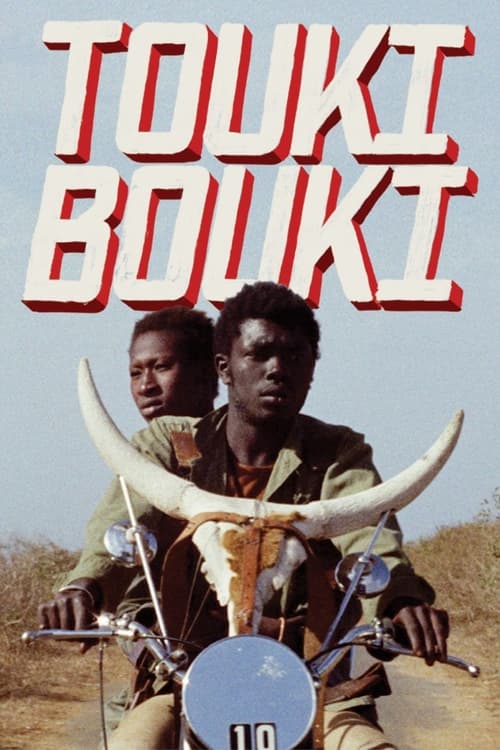
Touki Bouki (1973)
Directed by Djibril Diop Mambéty
No · Based
How we score movies →Consciousness Markers
The film engages profoundly with colonialism's psychological damage and the internalization of European cultural supremacy among African subjects, though through existential and philosophical means rather than contemporary racial justice discourse.
The film critiques capitalist desire and the false promises of wealth through its examination of Mory and Anta's aspirations, but this emerges from postcolonial theory rather than contemporary anti-capitalist discourse.
The film offers a postcolonial perspective on history and challenges European narratives of progress, but does not engage in the specific revisionist history projects associated with 2020s discourse.
Anta possesses agency as a university student and equal partner in the scheme, but the film contains no explicit feminist commentary or contemporary gender consciousness.
Mambéty trusts the viewer to interpret the film's meanings through surrealism and ambiguity rather than delivering explicit moral instruction or preachy messaging.
The film features an all-Senegalese cast, but this reflects practical casting rather than any deliberate representation initiative or contemporary diversity discourse.
No LGBTQ+ themes or representation appear in the film. The romantic plot involves a heterosexual couple.
No climate or environmental themes are present in the film.
No body positivity themes or commentary appear in the film.
The film contains no representation of or discourse surrounding neurodivergence.


Synopsis
Mory, a cowherd, and Anta, a university student, try to make money in order to go to Paris and leave their boring past behind.
Why it received this score
Touki Bouki stands as a masterwork of postcolonial African cinema, yet its relationship to contemporary progressive sensibilities remains oblique. Mambéty's debut examines the psychological wreckage left by colonialism through the fever dream of two young Senegalese attempting to flee their homeland for Paris, treating their aspirations with a mixture of sympathy and dark comedy. The film's critique of capitalist desire and its unflinching portrayal of how colonial subjects internalize European cultural supremacy touches upon themes we might now categorize as socially conscious, though Mambéty's philosophical framework predates by decades the specific vocabulary of 2020s identity discourse.
The film features Senegalese actors in the lead roles, yet this reflects the basic necessity of casting rather than any deliberate commitment to representation politics. The female protagonist, Anta, is a university student who shares equal agency with Mory, but the film offers no explicit feminist commentary or contemporary gender consciousness. The social critique emerges through surrealism, visual poetry, and existential inquiry rather than through the instructional or preachy modes we associate with modern progressive filmmaking. Mambéty's concerns are fundamentally with colonialism as a spiritual and psychological catastrophe, not with identity categories as such.
To score this film as highly progressive in 2020s terms would be to collapse historical specificity into contemporary terminology. Touki Bouki remains a work of profound cultural intelligence and moral seriousness, yet it operates in a different register entirely from the social consciousness markers of 2020s cinema. Its power derives from its refusal to explain itself, its commitment to ambiguity, and its faith in the viewer's capacity to sit with discomfort. These are precisely the qualities that contemporary progressive cinema often abandons in favor of clarity and affirmation.
Analysis generated by our Consciousness Algorithm
Critic Reviews
“The good news is that it's as great as its reputation, a genuinely refreshing, technically brilliant, superb-looking and charismatically acted film telling the story of a couple of Senegalese hipsters who want to escape and go to Paris.”