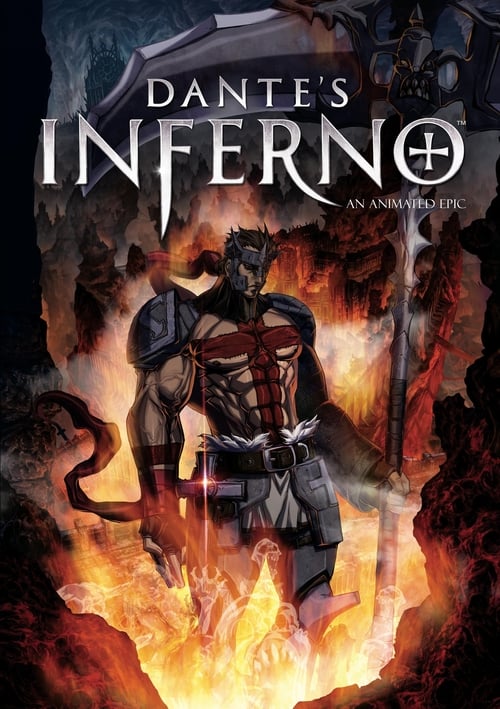
Dante's Inferno: An Animated Epic (2010)
Directed by Lee Seung-Gyu
No — Dante's Inferno: An Animated Epic is not woke, scoring 0 out of 100 on our wokeness meter.
Dante's Inferno: An Animated Epic arrives as a curiosity of 2010: an anthology assembled by six animation studios, adapting a video game that had already paraphrased a fourteenth century poem, then sent straight to video.
Consciousness Markers
The voice cast is drawn from standard animation talent with no deliberate or commented-upon diverse casting; the film is set in a medieval European/religious framework with no representation agenda.
No LGBTQ+ characters, themes, or subtext appear anywhere in the narrative.
Beatrice functions largely as a damsel-in-distress and prize to be won, and the film's moral framework is a medieval Catholic one with no feminist critique.
The film engages no racial themes or commentary; its subject matter is sin, damnation, and redemption in a theological register.
No environmental or climate themes are present.
The circle of Greed depicts avarice as a religious sin punished in Hell, not a modern 'eat the rich' economic critique.
The gluttony circle features bodies being devoured and punished; there is no body-positive messaging.
No neurodivergent characters or themes are present.
The film adapts a video game loosely based on Dante's poem; it makes no historical revisionist claims.
The film is philosophical and introspective about sin and salvation, but it delivers no modern preachy social messaging.
Why it received this score
Dante's Inferno: An Animated Epic arrives as a curiosity of 2010: an anthology assembled by six animation studios, adapting a video game that had already paraphrased a fourteenth century poem, then sent straight to video. Dante returns from the Crusades to find his household butchered and Beatrice dying, and Lucifer hauling her soul through the gates. The result is a tour of the nine circles conducted with the enthusiasm of a theme park ride through medieval theology. The film takes damnation at face value, which is to say it treats sin as sin, punished by God, catalogued by Virgil, and never as a stand-in for a contemporary grievance.
Beatrice spends most of the running time as a prize suspended over the abyss, and nobody involved seems troubled by the arrangement. The circle of Greed is populated by Dante's own father and rendered as boiling gold, an indictment of avarice in its oldest religious sense, not a critique of markets or billionaires. Gluttony is punished by being devoured, which sits at some distance from a body-positive position. The voice cast performs competently, with no accompanying conversation about who was cast and why.
None of this is a complaint. The film is sincere dark fantasy, macabre and earnest, with Mark Hamill audibly enjoying himself as the adversary. It lectures, but about penitence, and mostly to itself. The Oktyabrsky District Court in Saint Petersburg banned it in 2021 alongside Happy Tree Friends, which suggests the censors located something in it that our own taxonomy does not. That is an entirely separate category of offense from the one measured here. Zero, then. Not a whisper of the modern sensibility. Just fire, and a man walking through it for love.
Analysis generated by our Consciousness Algorithm


Synopsis
Dante journeys through the nine circles of Hell -- limbo, lust, gluttony, greed, anger, heresy, violence, fraud and treachery -- in search of his true love, Beatrice. An animated version of the video game of the same name.
Questions about Dante's Inferno: An Animated Epic
Is Dante's Inferno: An Animated Epic woke?
No — Dante's Inferno: An Animated Epic is not woke, scoring 0 out of 100 on our wokeness meter. That earns it a verdict of Ultra Based.
Does Dante's Inferno: An Animated Epic have any woke elements?
No. All 10 markers score zero.
How does Dante's Inferno: An Animated Epic compare to other 2010 movies?
It ranks #204 of the 238 films from 2010 we've scored; their average is 11. The wokest is My Name Is Khan (84).
How is the Woke Score calculated?
An AI-assisted process researches the film and its reception, scores it 0–100 on ten markers, then combines those into one 0–100 Woke Score. It measures a specific set of 2020s cultural themes, not film quality.