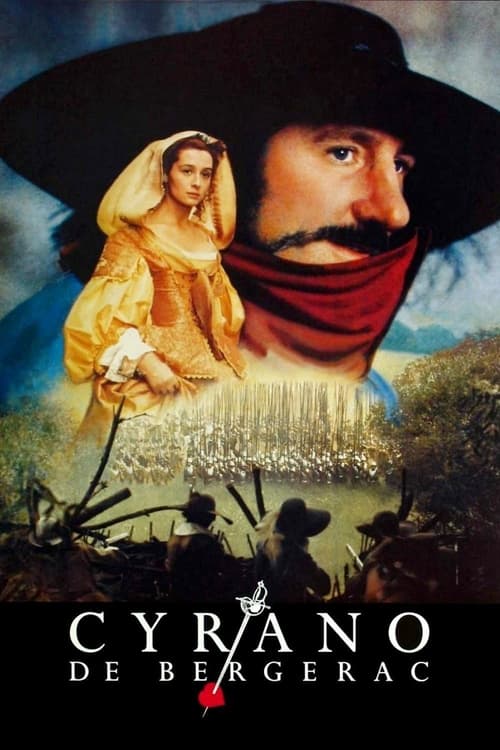
Cyrano de Bergerac (1990)
Directed by Jean-Paul Rappeneau
No — Cyrano de Bergerac is not woke, scoring 0 out of 100 on our wokeness meter.
The 1990 Cyrano de Bergerac is a French period romance adapted from Edmond Rostand's 1897 play.
Consciousness Markers
The cast is entirely white and period-appropriate for 17th-century France, with no modern diversity casting or inclusive representation.
There are no LGBTQ+ characters, themes, or subtext in the film.
Roxane has some agency, but the story is a classic romantic tragedy centered on male honor and unrequited love, not a feminist agenda.
The film does not engage with race, racism, or racial identity in any modern sense.
There is no environmental or climate-related theme in the film.
The film depicts aristocratic society and poverty, but it does not offer a systemic anti-capitalist or eat-the-rich critique.
Cyrano's large nose is central to his insecurity, but the film treats it as tragic romance and inner beauty rather than a modern body-positive celebration of non-normative bodies.
There is no exploration of neurodivergence or neurodiverse identity in the film.
The film is a faithful adaptation of a 19th-century play set in the 17th century, not a revisionist historical narrative.
The film is a romantic period drama with no modern social or political lecturing directed at the audience.
Why it received this score
The 1990 Cyrano de Bergerac is a French period romance adapted from Edmond Rostand's 1897 play. Gérard Depardieu plays the Gascon poet and swordsman as a man undone by his own nose, a private tragedy of honor and longing. The cast is white and historically appropriate for seventeenth-century France. The film does not pause to comment on this fact, and neither shall we. It is a costume drama that trusts its source material, which is either admirable or quaint depending on the viewer's patience for rhymed couplets.
Roxane has wit and a measure of agency, but the narrative remains a classic romantic tragedy built on male self-sacrifice and unrequited love. Her choices serve the emotional architecture of the play, not a feminist thesis. Cyrano's nose drives his insecurity, yet the film treats it as a source of pathos and inner beauty, not as a body-positive celebration of non-normative appearance. The story has no interest in contemporary identity categories, environmental anxieties, or economic grievances. The starving cadets at Arras are a historical detail, not a sermon about wealth redistribution. The film has no interest in lecturing its audience about modern virtue.
Revisionist history is absent as well. This is a faithful adaptation, not a reimagining designed to correct the past. The result is a work of old-fashioned sentiment, beautifully performed and staged, that asks us to feel rather than to audit. On the contemporary social consciousness scale, it leaves no measurable trace. That is not an insult. It is a classification. The film belongs to another era, and it seems content to stay there. We remain weary, but we respect the clarity of its position.
Analysis generated by our Consciousness Algorithm


Synopsis
Famed swordsman and poet Cyrano de Bergerac is in love with his cousin Roxane. He has never expressed his love for her as he his large nose undermines his self-confidence. Then he finds a way to express his love to her, indirectly.
Questions about Cyrano de Bergerac
Is Cyrano de Bergerac woke?
No — Cyrano de Bergerac is not woke, scoring 0 out of 100 on our wokeness meter. That earns it a verdict of Ultra Based.
Does Cyrano de Bergerac have any woke elements?
No. All 10 markers score zero.
How does Cyrano de Bergerac compare to other 1990 movies?
It ranks #54 of the 68 films from 1990 we've scored; their average is 9. The wokest is Nightbreed (60).
How is the Woke Score calculated?
An AI-assisted process researches the film and its reception, scores it 0–100 on ten markers, then combines those into one 0–100 Woke Score. It measures a specific set of 2020s cultural themes, not film quality.