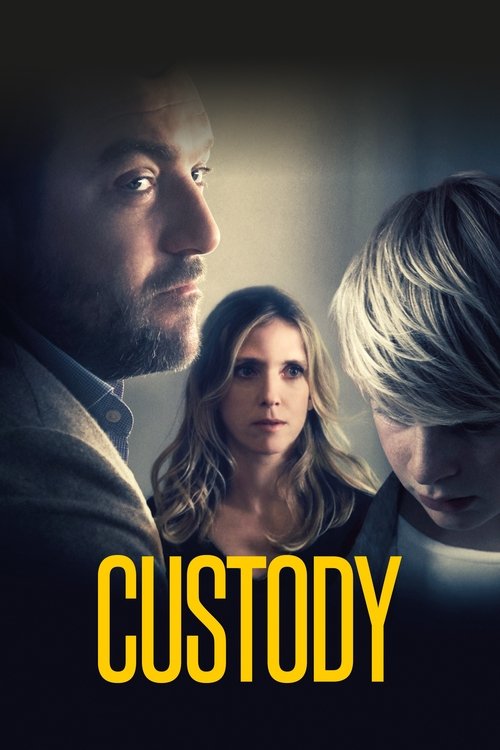
Custody (2018)
Directed by Xavier Legrand
No — Custody is not woke, scoring 9 out of 100 on our wokeness meter.
Xavier Legrand's Custody arrives with a Silver Lion and a trio of Césars, and it earns them the old-fashioned way: through dread.
Consciousness Markers
The film centers on a mother's desperate fight to protect her son from an abusive ex-husband and critiques a legal system that fails her, but it treats this as a humanist domestic drama rather than an explicit feminist polemic.
The cast is predominantly white French, with any minority presence incidental and unremarked upon; no conscious diversity casting agenda is evident.
No LGBTQ+ characters, themes, or relationships appear in the film.
Race is not a thematic concern; the film does not engage with racial identity, inequality, or consciousness.
No environmental or climate-related themes are present.
The film does not critique capitalism, wealth inequality, or class structures.
No body positivity, fat acceptance, or related themes are present.
No neurodivergent characters or themes are present.
The film is a contemporary fictional drama and does not revise or reinterpret historical events.
The film is a tense domestic thriller that shows rather than tells, with no preachy or didactic monologues.
Why it received this score
Xavier Legrand's Custody arrives with a Silver Lion and a trio of Césars, and it earns them the old-fashioned way: through dread. A divorce hearing, a magistrate who grants joint custody, an eleven-year-old boy handed over to a father he fears. Legrand keeps his camera close and his dialogue spare, and the result is a domestic thriller that operates almost entirely through what is withheld. The audience knows what the magistrate does not, and the gap between those two positions is where the film lives.
On the matter of social consciousness, the film is nearly inert, and this is a compliment of sorts. The cast is white French, and no effort is made to correct that. There are no LGBTQ threads, no racial reckoning, no climate anxiety, no critique of capital, no body positivity, no neurodivergent arc, no rewriting of history. Miriam's fight to protect her son from an abusive ex-husband carries a faint charge of grievance against a legal system that dismisses a mother's testimony, but Legrand frames it as a humanist cry, not a manifesto. The film has no thesis to deliver. It has a boy, a locked bathroom door, and a shotgun.
Legrand trusts silence. He trusts a child's face. The film never stops to explain itself, never pauses for a speech, never turns to the audience to confirm that we have understood the lesson, because there is no lesson. It simply tightens. For those of us who catalog these things, Custody is the rare serious film that resists the urge to sermonize, and it scores accordingly low on our index. A grim, precise, unadorned piece of work.
Analysis generated by our Consciousness Algorithm


Synopsis
Miriam and Antoine have recently separated. While she’s willing to permit their 17-year-old daughter Josephine to decide living arrangements for herself, Miriam is desperate to keep her youngest, 11-year-old Julien, away from his father. But the magistrate rules in favour of joint custody, and suddenly the boy is thrown directly into the middle of an escalating parental conflict, where it seems inevitable that sides must be chosen.
Questions about Custody
Is Custody woke?
No — Custody is not woke, scoring 9 out of 100 on our wokeness meter. That earns it a verdict of Ultra Based.
Does Custody have any woke elements?
Very few. None of the 10 markers reaches 30, the level where a marker counts as present; the highest is Feminist Agenda at 15.
How does Custody compare to other 2018 movies?
It ranks #203 of the 325 films from 2018 we've scored; their average is 20. The wokest is Return (92).
How is the Woke Score calculated?
An AI-assisted process researches the film and its reception, scores it 0–100 on ten markers, then combines those into one 0–100 Woke Score. It measures a specific set of 2020s cultural themes, not film quality.