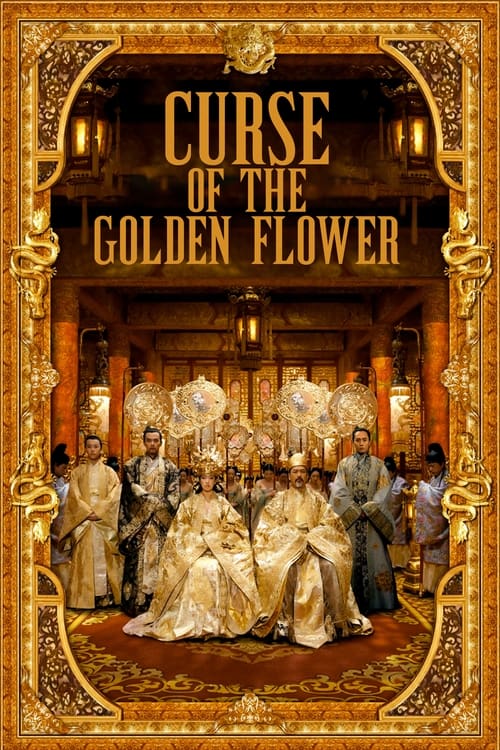
Curse of the Golden Flower (2006)
Directed by Zhang Yimou
No — Curse of the Golden Flower is not woke, scoring 0 out of 100 on our wokeness meter.
Curse of the Golden Flower is a 2006 Chinese epic wuxia drama directed by Zhang Yimou.
Consciousness Markers
The cast is entirely Chinese, which is natural for a Chinese historical epic and not a modern diversity casting decision.
There are no LGBTQ+ themes or characters in the film.
The Empress is a central figure, but the film is a tragedy about imperial power, not a feminist agenda.
The film depicts Chinese imperial court intrigue without any modern racial justice themes.
There are no climate or environmental themes in the film.
The film critiques imperial power and corruption, not capitalism or economic inequality.
There are no body positivity themes or messages in the film.
There are no neurodivergence themes or characters in the film.
The film is based on a 1934 play and set in a vaguely historical China, but it does not reinterpret history through a modern social justice lens.
The film does not contain modern lecturing or preachy social commentary.
Why it received this score
Curse of the Golden Flower is a 2006 Chinese epic wuxia drama directed by Zhang Yimou. It adapts Cao Yu's 1934 play Thunderstorm and moves the action to an imperial court of vague historical vintage. The plot concerns poisoned tea, an empress's rebellion, a crown prince's forbidden romance, and a family consumed by the machinery of dynastic power. The film's concerns are royal, familial, and lethal. We search the screen for modern progressive signifiers and find nothing worth recording. The cast is entirely Chinese, which suits a Chinese historical epic and does not read as a contemporary diversity decision. There are no LGBTQ threads. The Empress is a central and formidable figure, but her tragedy is about imperial cruelty, not feminist advocacy. The story remains a blood-soaked family melodrama.
Racial consciousness is absent. The court intrigue unfolds without any modern racial justice framework. Climate concerns are absent, unless we count the chrysanthemum beds as a modest carbon sink, which we do not. The critique of power is not anti-capitalist; it aims at emperors and courtiers, not markets or economic systems. Body positivity does not appear. Neurodivergence does not appear. Revisionist history does not appear. The film uses a play and a half-remembered dynasty for operatic ends, not to reinterpret the past through a present-day moral lens. Lecture energy is zero. At no point does the film pause to instruct us on contemporary virtue. It presents corruption, poison, and betrayal as spectacle.
The film remains a lavish, overwrought pageant of gold armor, chrysanthemums, and slaughter. The final act stages a rebellion, a massacre, and a cleanup so efficient that the palace looks as if nothing happened. That image of erasure is the film's real subject: power consuming its own. The result is grand, excessive, and occasionally ridiculous. It is also not a vehicle for 2020s cultural politics. Our ledger records no evidence across the markers. We file Curse of the Golden Flower as a historical wuxia tragedy, a sommelier's vintage of imperial despair, and we move to the next bottle.
Analysis generated by our Consciousness Algorithm


Synopsis
During China's Tang dynasty the emperor has taken the princess of a neighboring province as his wife. She has borne him two sons and raised his eldest. Now his control over his dominion is complete, including the royal family itself.
Questions about Curse of the Golden Flower
Is Curse of the Golden Flower woke?
No — Curse of the Golden Flower is not woke, scoring 0 out of 100 on our wokeness meter. That earns it a verdict of Ultra Based.
Does Curse of the Golden Flower have any woke elements?
No. All 10 markers score zero.
How does Curse of the Golden Flower compare to other 2006 movies?
It ranks #177 of the 211 films from 2006 we've scored; their average is 11. The wokest is An Inconvenient Truth (92).
How is the Woke Score calculated?
An AI-assisted process researches the film and its reception, scores it 0–100 on ten markers, then combines those into one 0–100 Woke Score. It measures a specific set of 2020s cultural themes, not film quality.