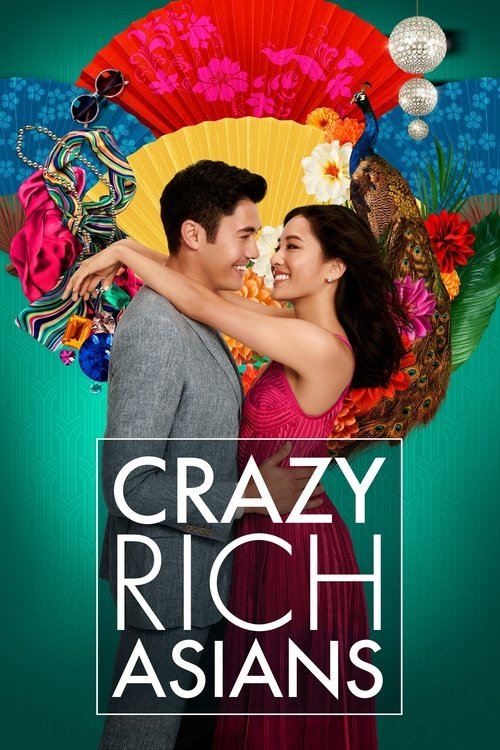
Crazy Rich Asians (2018)
Directed by Jon M. Chu
Yes — Crazy Rich Asians is woke, scoring 60 out of 100 on our wokeness meter.
The film is a glossy romantic comedy about a Chinese American economics professor who discovers her boyfriend is Singaporean royalty.
Consciousness Markers
The film is a landmark for Asian representation in Hollywood, featuring a majority Asian cast in a modern studio romantic comedy. It was both praised for this and criticized for its narrow East Asian focus and lack of Southeast Asian diversity.
Asian and Asian-American identity, cultural belonging, and the politics of representation are central to the film's premise and reception. It explicitly contrasts Chinese-American and Singaporean Chinese expectations and class dynamics.
The plot centers on women—Rachel, Eleanor, and Astrid—navigating family, marriage, and independence, with Astrid leaving her unfaithful husband. However, it remains a traditional romantic comedy rather than a feminist polemic.
The film touches on cultural identity and representation, but it delivers these themes through romantic-comedy conventions rather than overt preaching.
Nico Santos appears as Oliver, a gay cousin who calls himself 'the rainbow sheep of the family,' but the role is minor and comedic rather than a substantive LGBTQ+ storyline.
The film critiques old-money elitism and the cruelty of exclusion, but it largely celebrates extreme wealth and luxury rather than condemning capitalism.
There is no environmental or climate-related theme in the film.
There is no body-positivity theme or notable body-diverse representation in the film.
There is no exploration of neurodivergence or neurodiverse characters.
The film is a contemporary romantic comedy and does not engage in historical revisionism.
Why it received this score
The film is a glossy romantic comedy about a Chinese American economics professor who discovers her boyfriend is Singaporean royalty. Its primary cultural contribution is casting: a majority Asian ensemble in a modern Hollywood studio picture, a statistical anomaly since 1993. The film treats this as both premise and argument. It contrasts Chinese American and Singaporean Chinese expectations, class codes, and the quiet violence of exclusion. The mahjong parlor scene uses game theory as emotional resolution. That is as close as the film comes to a thesis. It is effective, though the film's Southeast Asian representation remains narrow, a point its own reception made unavoidable.
The romantic machinery is conventional. Rachel, Eleanor, and Astrid carry the emotional weight, and Astrid's exit from an unfaithful husband grants a modest independence. But the film wants a wedding, not a revolution. Its treatment of wealth is ambivalent: old-money cruelty gets a scolding, yet the cars, gowns, and private jets are filmed with sincere appetite. The gay cousin Oliver exists for a single campy line and disappears into the reception. No climate anxiety, no body-diverse subplot, no neurodivergent interiority, no historical revision. The film is too busy being a fairy tale.
Its social consciousness arrives through genre, not sermon. The representation is the message, and the message is delivered with champagne and mahjong tiles. That keeps the lecture energy mild, even when the cultural contrasts are sharp. The result is a landmark of casting and a modest romantic comedy, a film that changed the conversation about who gets to be rich and foolish on screen while remaining thoroughly in love with wealth. We classify it accordingly: significant, charming, and only occasionally inclined to preach.
Analysis generated by our Consciousness Algorithm
Part of


Synopsis
An American-born Chinese economics professor accompanies her boyfriend to Singapore for his best friend's wedding, only to get thrust into the lives of Asia's rich and famous.
Questions about Crazy Rich Asians
Is Crazy Rich Asians woke?
Yes — Crazy Rich Asians is woke, scoring 60 out of 100 on our wokeness meter. That earns it a verdict of Woke.
What makes Crazy Rich Asians woke?
3 of the 10 markers register at 30 or above, led by Representation Casting (88), Racial Consciousness (82) and Feminist Agenda (40). On Representation Casting: The film is a landmark for Asian representation in Hollywood, featuring a majority Asian cast in a modern studio romantic comedy.
How does Crazy Rich Asians compare to other 2018 movies?
It ranks #21 of the 325 films from 2018 we've scored; their average is 20. The wokest is Return (92).
How is the Woke Score calculated?
An AI-assisted process researches the film and its reception, scores it 0–100 on ten markers, then combines those into one 0–100 Woke Score. It measures a specific set of 2020s cultural themes, not film quality.